
|
Coracle Press ~ Ireland |
Share this page: |
| Patrick Eyres: " Over the years Coracle has developed through numerous phases of activity in places as various as London (1975–1987) and subsequently Liverpool, Norfolk, Italy and Ireland. The consistent intention has been to involve artists, editors, poets and writers in the creation of an eclectic synthesis of word, image and print that could flourish in book form through exploration of metaphor, allusion, paradox and irony. " | |
Books about Coracle Books |
|
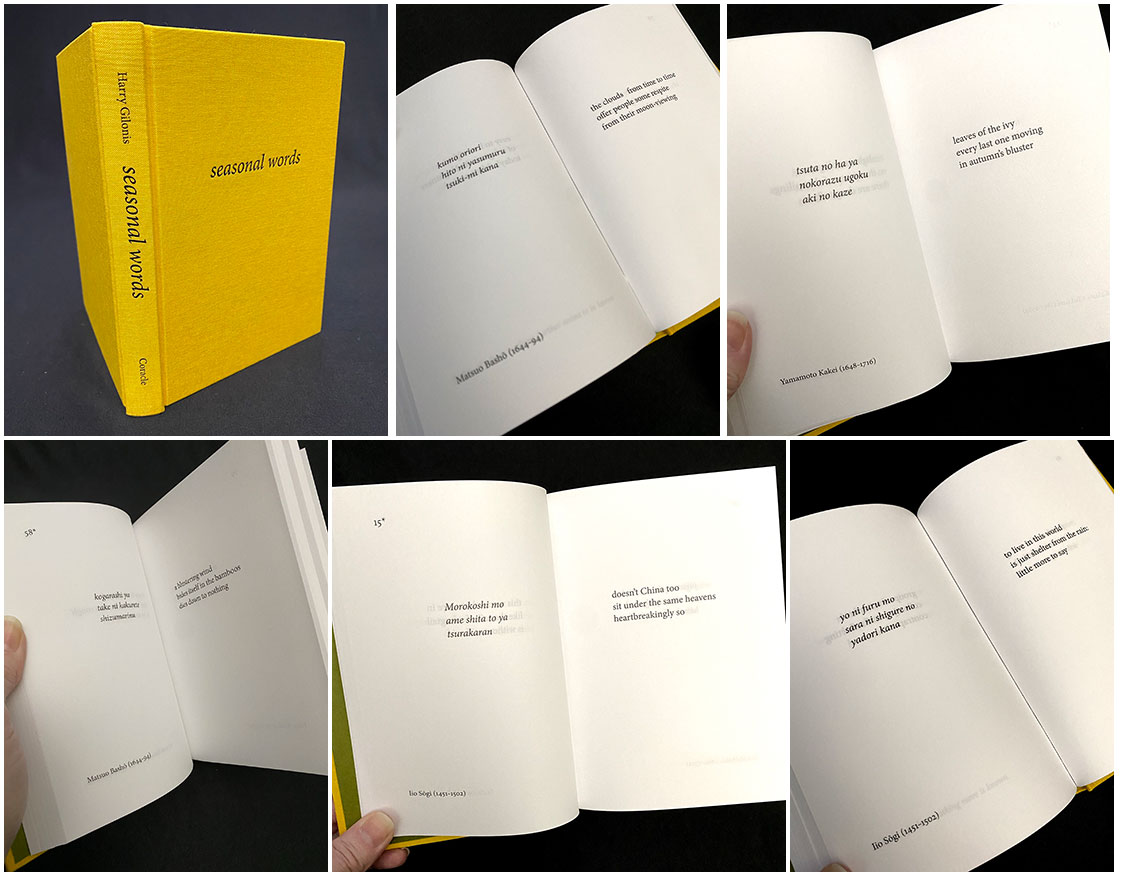
seasonal words 236 pages; 175 x 125mm. Printed offset. Casebound. Fine. Coracle: "These versions of Japanese haiku from various writers, translated by the poet, Harry Gilonis were initially sent out as a daily e-mail; initially to a handful of friends, but the number grew and grew. They were not begun with a set plan, nor duration; they went out from 17 September to 24 December; neatly dividing almost exactly into autumn and winter (by Japanese seasonal definitions). “Harry Gilonis is a poet, editor, publisher, and critic writing on art, poetry, and music. Since the late 1980s he has written various books of poetry (published by Carcanet Press, among others), and has collaborated with other poets. His writing has been translated into Catalan, Gaelic, German, Polish, and Spanish. In 2018, ‘The Guardian’ published Gilonis’ piece ‘a small alba’ as its Poem of the Week." Review by Billy Mills at “Elliptical Movements” blog begins “seasonal words is a handsomely produced collection of 100 translations of Japanese haiku, each original transcribed in Romanji with the translation facing on the verso. …” |
 Click image for more |
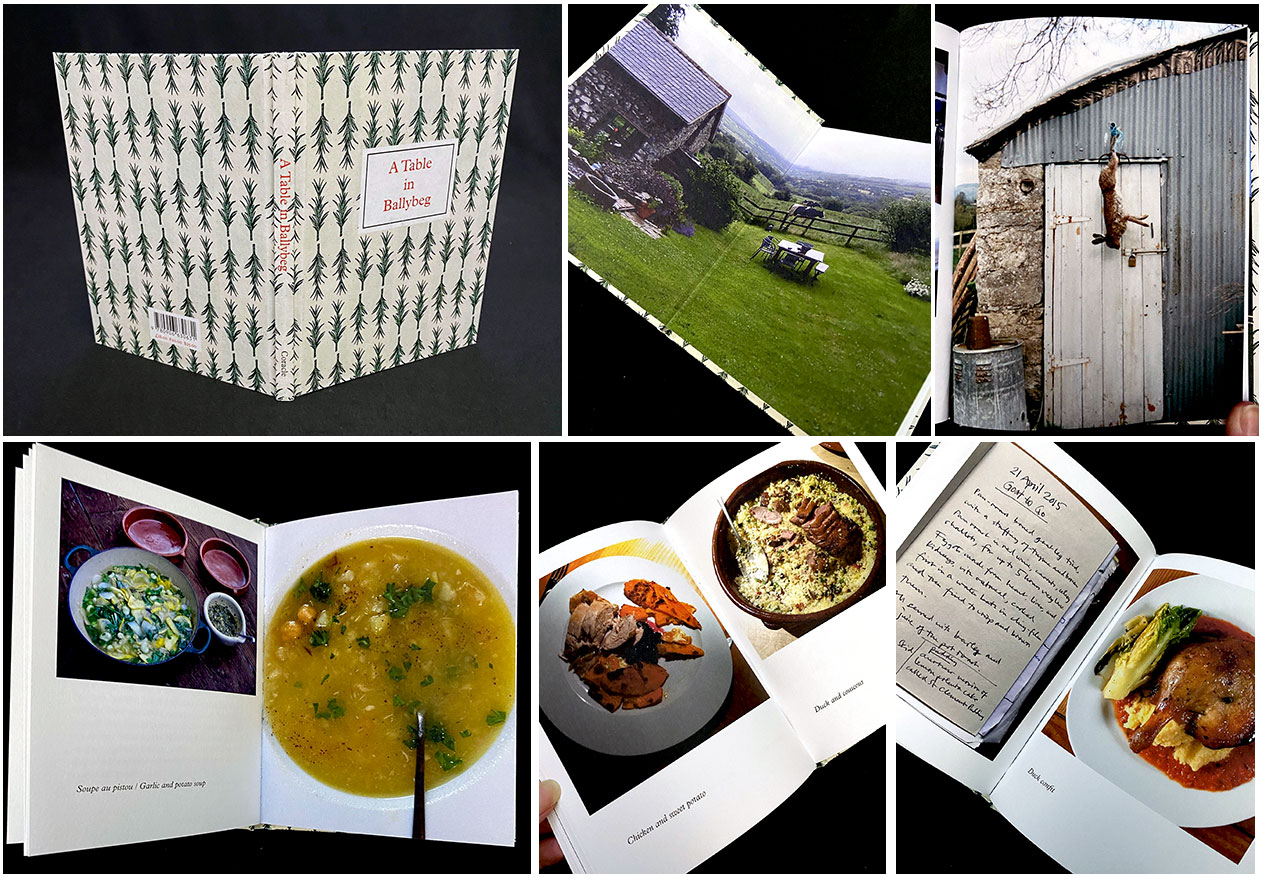
A Table in Ballybeg 64 pages; 185 x 145mm. Casebound paper over boards. Four colour offset. Coracle: "An edition of 250 copies made at the time of the epidemic lockdown in all of Europe, but where life in our valley was much as it usually is, but with no visitors. We have endured almost a year eating our own food, with no abatement. No cafés to visit. No tables to travel to. No take-away. We live in a suspension of the past and of the imagined future, anticipating a time when we can hang up the apron, if only temporarily." Excerpt: “this selection of dishes and images if largely an accident. What was photographed and sometimes listed becomes what we remember. This assembling is about foo d eaten immediately at the time it is prepared, shared and lingered over with friends. There are not recipes, just a chance occurrence of available produce modified by intention and previous use, sometimes permanent leftovers, the joy of ingredients within an attitude to eating.” |
 Click image for more |
A Walled Garden 9.5 x 7"; 192 pages. Casebound in cloth with embossed image and headbands. Numbered. Coracle: "'Walled Garden' reproduces for the first time the complete set of watercolours from the early nineteen eighties that Ian Gardner made in collaboration with Ian Hamilton Finlay for the unpublished book, 'A Walled Garden: A History of the Spandau Garden in the Time of the Architect Albert Speer'. Finlay conceived the project after corresponding with the former Third Reich architect in the late 1970s, shortly after the publication of Clara and Richard Winston’s English translation of 'Spandau: The Secret Diaries' (1976), Speer’s clandestine record of his twenty-year imprisonment in Spandau prison from 1946 to 1966, where one of his main pre-occupations was the making of a secret rubble garden from the debris of the courtyard. ... with an extensive commentary by Ross Hair." Albert Speer, letter to Ian Hamilton Finlay, 19 December 1979: “Small designs can be as fascinating as the largest building works in the world. In Spandau I conceived the idea of creating with bricks two sunken stone gardens which would satisfy my longing for architectural expression even more than the important designs I produced until 1942. And so I see in these two stone gardens a work which has found a privileged position amongst other buildings and designs.” Ian Gardner (1944–2019) - a British watercolorist who taught in the School of Art and Design at Bradford College. Ian Hamilton-Finlay (1925–2006) - a Scottish poet, writer, artist and gardener. $90 |
 Click image for more |
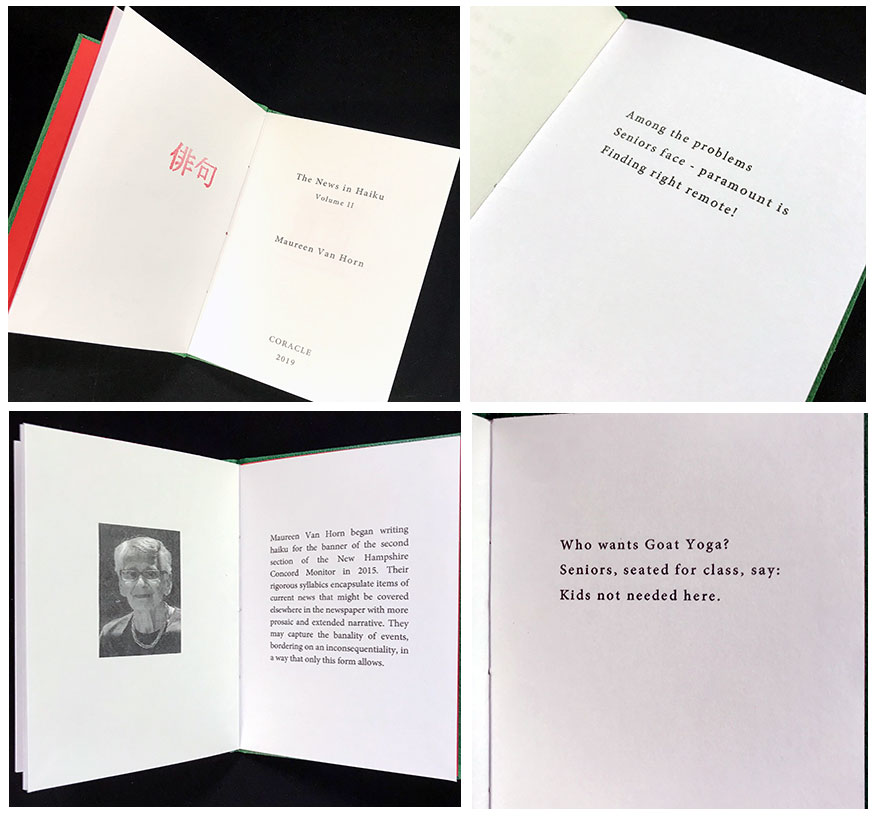
News in Haiku 6 x 4.25"; 32 pages. Red paper free end pages and pastedowns. Handsewn with green stiff wraps. Coracle: "Maureen Van Horn began writing haiku for the banner of the second section of the New Hampshire Concord Monitor in 2015. Their rigorous syllabics encapsulate items of current news that might be covered elsewhere in the newspaper with more prosaic and extended narrative. They may capture the banality of events, bordering on an inconsequentiality, in a way that only this form allows."
$18 |
 Click image for more |
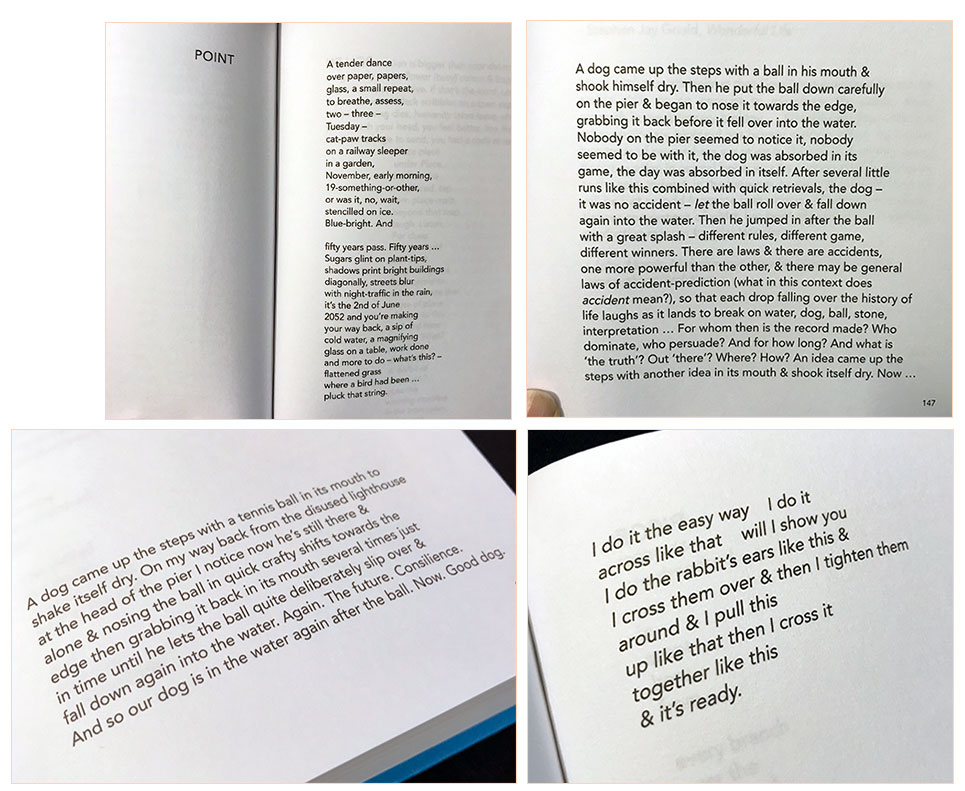
Play Book 5.75 x 8.5"; 188 pages. Printed digitally. Casebound paper over boards. Coracle: "Play Book' is the new collection of poems by Irish poet, Maurice Scully. His writing began in the early 1970s, and since 1981 he has published 10 books of poetry with publishers such as Wild Honey Press and Shearsman Books. Maurice Scully has been editor of a number of influential magazines (Icarus, and The Beau), and through the 1970s and 1980s organized important readings and literary gatherings, and over the years he has taken part in conferences and festivals in Ireland, the UK, and the US, where his readings are prized as key interpretations of his complex work." |
 Click image for more |
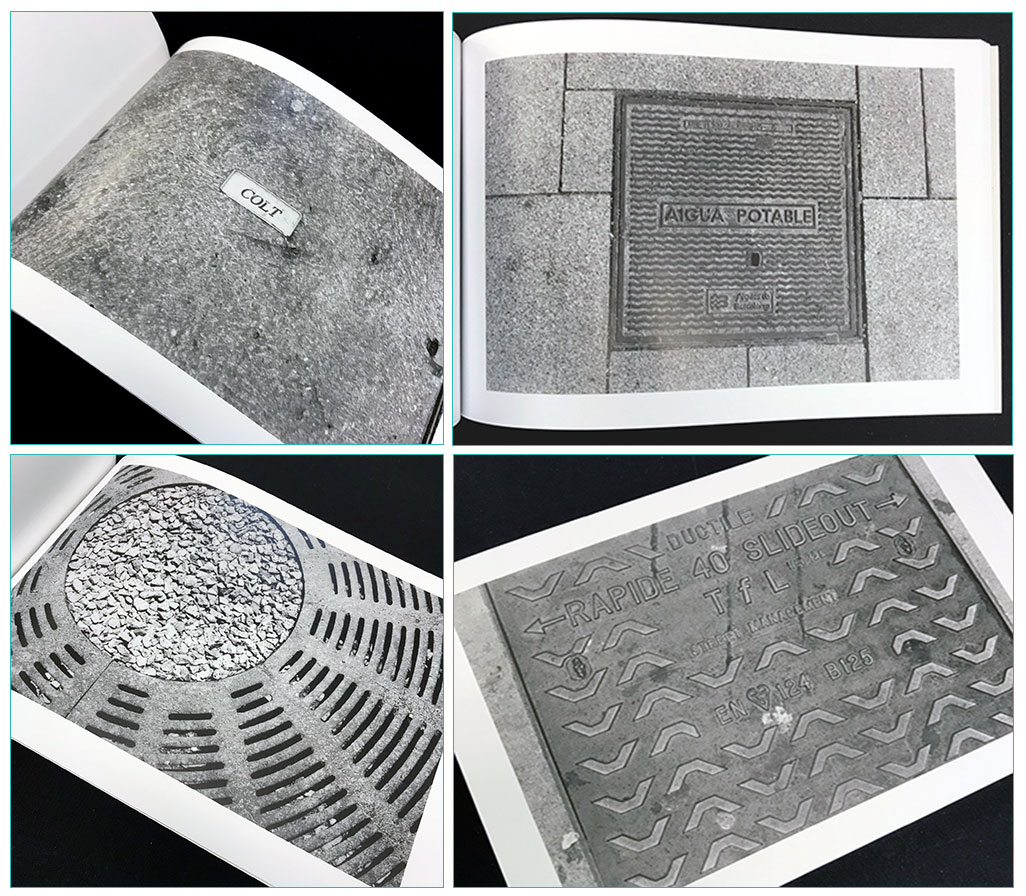
Street Signs 72 pages; 160 mm x 240 mm (6.3 x 9.4"). Softcover. Casebound with flaps. Offset printed. Photographs of street and pavement covers taken in various countries around the world in 2011. Each photograph with location and date documented. The overriding arch of Downbrough's work is examining the meaning of space and place (see Art Dictionary article accessed 8.19.19 https://www.hatjecantz.de/peter-downsbrough-5626-1.html). Peter Downsbrough: “With the word, one takes part in a dialogue, a discourse on its precise meaning. … The word for me is an object. It has both a precise and a vague meaning. It is a universe one is confronted with. But there is no obligatory way of reading.” |
 Click image for more |
The Balthus Poems 4.5 x 6.5"; 84 pages. Printed digitally. In pictorial wraps. Coracle Press: "This is the second book from Coracle of William Minor’s poems, after 'tree on the outside' from 2010. Here, by conjecture and statement surrounding the artist’s life and work, he presents an interior with the detail and form of a still-life. An intermediate book, P***y and Pigeon came from Shearsman Press in 2014." Coracle Press, jacket blurb: "In The Balthus Poems, fragment and detail again achieve a form of still-life, in this case surrounding the life and work of its protagonist. These poems move with their own innate syntax, detailing the enigma of the single phrase in its own space, and cohere through a particularly laconic sensibility." William Minor is an American poet residing in Los Angeles. |
 Click image to enlarge |
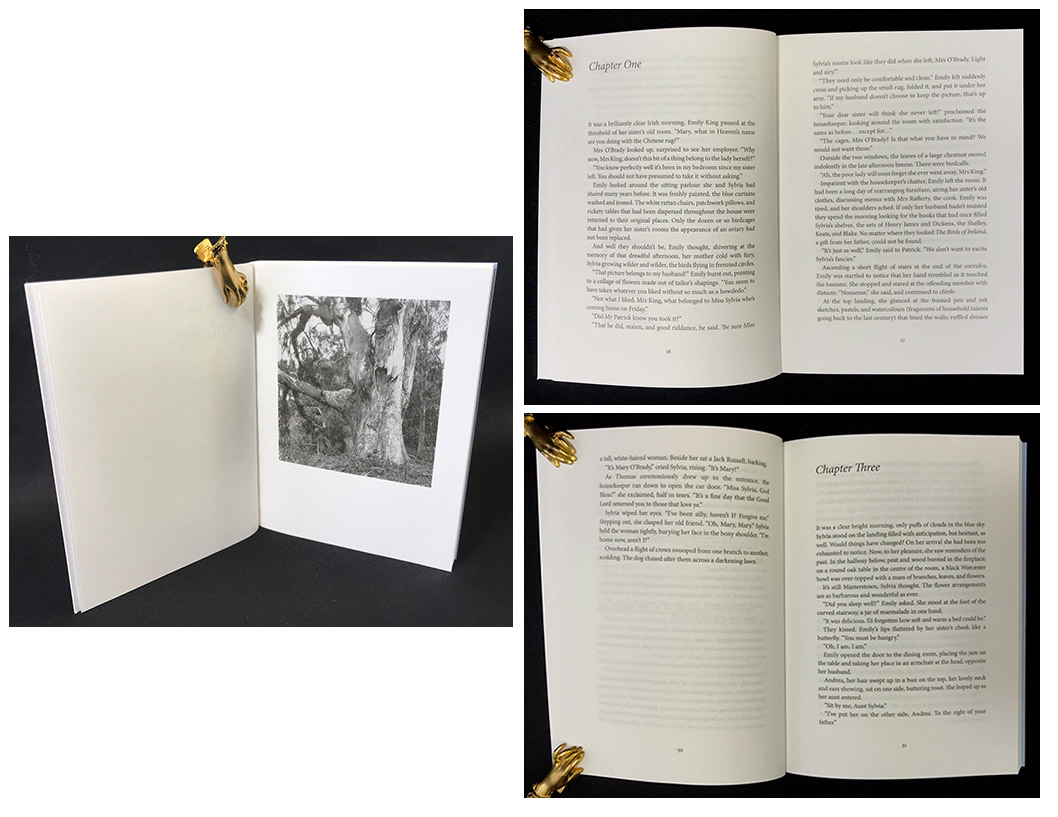
Birdsong 6.75 x 4.9"; 176 pages. Offset in two colors. Soft covers. Frontispiece and cover photograph by Joan Roth. Coracle: "Birdsong was written in the late nineteen nineties, and is based almost entirely on incidents and characters from William Roth's life in Ireland. First published posthumously in 2015, this memorial edition is issued to celebrate the inauguration of the William and Joan Roth Lecture at the University of Limerick beginning in April 2017. With postscript by Simon Cutts and Erica Van Horn of anecdotal jottings of lives unduly passed over, and the contribution of William and Joan Roth to the life of the arts in Ireland over a period of more than sixty years." |
 Click image for more |
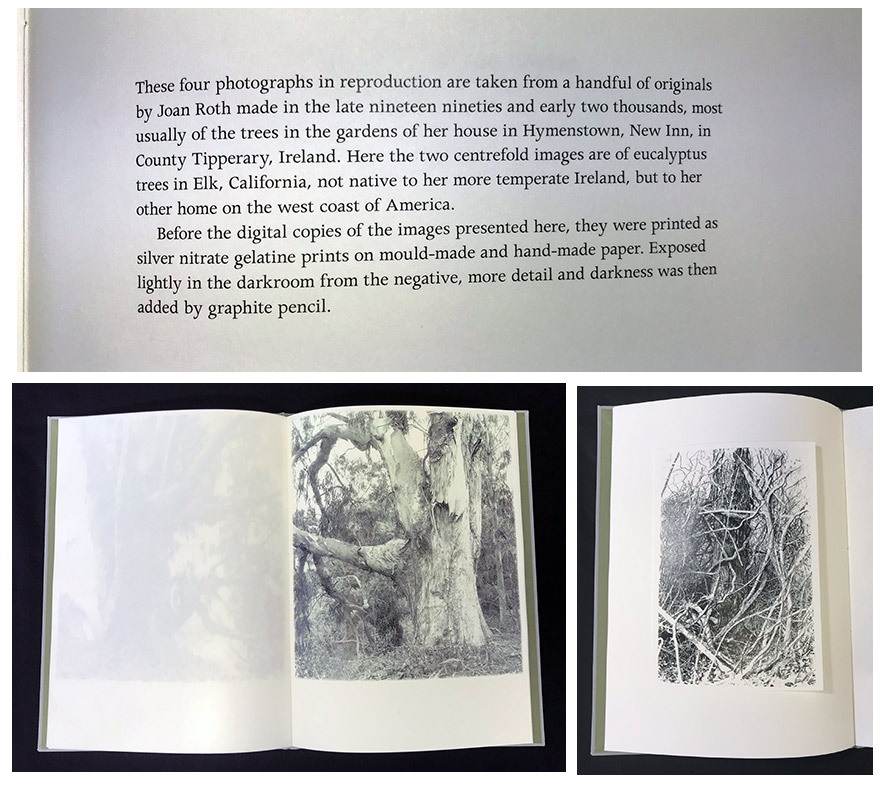
Four Trees 12 x 8.5"; 16 pages plus japanese tissue interleave. Printed digitally. Casebound with image on front cover. Numbered. Afterword: "These four photographs in reproduction are taken from a handful of originals by Joan Roth made in the late nineteen nineties and early two thousands, most usually of the trees in the gardens of her house in Hymenstown, New Inn, in County Tipperary, Ireland. Here the two centerfold images are of eucalyptus trees in Elk, California, not native to her more temperate Ireland, but to her other home on the west coast of America. "Before the digital copies of the images presented here, they were printed as silver nitrate gelatin prints on mould-made paper. Exposed lightly in the darkroom from the negative, more detail and darkness was then added by graphite pencil." |
 Click image for more |
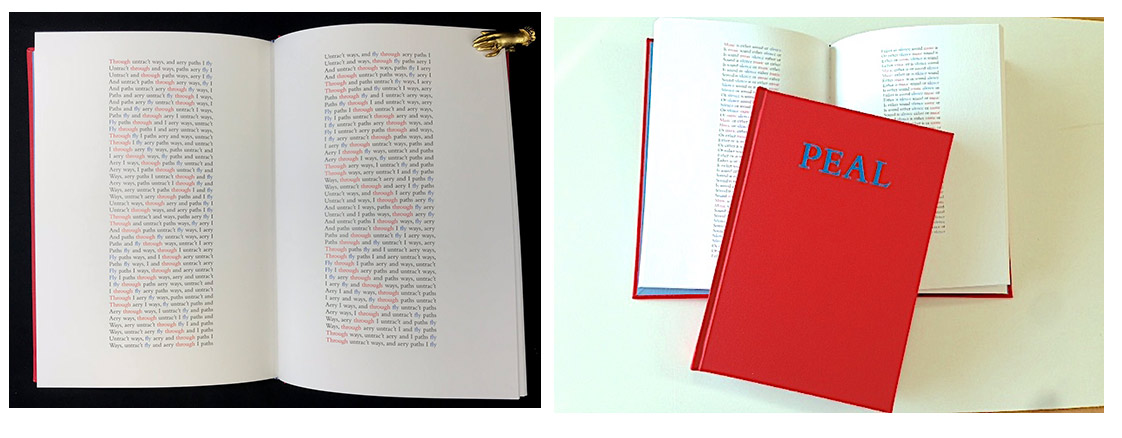
Peal 9.25 x 6.5"; 144 pages. Printed three-colour offset. Typography by Colin Sackett. Casebound with headbands. Coracle: "Syntax is to word order as melody is to note order. Peal explores the analogy of melody and syntax by applying the methods of bell change ringing to rows of words: poetic lines. Each individual poem begins with a line of four to nine nonrepeating words. That line is then permuted according to one of the methods, resulting in anywhere from 12 to 240 unique variations. By convention, the word corresponding to the heaviest working bell is coloured blue (the “blue line”) and the word corresponding to the treble or highest-pitched bell is coloured red. The starting lines—all quotations—form the cento that opens the book, where their inflections evoke thematic relationships. Their permutations create distinctive visual patterns as well as frequent semantic surprises. The methods have been chosen with an eye to the associations created by juxtaposing their names with the corresponding starting lines." www.randallcouch.com: "He is a regular panelist on the podcast series PoemTalk sponsored by the Poetry Foundation, PennSound, and Kelly Writers House. … He has published essays and book chapters on Susan Stewart, Harryette Mullen, Gabriela Mistral, Constantine Cavafy, Ezra Pound, and on ethics and reception in poetry translation. His poems have appeared in numerous journals and anthologies including Best New Poets and The Hide-and-Seek Muse. In 2000 and 2008 he was awarded poetry fellowships by the Pennsylvania Council on the Arts." |
 Click image for more |
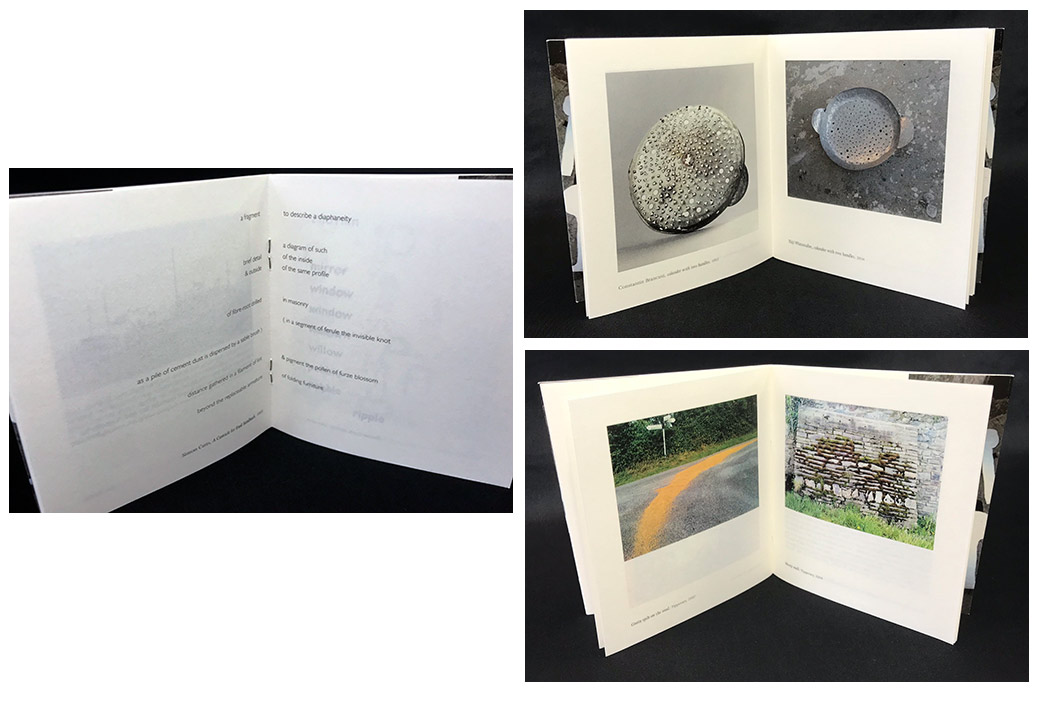
Brancusi's Sewing Box & Other works 5.9 x 5.25"; 36 pages. Digital in color. Softcover with flaps. Saddle stitch (stapled) binding. An illustrated catalogue for an arrangement at MAT Nagoya, Japan in the Minatomachi Potluck Building from September 22nd - October 23rd 2017 presenting the work of three artists against the backdrop of Brancusi's sensibility of art and the everyday. Introduction: "'Brancusi's Sewing Box & Other Works' is an extension of some recent books and related work from Coracle by Erica Van Horn and Simon Cutts, and new work made by Eiji Watanabe. "The titlework is a remaking by Eiji Wtanabe of some of the domestic objects of the sculptor Constantin Brancusi, used in his studio in Paris between 1923 and 1957. Towards the end of that period, they were given to his friends Alexandre Istrati and Natalie Dumitresco, around 1947. They in turn, continued to use them in their daily life. Eventually all these implements were put up for sale at the auction house Artcurail in Paris in late 2010. … "The clarity of these domestic objects endures, whatever disregard their presence engendered in the saleroom. They too are pure sculpture, and exist with the disposition of Brancusi's sensibility, his way of life, of having been made and used by him. We must remember that Brancusi said that 'All Sculpture is furniture!'" |
 Click image for more |
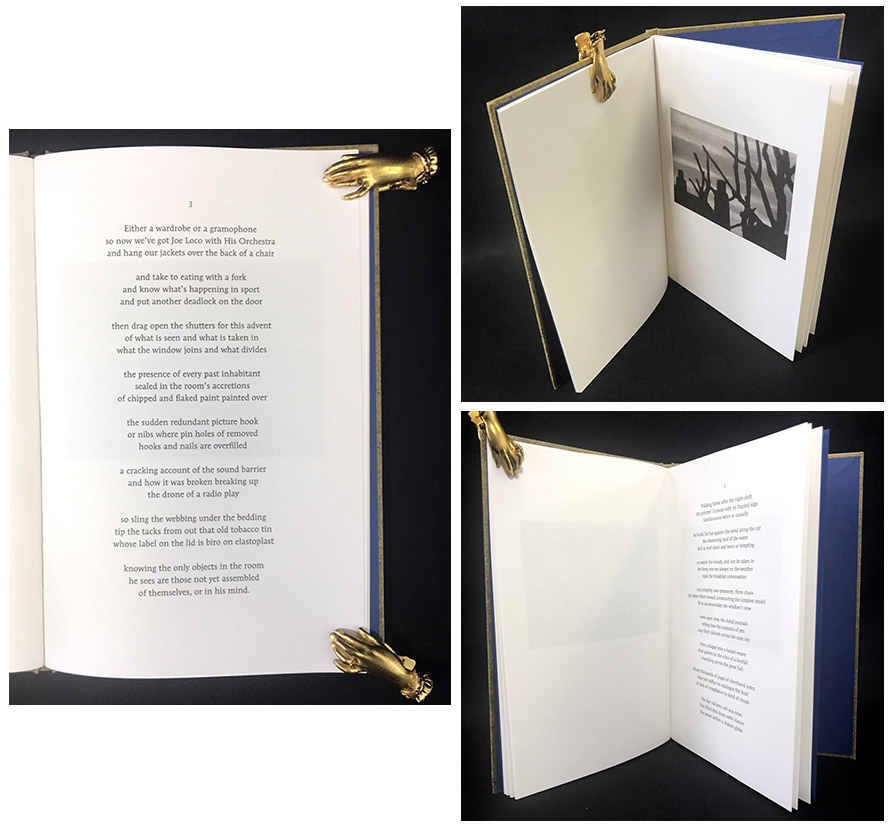
| The Window Paintings By Stephen Skidmore & a poem by John Bevis Ballybeg - Wien: Coracle & Galerie Hubert Winter, 2015. Edition of 200. 5 x 8"; 32 pages. Casebound. Paper over boards. 7 plates. Numbered. www.johnbevis.com (accessed 5/28/15): "A poem in six sections to accompany the monochrome paintings by Stephen Skidmore of the rooftop and treetop view from his window in Acton, West London, published by Coracle and Galerie Hubert Winter at time of an exhibition of the paintings in Vienna, spring 2015 "The Window Paintings follow on from Stephen Skidmore’s exquisite series of Rain Paintings, which looked down from the window of his bedsit – or ‘studio apartment’ – to the uneventful street below, its pavements and parked cars and blurry hints of apartment walls. Sometimes the focus strayed no further than the drops of rain fused to the window glass itself. Now, a new series of paintings looks up from the same viewpoint to treetops, rooflines and clouds, in almost colour-free compositions that re-examine the scarce variations of a view both mundane and ominous of the suburban dormitory. "The poem written to accompany the paintings is in six sections. It has a jagged, almost improvised quality which marks a departure from the author’s previous essays. Fragments of past lives of occupants of the room are imagined in a series of interactions between the view from the window, whether studied or glimpsed, and what is going on inside, in a montage described by Simon Cutts as ‘a cold-war narrative'." Galerie Winter: "What can be said about such an artist? His fellow student Simon Cutts provides us a comprehensive insight into Stephen Skidmore´s pictorial inventions: since almost 40 years the artist has lived and worked in a tiny apartment in London. In the first years he painted with gouache and acrylic , then started to use oil. Small sized paintings. In the early days, his landlady told him he couldn´t have pictures on the wall, so he kept them under his bed. Now it is too late for that. "From his living - bedroom at Avenue Crescent in Acton, West London, - renamed due to tenancy law into 'studio apartment’ – he painted looking through the rain on the window melancholic blurred street scenes , Rain Paintings. Now the same contemplating, blue view is captured by defoliated trees over the roof ridges, expecting the upcoming spring. ... A glance at the world outside the artist's comfort zone, reduced to black and white." $25 |
 Click image for more |
| Modern Dutch Interiors By Erica Van Horn & Simon Cutts Ballybeg, Grange, Clonmel, Tipperary, Ireland: Coracle, 2014. Edition of 150. 15 x 10.5 cm; 36 pages. Bound in cloth over boards with sample tipped on front board. Numbered. A collection of Dutch envelope interiors sent by Peter Foolen to Erica Van Horn. Afterword: "These from the Netherlands have a consistent simplicity and plain-ness. They employ reduced repetition, asymmetry, and even at times a formal randomness approaching camouflage. The use of a single firm yet impenetrable colour makes them different from the interiors of other countries. They bring the nineteenth-century origin of the printed envelope interior as a means of hiding the contents of the envelope into our time." $30 |
 Click image for more |
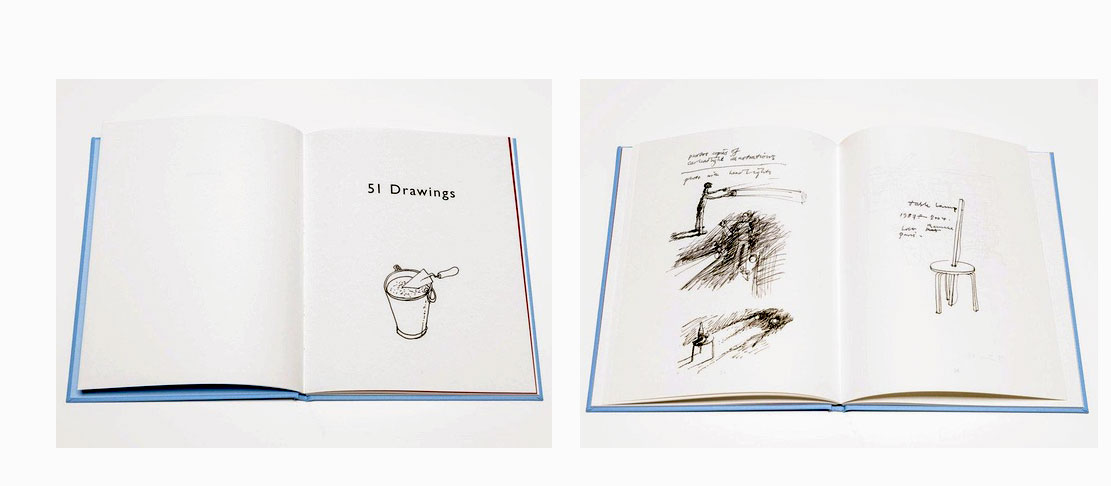
| 51 Drawings By Bill Culbert Ballybeg, Grange, Clonmel, Tipperary, Ireland: Coracle, 2013. Edition of 300. 260 x 210 mm; 64 pages. Casebound with 2-color blocking. Numbered. Coracle: "51 drawings were made over the last thirty years using Parker 51 reservoir and cartridge fountain pens, mostly on pieces of A4 office paper. They were selected and edited by Bill Culbert and Simon Cutts from drawings of Pens & Corkscrews, Shades & Lamps, Chairs, Tables & Other Furniture, Bottles & Glasses, Instructions for Installations, Diagrams & Listings, in January 2013." Bill Culbert is noted for his painting, photography, sculpture, and installation work and was New Zealand's representative at the 2013 Venice Biennale. $60 |
 Click image for more |
tree on the outside 4.5 x 5.875"; 156 pages. Offset printed. Perfect bound. Dark green folding self-wrappers with letterpress titles. Design and production by Simon Cutts. Minimalist poetry by William Minor. The small book begins with no title page. It launches into the poetry from the first turn of the page. $15 |
 Click image for more |
| Driven Out, Ditched, & Deserted By Jason Clark Ballybeg, Grange, Clonmel, Tipperary, Ireland: Coracle, 2008. Edition of 300. 5.125 x 6.75"; 36 pages. Offset interior with letterpress cover. Drawings and postscript by Jason Clark. Introductory poem "Autobahn Children" by Cralan Kelder. Number three in the flaps poetry series Jason Clark, statement: "My notebooks trace the interaction between drawing and its subject, the way it can inflect on it its own language, and conversely, the way a drawing interprets a subject as its own vernacular. In a monotone drawing everything is pushed to one extremity or another. The subject, striving to remain legible, contrives dialect for the drawing: hash-marking to suggest middle tones and outline where details would otherwise have been washed out. These contrivances are mental constructions, quite alien to the world of the eye. "The subjects I'm drawn to in my projects are Trees/Lines, of power lines and telephone poles amongst groups of trees, or Drive-Out, Ditched and Deserted, of cars abandoned in the wilderness, and the yet unnamed project of Army tanks that decorate the lawns of urban and suburban VFW meeting houses. "Drawn on location in ink, this book is as much a document of abandoned cars I've found while hiking in the woods of northern New England as it is a record of drawing decisions. The cars, abandoned along old logging grounds, ditched down ravines, driven in up to their wheel-wells in sandpits, burned and bullet-ridden, and left to disintegrate and then integrate into nature, are a dear armature for my work which tracts the edge where mark-making and legible image merge." Jason Clark graduated from Massachusetts College of Art. He currently resides in Vermont. $15 |
|
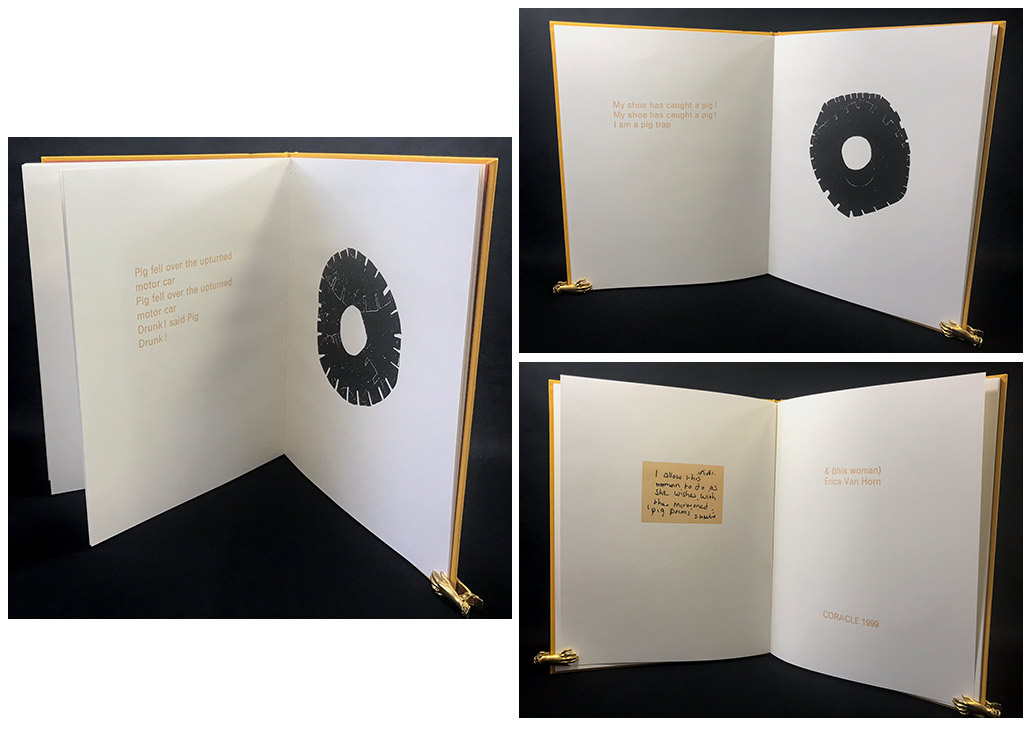
The Pig Poems 9.5 x 11.75"; 34 pages. Letterpress printed in two colors. Casebound in bookcloth with title, author, and image printed on front board. Colophon: "These poems were first published in Spike Hawkins' Poems, Tarasque Press, Nottingham 1966." Spike Hawkins, Liverpudlian poet, uses pigs in the work of Russian impressionist painter Mikhail Larionov as inspiration for three poems - "Target," "Liddled" and "Boiler." Each poem is accompanied by a different image, some version of a thick black ring (a gear? or gears?).
$70 (Last Copy) |
 Click image for more |
Poems Found In a Pioneer Museum
poets.org: "Susan Howe was born in 1937 in Boston, Massachusetts. She is the author of several books of poems and two volumes of criticism. Her most recent poetry collections are The Midnight (2003), Kidnapped (2002), The Europe of Trusts (2002), Pierce-Arrow (1999), Frame Structures: Early Poems 1974-1979 (1996), The Nonconformist's Memorial (1993), The Europe of Trusts: Selected Poems (1990), and Singularities (1990)." |
|
Simon Cutts is a poet, artist and editor who began Coracle in the early 19702. He began making work through concrete poetry. |
|
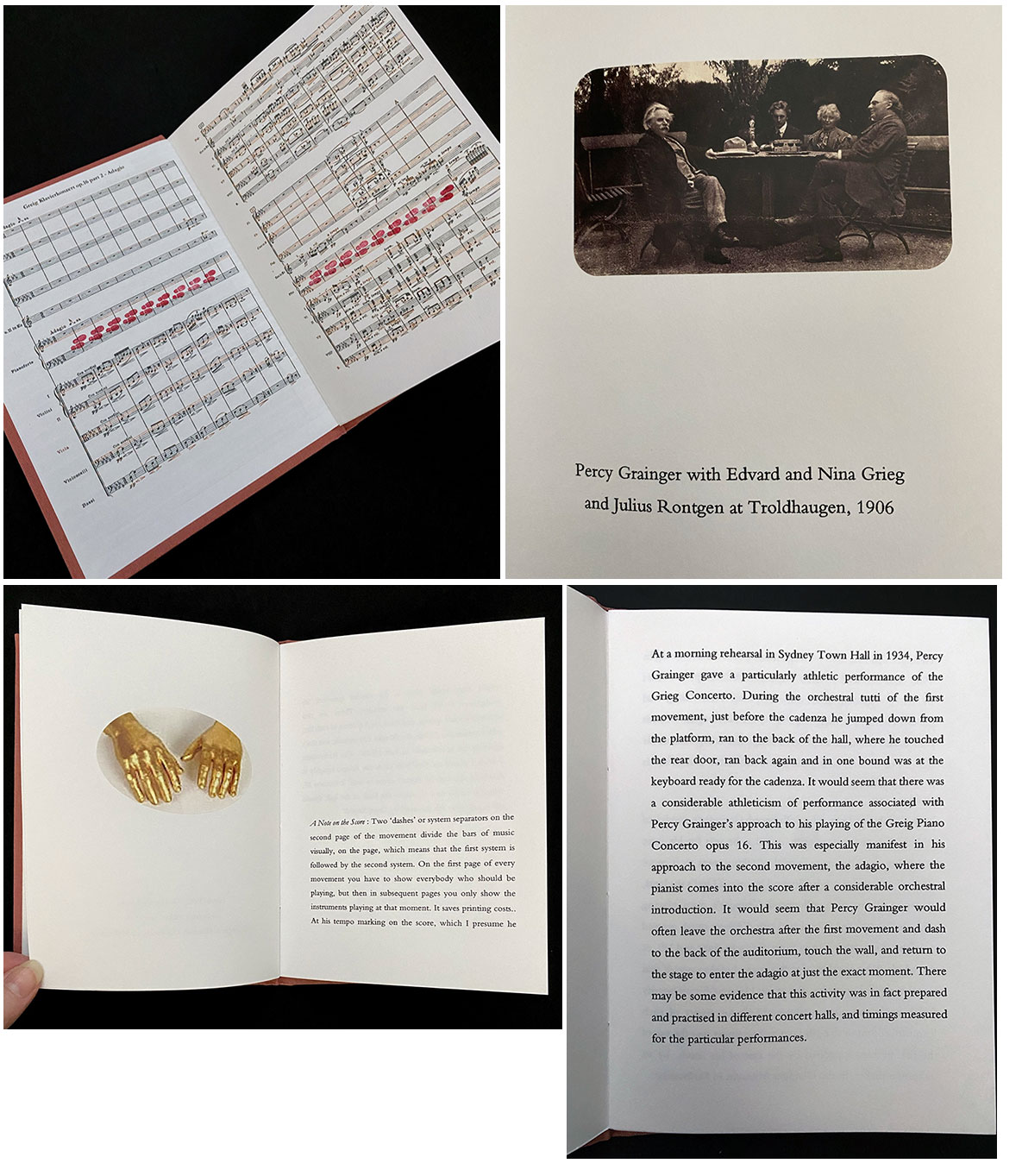
Percy Grainger's Dash 20 pages; 18.5 x 13.5 cm. Casebound, with embossed cover image and coloured endpapers of the score and Grainger's footsteps to his entry. Three tipped-in images. Coracle: "A history of the rehearsed dash made by the pianist and composer Percy Grainger, to arrive at the entry of the pianoforte in the second movement, the Adagio, of Grieg's Piano Concerto.” Introduction: “At a morning rehearsal in Sydney Town Hall in 1934, Percy Grainger gave a particularly athletic performance of the Grieg Concerto. During the orchestral tutti of the first movement, just before the cadenza he jumped down from the platform, ran to the back of the hall, where he touched the rear door, ran back again and in one bound was at the keyboard ready for the cadenza. … For Grainger, virtuosity was not restricted to the hands, but also extended to the feet, more as an athlete, and this principal became intrinsically linked to his unique interpretation of rhythm and articulation.” Wikipedia, 11.30.21: “Percy Aldridge Grainger (born George Percy Grainger; 8 July 1882 – 20 February 1961) was an Australian-born composer, arranger and pianist who lived in the United States from 1914 and became an American citizen in 1918. In the course of a long and innovative career he played a prominent role in the revival of interest in British folk music in the early years of the 20th century. Although much of his work was experimental and unusual, …” |
 Click image for more |
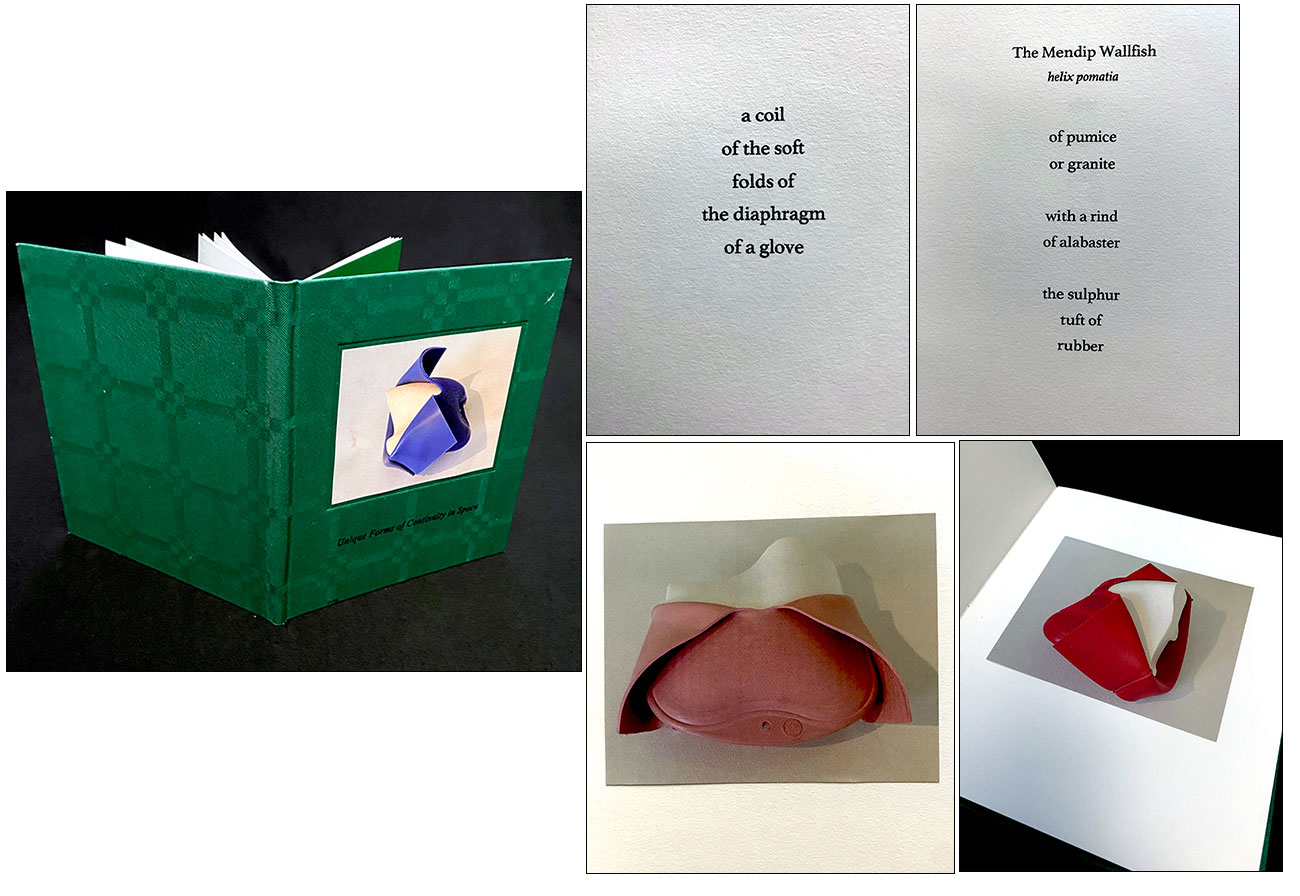
Unique Forms of Continuity in Space 36 pages; 17.5 x 15 cm. Casebound picnic paper over boards, with embossed cover image. Seven tipped-in images of the series and a facsimile of the 20 cent euro coin holding an image of the futurist piece. Numbered. Coracle: "A collaboration surrounding Maud Cotter's altered hot water bottle sculptures, referring in turn to the dynamic of Boccioni's work of the same title." Excerpts: "The 1913 sculpture Unique Forms of Continuity in Space by the Futurist Umberto Boccioni ... borrows from that Hellenistic sculpture of Nike … It is also perhaps in the same vein that the images of split hot water bottles with burgeoning plaster insets run parallel to the products of a sports and shoe company named after the Greek goddess herself. In the manner of such stylistically improbable pairings, initiated by the futurists with their manifesto, why not also these reconstructed hot-water bottles of Maud Cotter becoming pillows and purses, and which at their source and to this day are still called 'mezzo-maritos- in Italy - half-husbands!" End note: "The seven works illustrated here are taken from the set of 12 bottles made as a single work under that title." www.smarthistory.org: ”Unique Forms appears on the Italian 20-cent Euro coin and is both Futurism’s most famous symbol and a reminder that the movement itself was dynamic and did not always follow its own declarations. The Futurists sought to clear away the legacy of art’s history so that the future could come more quickly, but Unique Forms has often been compared to the ancient Greek Nike of Samothrace and Gian Lorenzo Bernini’s Apollo and Daphne. The Futurists wanted to destroy the museums, but in the end, their work was added to the canon of Italian sculpture.” |
 Click image for more |
Roger Ackling's Furniture 4 x 5.75"; 16 pages. Digital colour. Stapled binding. Illustrated wrapper. Coracle: "['Roger Ackling's Furniture' is one] in the on-going ephemera series. Illustrated essay by Simon Cutts, to correct the erroneously edited version in 'Between the Lines' published as 'Exhibitions at Coracle Press' by Occasional Press as a festschrift for Roger Ackling in 2016." Coracle held three exhibitions through the years showing Roger Ackling's work. Cutts' essay recaps the ideas of Ackling's work as well as the three exhibitions. Illustrations are work from those exhibitions. |
 Click image for more |
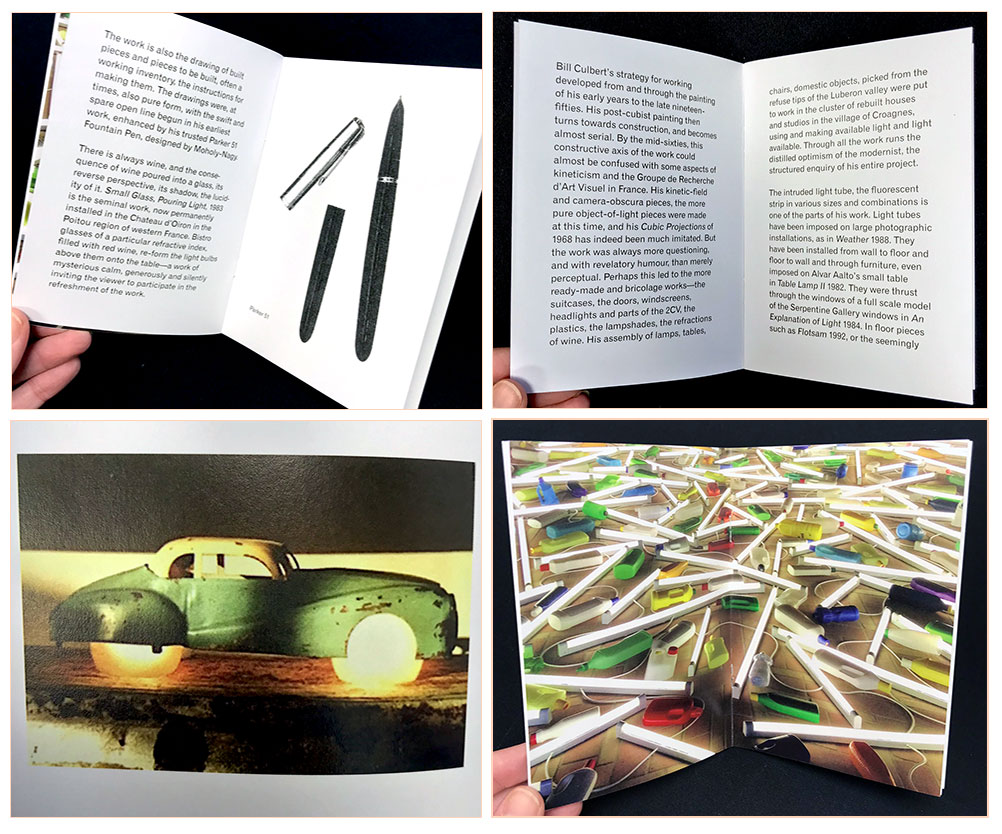
a slender horizon of light 4 x 5.75"; 16 pages. Digital colour. Saddle stitch binding (stapled). One in the on-going ephemera series by Coracle. An illustrated essay by Simon Cutts, after the demise of Bill Culbert in March 2019. Bill Culbert, wikipedia 1/16/20: " William Franklin Culbert MNZM (23 January 1935 – 28 March 2019) was a New Zealand artist, notable for his use of light in painting, photography, sculpture and installation work, as well as his use of found and recycled materials. … He was born in Port Chalmers, near Dunedin and divided his time between London, Croagnes in southern France, and New Zealand. He was married to artist Pip Culbert (1938–2016) and made many collaborative works with artist Ralph Hotere. ... Culbert began to experiment with electric light in 1967." |
 Click image for more |
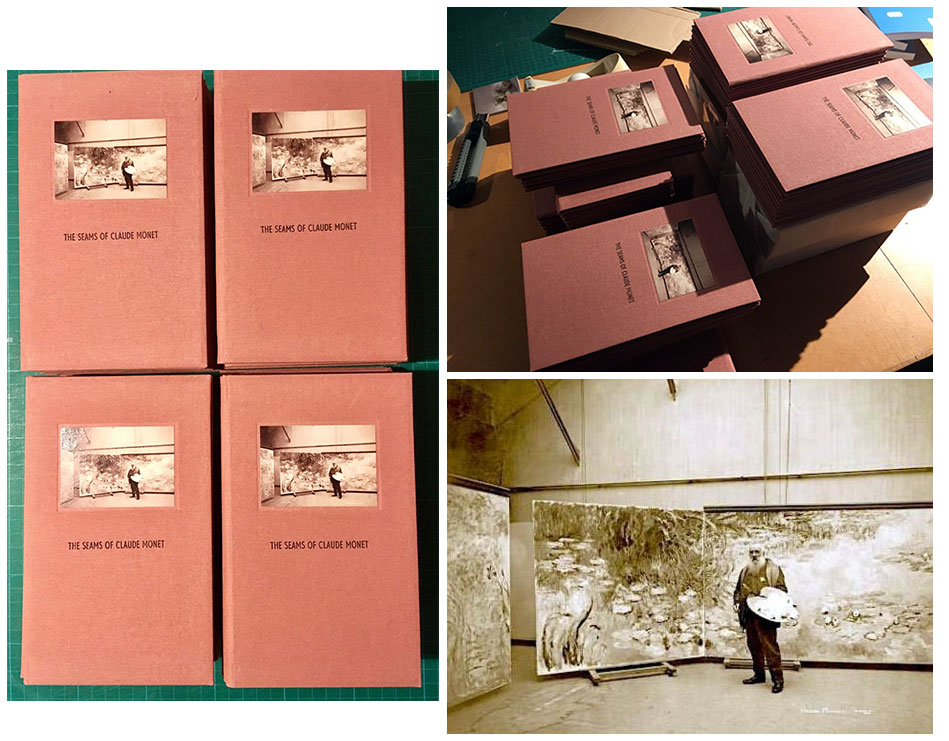
The Seams of Claude Monet 7.5 x 4.75"; 28 pages. Printed digitally. Casebound with embossed image. Cloth bound. Coracle Press: "An essay on the specificity of its subject. In order that Les Nymphéas might be accommodated in the Musée de l’Orangerie in 1927, the paintings had to be prepared in sections. For his purpose of instantaneous tonal perception, Monet painted false seams onto the canvas, thus rendering the breaks in the structure of the room, the real seams, indistinguishable. What was made as an astute gesture on the part of Monet, becomes upon further reflection an irony on the whole theoretical aims of the Impressionist movement. A spectator becomes accustomed to seams." |
 Click image for more |
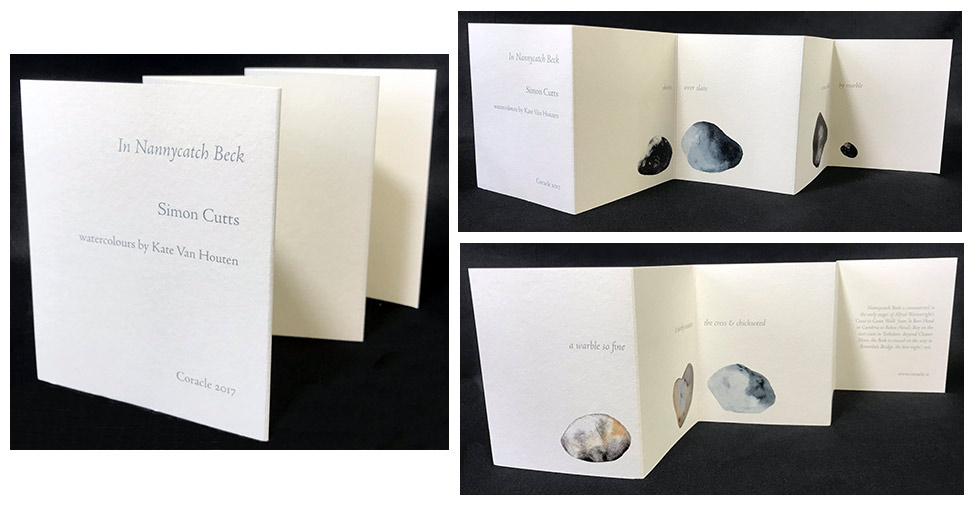
In Nannycatch Beck 3.5 x 4.5"; 5 panel concertina. Double sided. Printed digitally. In plastic wallet. Poem by Simon Cutts from 1995, with watercolors by Kate van Houten. Nannycatch Beck is a valley in Cumbria, Great Britain. Coracle: "Nannycatch Beck is encountered in the early stages of Alfred Wainwright's 'Coast to Coast Walk' from St Bees Head in Cumbria to Robin Hood's Bay on the east coast in Yorkshire. Beyond Cleator Moor, the Beck is crossed on the way to Ennerdale Bridge, the first night's rest." Kate van Houten is an American visual artist living and working in Paris. |
 Click image for more |
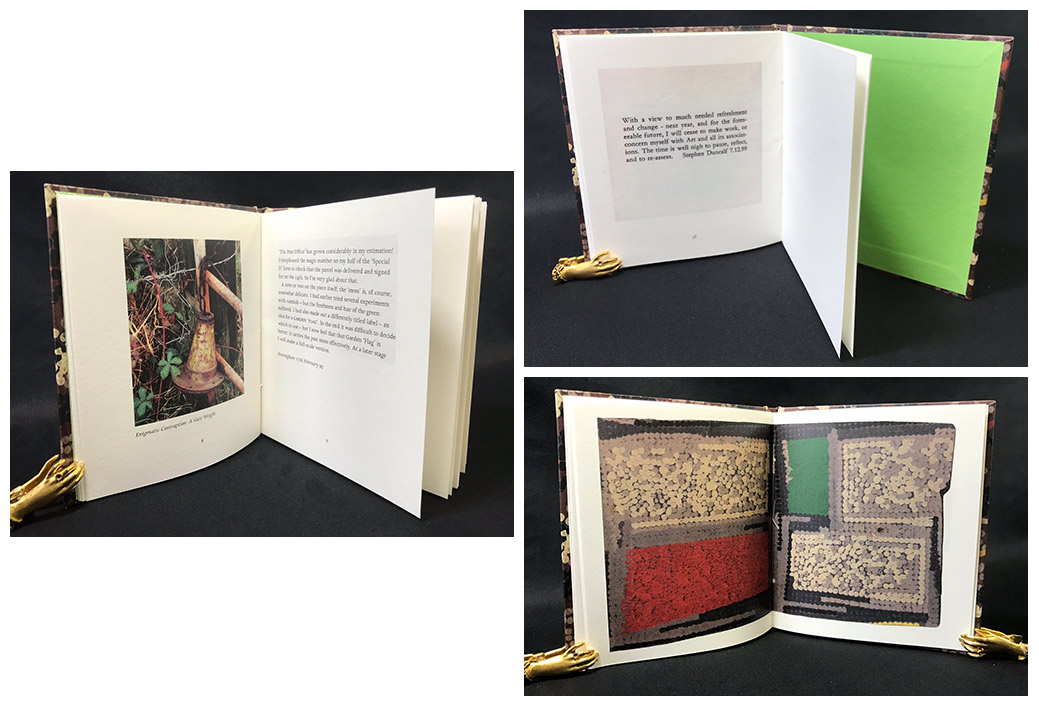
The 'X' Mas Files 6 x 5.25"; 44 pages. Digitally printed. Casebound paper over boards. Inset title label. Afterword: "The 'X' Mas Files is a random cross-section of extracts from the postcards, folding cards, and notes received from Stephen Duncalf during the period 1994 - 1999. Its title is not only an overt pun on the existence of the eponymous movie in dubious taste, but also descriptive of the annual cards and ephemeral offerings that printer-poets, artists and writers sent to each other around this time. These were sent by post, and firmly endorsed the mailing system that has so much part of the life of the time. "So much so, that the exchange here included two items despatched on floor-covering linoleum, that of the cover paper of this book, and also one isolated in the centre. "But taken overall, and from different times of the year besides that of supposed celebration, these jottings reveal the searching sensibility of their author, battle-hardened to the point of entrenchment, sheltering in a world of his own making." |
 Click image for more |
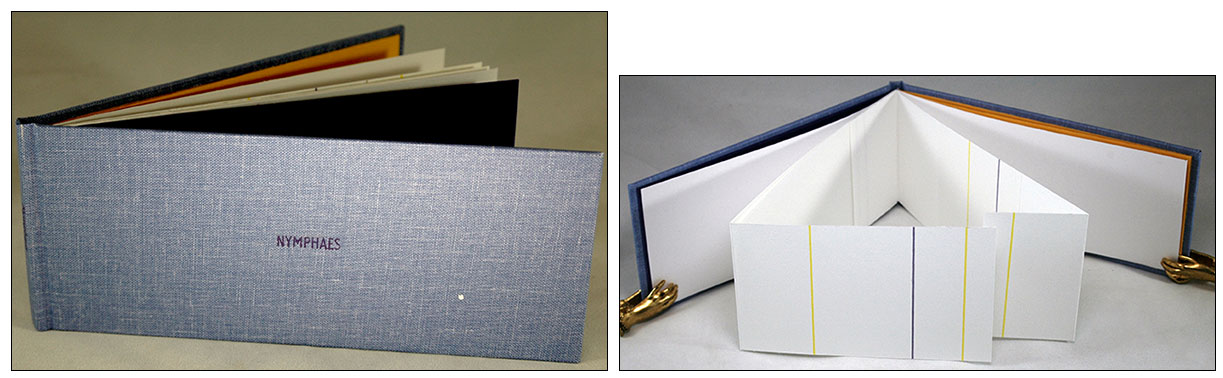
Nymphaes Simon Cutts: “The inter-relation of the pages and pastings is only atmospheric, and is a model of walking through rooms where a diagramatic camouflage and deception is happening.I suppose it is a book as some sort of architecture, and there is no explanation to it, only a being lost in rooms and flaps.” |
 Click image for more |
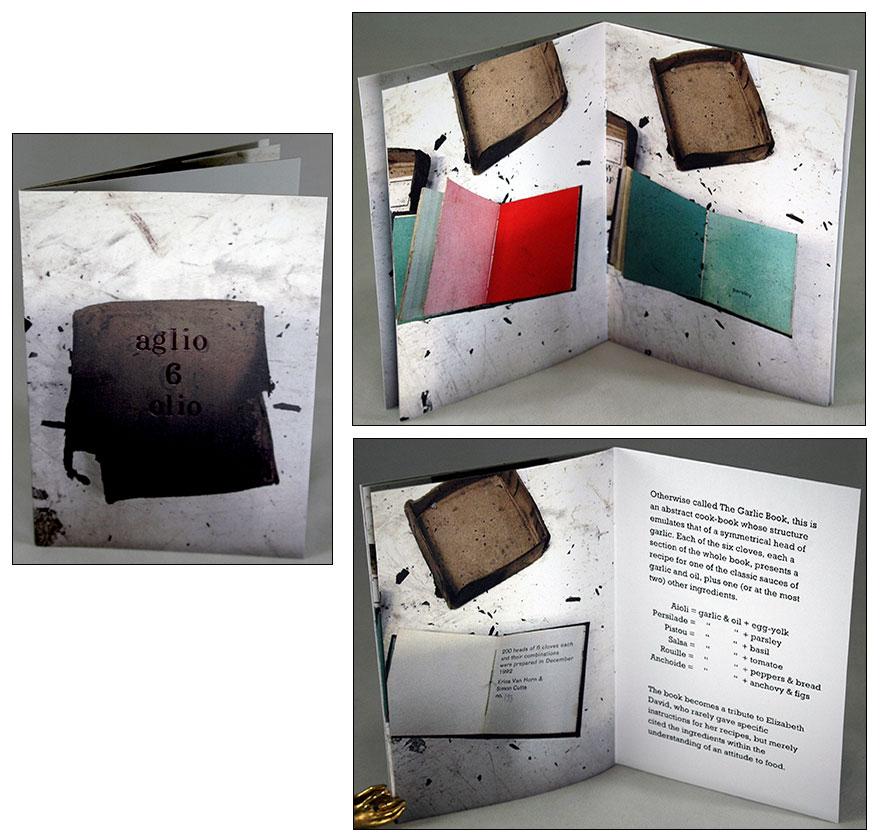
| aglio 6 olio By Simon Cutts Clonmel, Tipperary, Ireland: Coracle, 2015. Edition of 200. 4 x 5.75"; 8 pages. Digital print and letterpress. Laminated cover. Saddle stitch (stapled) binding. Coracle: "aglio 6 olio, from 1983, was one of the 81 books salvaged from the fire in the Mackintosh Library at the Glasgow School of Art on May 23rd 2014. This was the only Coracle book to be affected, and was photographed by the Librarian, Mr. Duncan Chappell in June 2015. " $8 |
 Click image for more |
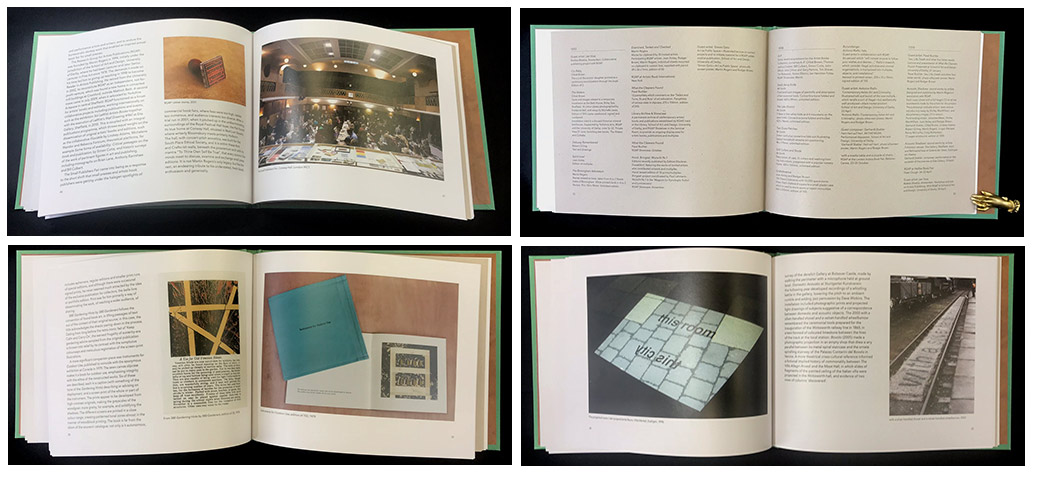
| Construction Storage Despatch The Work of Martin Rogers By Simon Cutts Clonmel, Tipperary, Ireland: Coracle Books, 2015. Edition of 300. 22 x 16.5 cm; 74 pages. Four-colour offset. Case bound. Coracle: "Martin Rogers, printer, sculptor, and publisher, was the exemplar of a condition that had become prevalent after the nineteen-sixties. He had moved the physical materials of his work to the production of multiple objects in printed form, to books and publication, eventually embracing the idea of publishing as the platform for the work. At the same time, in the way he avoided the side-track, even the cul-de-sac, of the so-called artists book, he becomes emblematic of that repositioning. With his book we attempt to site this as a different model. The work moves from its Construction through Storage to its Despatch into world as Publication." Contents include "From Construction to Publication" essay by Simon Cutts; three essays ("Construction," "Storage," "Despatch") by John Bevis; a section on RGAP (Research Group for Artists Publications) with inventory of books and editions, collaborations, exhibitions and events; and closing essay ("bagatelle") by Simon Cutts. $18 |
 Click image for more |
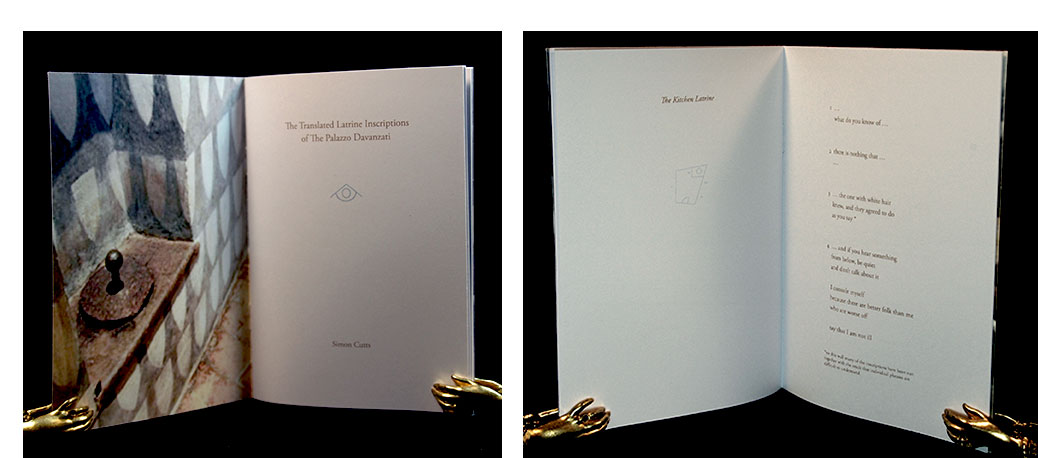
| The Translated Latrine Inscriptions of The Palazzo Davanzati | |
| By Simon Cutts Clonmel, Tipperary, Ireland: Coracle Books, 2015. Second edition, 300 copies. 4 x 5.75"; 12 pages. 4-page laminated cover. Saddle-stitched binding. Printed digitally. Originally printed in 1993 in an edition of 200 copies as a cloth covered hardback. Johanna Drucker, 1993 edition Project Statement: "The book contains transcriptions and translations of graffiti found in the latrines of the Palazzo Devanzai which was built in Florence in the 14th century. Some of the inscriptions are dated, some are not, all are translated. The book also provides a floorplan of the interior of the Palazzo showing where the graffiti were found. The book is a slim, elegant work, designed with a clean and minimalist aesthetic, as a curiously human document through its traces of experience and expression captured from the walls and obscurity." Simon Cutts, afterword: "The Palazzo Davanzati in Via Porta Rosa, Firenze, … contained not only one of the first sewage systems, but also perhaps the first graffiti in the form of inscription on the lavatory walls. These may have been produced by citizens, who whilst waiting their turn to be assessed for land valuation, killed time and found an outlet for their impatience by writing on the walls. All of the inscriptions were made by unskilled hands, often devoid of the most rudimentary notion of spelling. The words also prove difficult to decipher both because they are at times barely distinguishable from the plaster surface, and because they have often been superimposed over each other. On occasions, as a result of an unusual character being included in the word, doubts are raised as to whether a number of them have been adulterated by later additions." $10 |
 Click image for more |
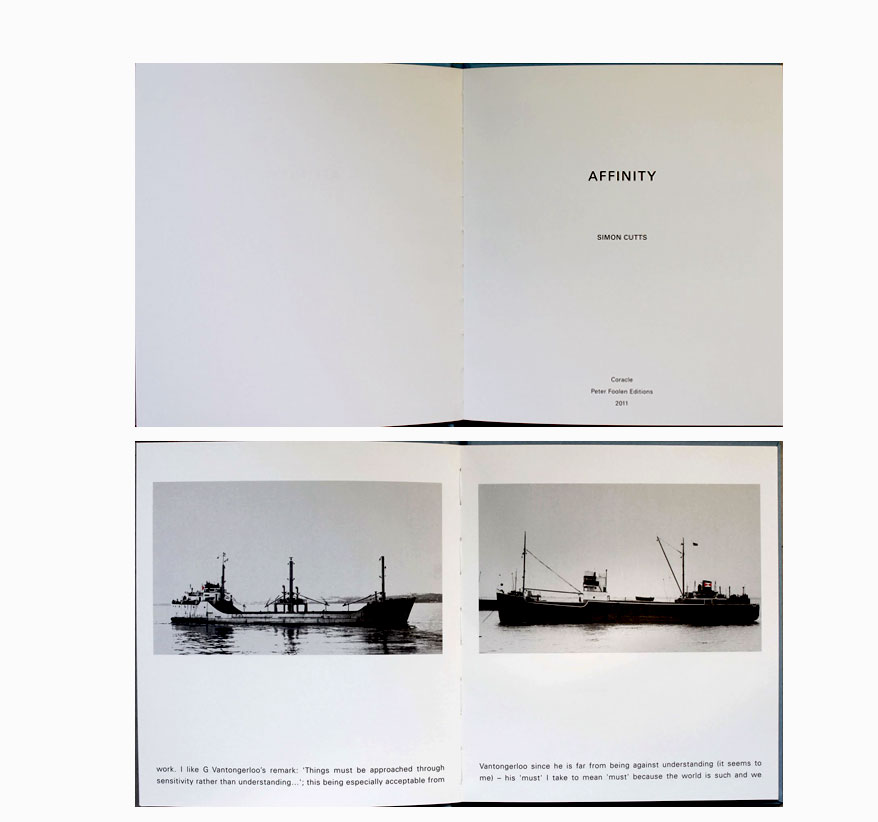
Affinity 7 x 8"; 40 unnumbered pages. Printed in duotone offset lithography by R. Booth, Penryn, Cornwall. Photographs of the A boats of the Everard Line taken from The Allen Collection. Hardback linen covers with embossed block printing in 3 colors. Design by Simon Cutts and Peter Foolen. Another of Simon Cutts' wonderful but maddening simple and confounding productions. This book combines images of the ships from Everard Line whose names begin with A (Affinity is notably – or not – not present) and a letter on the subject of concrete poetry from idiosyncratic and combative Scottish poet and artist Ian Hamilton Finlay to Pierre Garnier. As is usual with Coracle productions, there is much to be pondered and learned – and enjoyed – from this mix of particularity and peculiarity. |
 Click image for more |
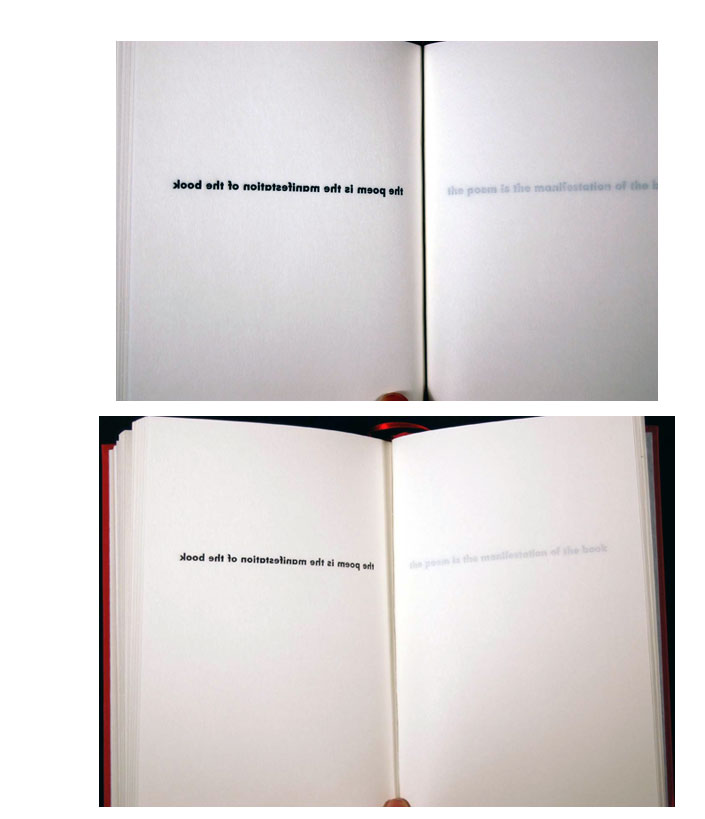
| The Manifestation of the Poem By Simon Cutts [Clonemel, Tipperary, Ireland]: Coracle, [2011]. Edition of 100. 5.375 x 8.25"; 138 unnumbered pages. Ribbon marker. Red linen covered boards. Title information stamped on spine. The only text of the book is this: "The book is the manifestation of the poem." At the books beginning, the text is printed in reverse on the recto, but shows through, in proper order, on the next verso. Midway through the book, there is a switch: the text is printed in reverse on the verso, but shows through in proper order on the preceding recto. The purity and playfulness of this book document yet again a subject that has fascinated Simon Cutts: finding the objective correlative for concrete poetry in the book. $120 |
 Click image for more |
| Six Jugs of Bill Culbert With interleavings by Simon Cutts Ballybeg, Grange, Clonmel, Tipperary, Ireland: Coracle, 2011. Edition of 125. 5 x 7.5"; 24 pages. Inkjet and letterpress on Canaletto paper. Casebound. Numbered. Coracle: "The images of six jugs of Bill Culbert from 1980 used in miniature. They exist both as objects and photoworks in their original format and here are placed alongside interleavings by Simon Cutts." broken glass cut / to an ellipse / & polished / to the beaded / meniscus / of a pour. Bill Culbert works in sculpture, installation, and photography. He has collaborated with Simon Cutts on several books including "Some More Notes on Writing and Drinking." $55 |
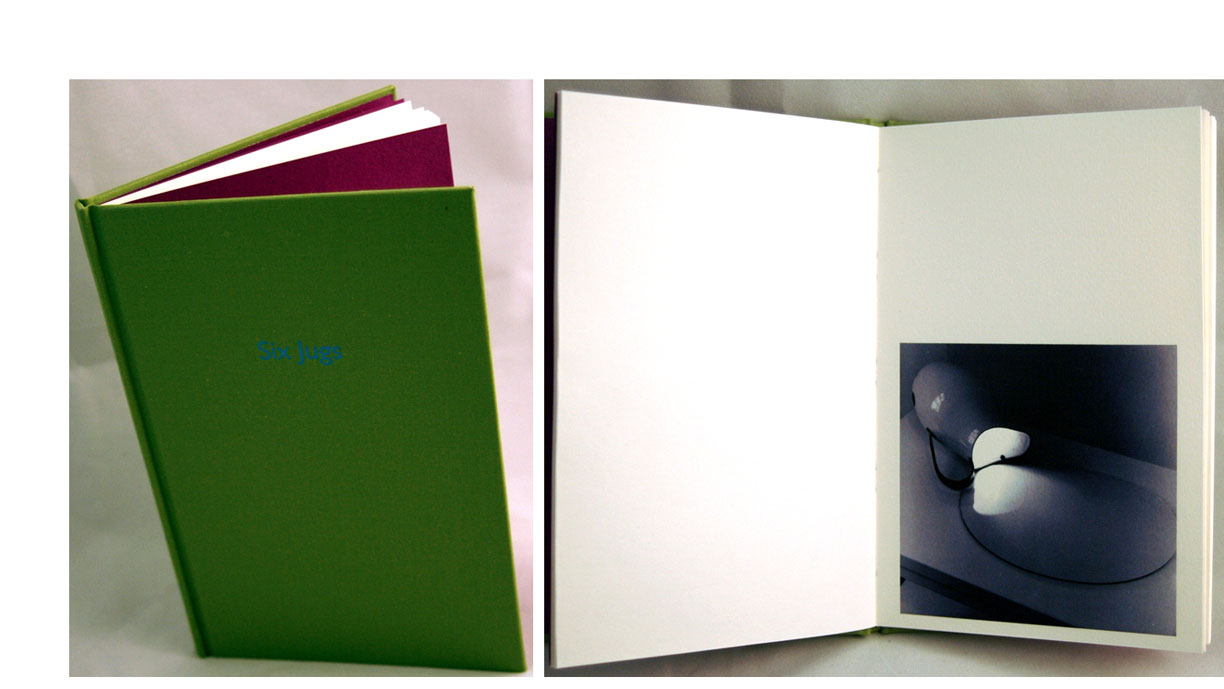 Click image for more |
| onglet By Simon Cutts Ballybeg, Grange, Clonmel, Tipperary, Ireland: Coracle, 2009. Edition of 125. 5 x 7"; 32 pages. Letterpress printed. Cutting and embossing. Casebound, sewn binding, cloth over boards. Title stamped on front cover. Ribbon marker. Numbered. Coracle Press: "Elaboration and demonstration of the term onglet with much hand-finishing as the only means of production. Companion volume to the earlier eclogues, but the metaphoric structure of the book works here as a more linear device." The French onglet receives a Simon Cutts and Coracle treatment – as a single-leaf cancel, a tab or thumb index, a guard, a miter joint or box, a thumbnail groove, the unguis of a petal, [his mother's] embroidery thimble, and a hanger steak. In Printed in Norfolk: Coracle Publications 1989-2012 John Bevis refers to onglet as "playful" and "a unique testament of crazy logic." $55 |
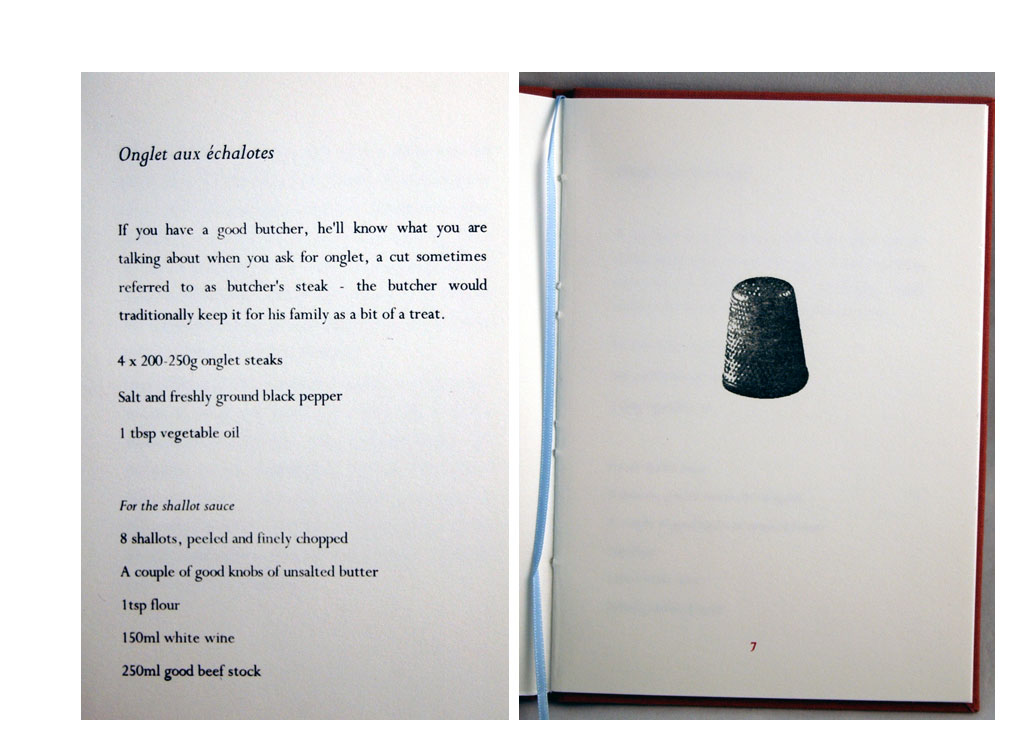 Click image for more |
| An English Dictionary of French Place Names By Simon Cutts Tipperary, Ireland: Coracle, 2004. Edition of 300. 6 x 8.5"; 144 pages. Offset in two colours with letterpress tab-index. Casebound in green leather with title stamped on front board. Green ribbon book mark attached. This books looks like a guidebook. Instead, it's a poetic record of travel to France by Simon Cutts and Erica Van Horn from 1989 to 2004. The book is outfitted with green alphabetical tabs that index the names of French cities and towns alphabetically. Next to each city's name is a number identifying its department (that is, its region, what would be a state in the US). A map of these departments is included along with a few photographs and the instruction to "pronounce all French place names as in English." Simon Cutts: "The poem's manifestation becomes the book itself, the particular book form the physical metaphor of the poem. " $55 |
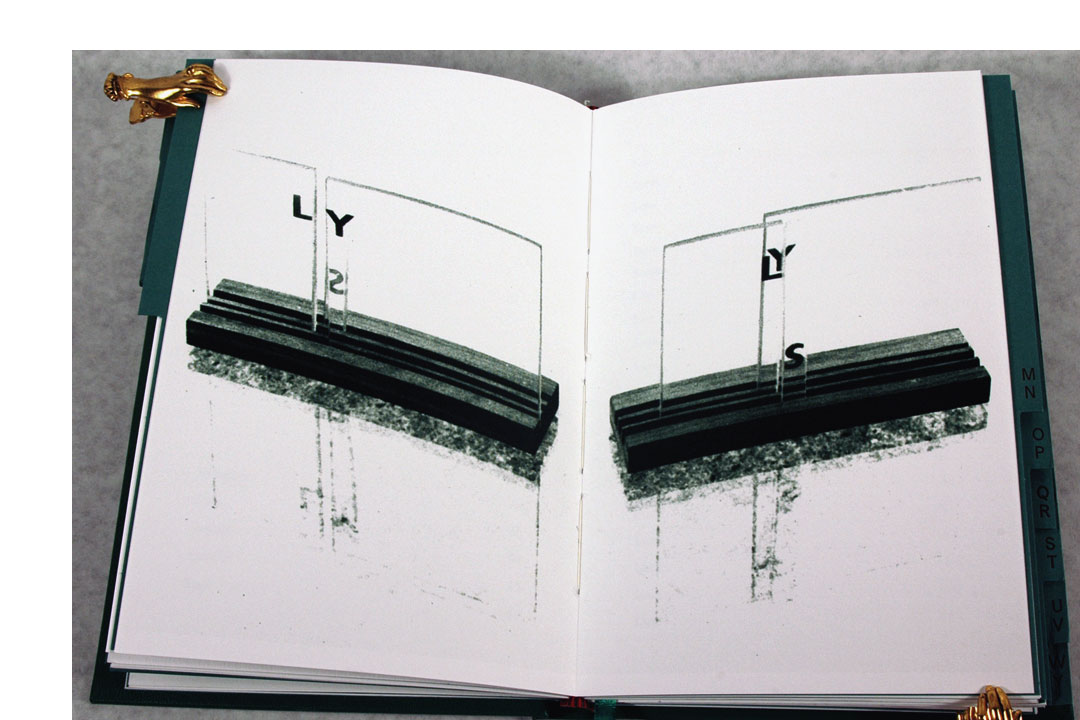 Click image for more |
| Namenlosen By Simon Cutts & Colin Sackett Docking, Norfolk, England: Coracle, 1993. Edition of 130. 7.5 x 10.25"; 56 pages. Letterpress in two colours with blind-embossing. Casebound paper over boards. Simon Cutts: "Namenlosen is the word for those shipwrecked who have no name - Naufragiste in French. So my book with Colin Sackett presupposes several mythic names from the annals of Modernism lie on the seabed stacked on top of each other as the printed impression dissipates through the pages of each section. It presupposes they are lost at sea, in the welter of other names and information. "As to the Yeti of the cover, there is no clear answer, but the whole seems to work on a level of tactility and the physicality of letterpress printing and ink." $55 (Last 2 copies) |
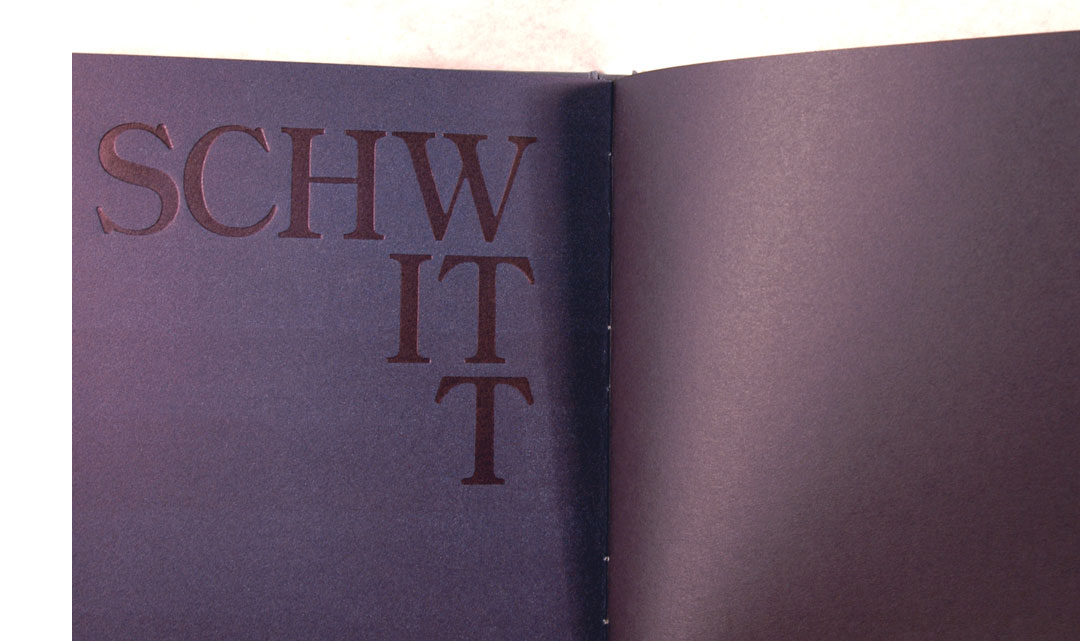 Click image for more |
Utopiary
|
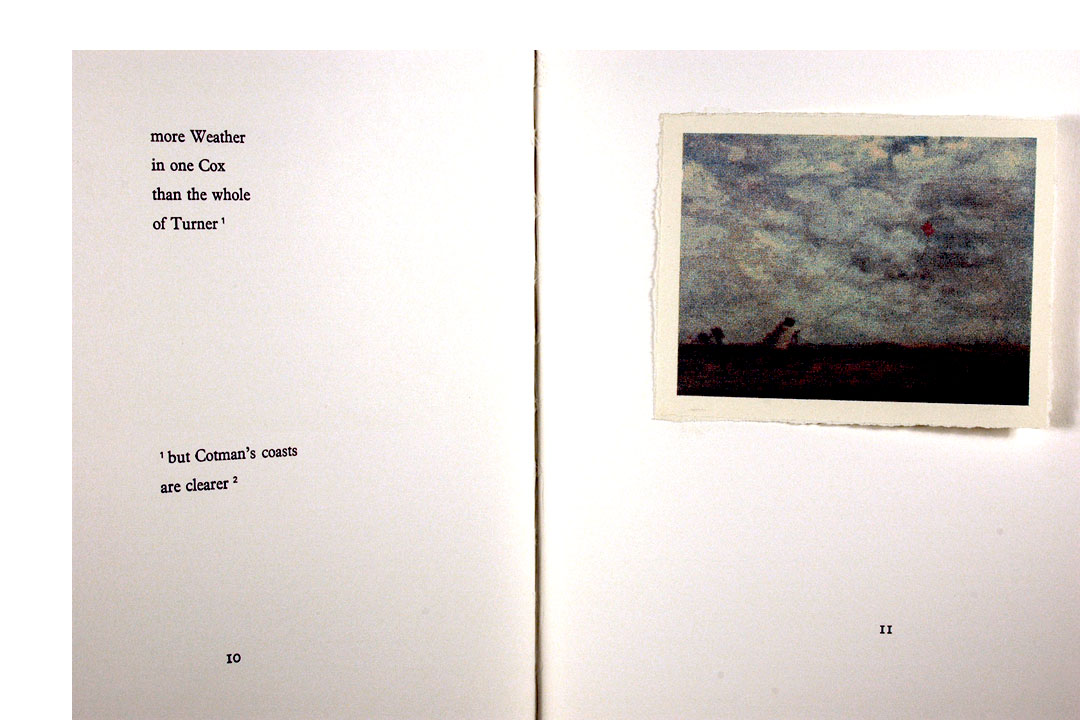 Click image for more |
Coracle is a small publishing press directed by artist and writer Erica Van Horn and poet, artist and editor Simon Cutts from what was a small farm in between the hills of South Tipperary Ireland, since 1996. |
|
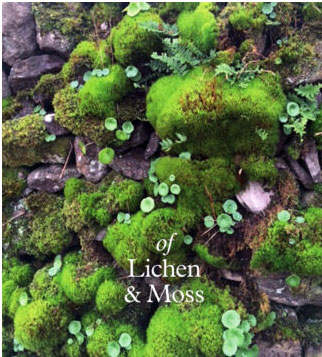
of Lichen & Moss 32 pages; 125 x 140 mm. Digitally printed. Casebound paper over boards. "of Lichen & Moss" features drawings by Kate Van Houten which accompany short vignettes by Erica Van Horn. Kate Van Houten has collaborated on Coracle publications before such as "In Nannycatch Beck". She has an interest in nature and natural materials. We often overlook these small offerings of the natural world but she brings them forward with her art. Vignette by Erica Van Horn, Entry 3: “Every stone in the dry stone wall is covered in moss. The vertical wall is green and soft and undulating. The moss makes it impossible to focus on the edges of the stones.” Vignette, Entry 7: “I have been amassing a collection of silvery lichen up near the orchard. Each time I walk past I add a few more pieces of lichen or else I add a stick that some lichen attached to it….” |
 Click image to enlarge |
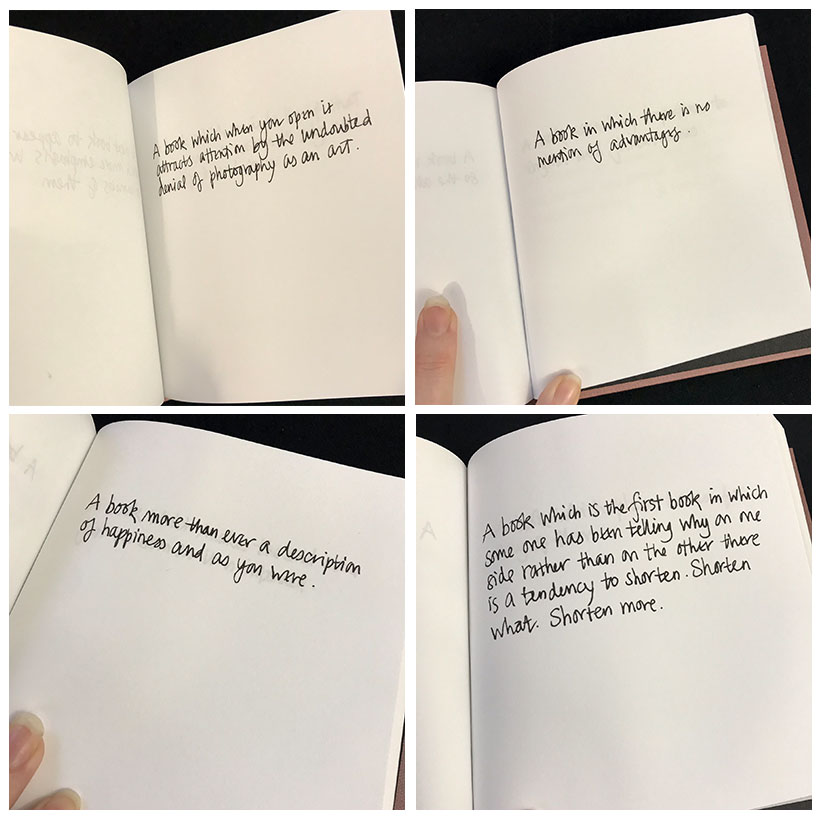
Descriptions of Literature by Gertrude Stein 5.5 x 6"; 144 pages. Casebound paper over boards. Erica Van Horn: "Her line length was not made by any particular decision. The length of her lines was determined by the width of her ruled notebook page. I did not worry about my line length being shorter than hers. I did not even think about it. Her sentences went from handwriting and later they were typeset and now they are handwritten again. This is just the way things sometimes happen. Writing someone else’s list has been a joy. Handwriting these sentences by Stein has provided me with a glorious kind of escape. It is not my writing. It is her writing. I am not the author. I am the writer. But as I am writing her writing, it demands all of my attention not to change things to make them into my own. As I write one of her sentences in this list of descriptions, I decide that the sentence I am writing right then is my absolute favourite of these sentences and then when I am involved in another sentence and I have to write it again and again to get it written right, I decide that that sentence is my favourite in this list of sixty-six sentences. Having a favourite is just a small thing because I am immediately on to the next sentence and once again I must copy and consider and write as carefully as my poor stiffening hand will allow. This is an exercise in restraint but it is a freedom too. I love the physical and hypnotic movement of my pen on the page. I love writing by hand." |
 Click image for more |
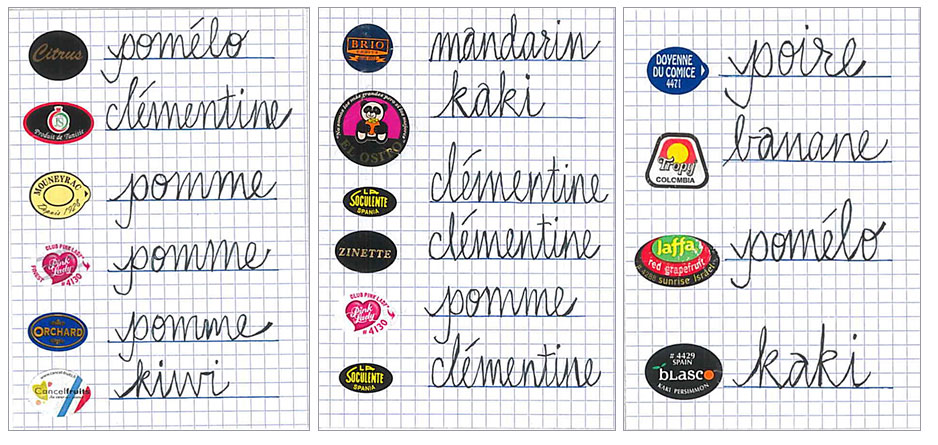
133 Fruit Labels 5.75 x 4"; 56 pages. Printed digital in four colors. Bound in yellow glossy wraps. Pages of images of fruit labels and their names with an introductory essay by Erica Van Horn. Coracle Press: "A swatch of 25 sheets of peeled-off individual fruit labels, collected as a way of enhancing an understanding of the French. Essentially, an artist's book as it deals with and classifies its single subject." Erica Van Horn, March 6, 2018: "It is not a new thing for me to play with the tiny labels found on fruit. I think my whole family fiddles with them. My father was never happy until all labels were removed from any fruit which came into the house. He took them off and he threw them away. It was a form of tidying. It might have just been fussing. "I too remove labels from fruit but increasingly I have been doing it in order to save the labels. I began to line them up on a gridded card and then I wrote the name of the fruit in French. I was able to do this as a way to trick myself into believing that it was a vocabulary-building exercise. The only two fruit words I did not already know were those for Persimmon and Pomegranate. Now that I know these words are KAKI and GRENADE, I am no longer learning any new fruit words. But I am still collecting the labels. Vegetables do not have stickers on them. There is no chance that my learning will extend in that direction. "I began by writing out four fruit words on a card along with four labels. Now I have extended to six words and six sticky labels per card. I very much like how busy the cards are looking. I do not think I can add more to the cards. The fullness is just enough. I cannot stop looking and peeling and coming home with labels, so I have to continue making the cards." |
 Click image for more |
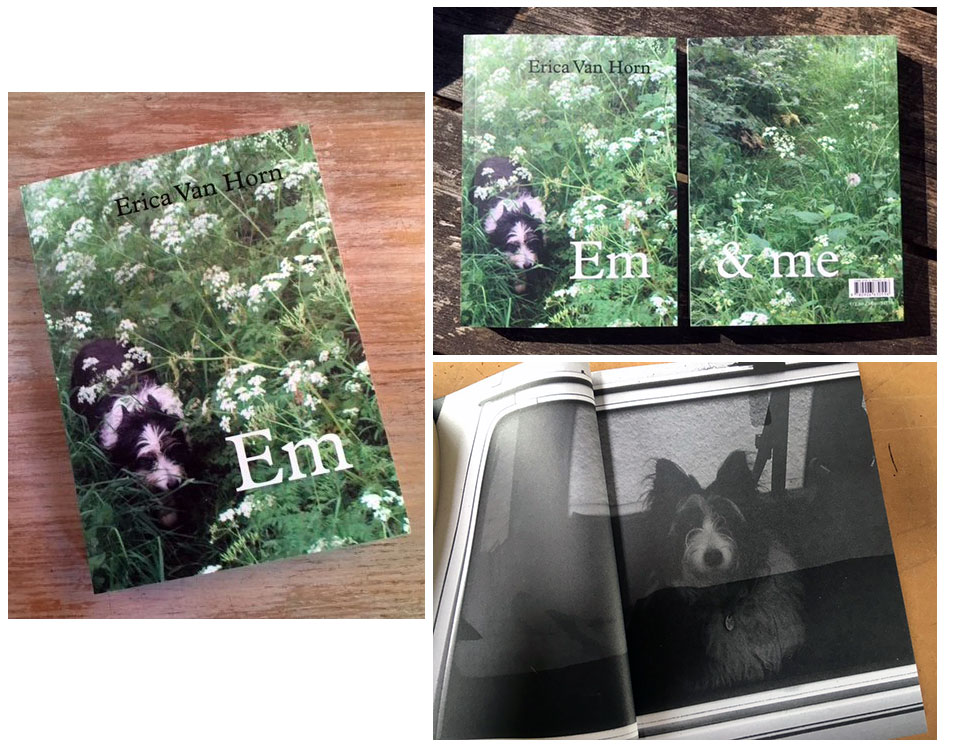
Em & Me 6.75 x 5.8"; 192 pages. 6 black-and-white images. Soft cover in pictorial wrappers with flaps for book information. Coracle Press: "Em was a sheepdog who never lived far from where she was born in Cahir, County Tipperary. She had a sense of place and a gentleness of temperament, and a way of making all events rituals with an eagerness for them to happen again. She led us through all the years we shared together. The narrative and sequence of this book is taken from entries to the writer's on-line Journal Words for Living Locally ( 2007 - 2014 )." Maurice Scully, poet: "This is a book centered on the relationship of the author & her dog. It is composed from blogs during her dog’s life & so has an episodic & almost poetically repetitive form. A pet’s life is of course an accelerated & condensed version of a human life, of all animal life & its phases, & so tracks the arc from exuberance of youth to the pathos of old age. Such a theme can lend itself to sentimentality, but Van Horn is the opposite of a sentimental writer: she writes of what-is with clarity & intelligence & lets the given speak for her beloved animal, without enlargement, just as her pet’s acuity is a given of nature, beyond adumbration. "Em & Me is an unfussy, tasteful production, as one takes for granted from Coracle Press, with good paper, good margins, clear font, pleasantly pocket-sized dimensions, attractive matt wrap-round cover & a good all-over feel to it in the hand. There are four protagonists in Em & Me: the dog, its owner, the countryside, & the owner’s human partner, Simon, this latter a shadowy but significant presence. Simon’s making a gravestone for the dog at the end & speaking to the dog’s spirit at her graveside could be mawkish, but it isn’t. Van Horn’s gift for presenting human feeling, human affection, love & sadness, without sentimentality is exceptional. "Em & Me is about attachment ultimately: to a pet, to a locale, to art, to a life lived with alertness. An exceptional book. Coming from an exceptionally gifted partnership, whose lifelong project is Coracle Press: Erica Van Horn & Simon Cutts." |
 Click image for more |
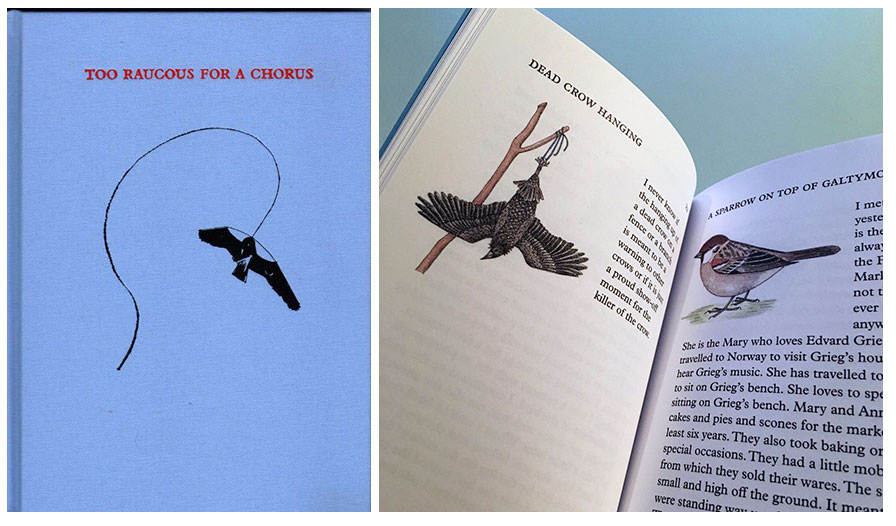
Too Raucous for a Chorus 7 x 4.9"; 64 pages. Printed four-color offset. Casebound and blocked in two colors. Coracle Press: "With dropped capital drawings by Laurie Clark, an assembly of shorter texts by Erica Van Horn, of the plight of birds encountered in local circumstances." Erica Van Horn, 14 November 2018: "I am thrilled with my new book. I cannot stop looking at it. As usual, I have been moving it around the house to surprise myself with its presence. The blue cover glows from across the room. I have one copy here and Laurie has one copy in Scotland. … I think it took us ten years to make this book. We always wanted to make a book about birds together but neither of us ever knew what the book might be. My knowledge of birds is so paltry. Finally these texts came together celebrating bird life, marking both small observations and small disasters. Laurie’s drawings could not be more perfect." Laurie Clark, the illustrator, lives in Pittenweem, a small fishing village on the east coast of Scotland. With the poet Thomas A Clark, in the summer months she runs Cairn gallery, a space for minimal and conceptual art. |
 Click image for more |
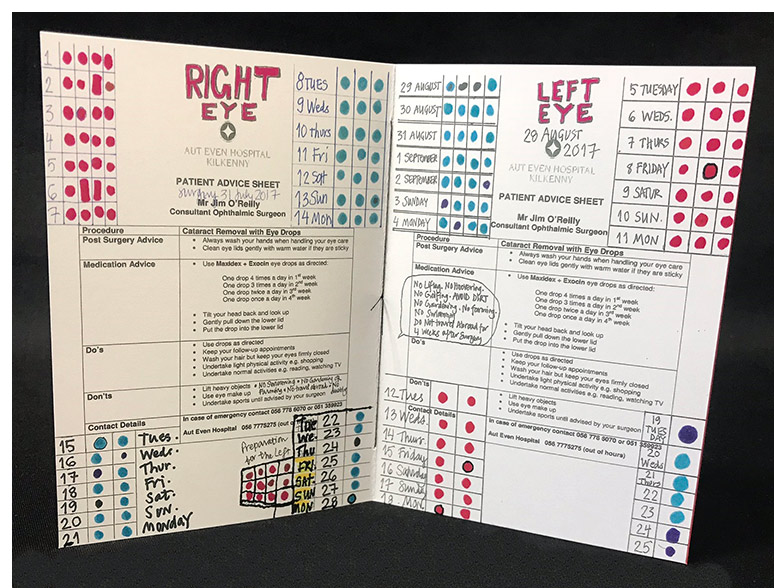
eye-drop calendar 5.5 x 3.9"; 2 pages. Pamphlet sewn. Red paper covers with title printed on front cover. In plastic sleeve. One of the inevitable givens, it seems, one deals with age is cataract surgery. Erica Van Horn has taken this incident from her own life and created this life-event pamphlet. The two page calendar — one page for the right eye, one page for the left eye — was created by her physician to help her keep track of when to administer eye drops. This is an annotated version by the artist – her tracking of treatments and notes on what not to do. |
 Click image for more |
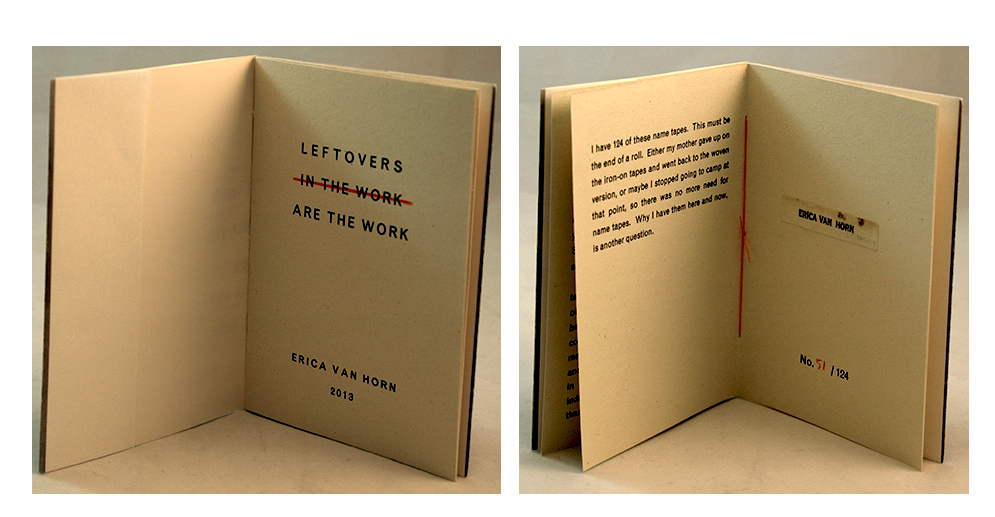
| Leftovers By Erica Van Horn Ballybeg, Grange, Clonmel, Tipperary, Ireland: Erica Van Horn, 2013. Edition of 124. 4 x 5.75"; 8 pages. Pamphlet style with sewn binding. In illustrated wraps. Numbered. Iron on tape with artist's adhered to colophon. Simon Cutts: "Another bit of stylised ephemera, made from Erica's high school name labels left over and a description of their place and purpose. Edition size based on what was left over." Erica Van Horn, Leftovers: "I have 124 of these name tapes. This must be the end of a roll. Either my mother gave up on the iron-on tapes and went back to the woven version, or ... Why I have them here and now, is another question." Nancy Kuhl, The Book Remembers Everything: "A distinctive feature of Erica Van Horn's work is the frequent recycling of materials left over from other projects or salvaged from daily life ... In addition to documenting her working process and the effort involved in bookmaking, Van Horn's practice of re-using saved and salvaged fragments reveals the ways such fragments make meaning. Histories and narratives can be embedded in ephemeral bits and pieces; scraps can carry substantial information. Re-worked and altered image and text fragments become visual representations of the incomplete and irregular nature of memory." $15 |
 Click image for more |
Flight Path Erica Van Horn, additionally: "My painted pages were cut to size and a block was made from my drawing. He [Simon Cutts] then had the tricky job of placing the planes as close as possible to my plans, using our little Adana press. Once they were dry, the pages were then glued down in order. I am quite thrilled with the results as I like the ephemeral nature of the paint with the solidity of the printed plane and the rigid boards." |
|
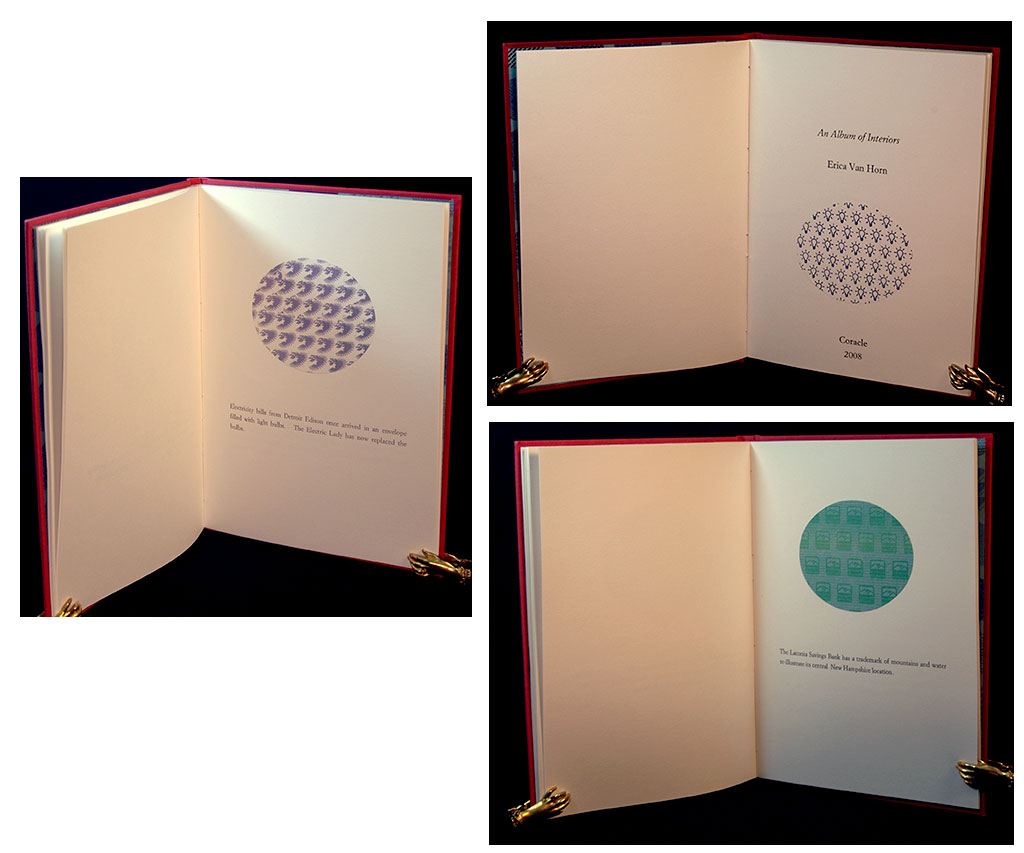
| An Album of Interiors By Erica Van Horn Tipperary, Ireland: Coracle, 2008. Edition of 175. 6.5 x 9.25"; 36 unnumbered pages. Letterpress press with fifteen oval cut tipped-in samples of envelope interiors. Casebound in red bookcloth with Illustrated endpapers of envelope interior patterns. The Book Remembers Everything / The Art of Erica Van Horn Exhibition, Beinecke Library: "For more than fifteen years Erica Van Horn has collected, considered, cataloged, and displayed paper envelope interiors, creating a large-scale, ongoing art project that includes bookworks, collages, and works on paper, public installations, and paper ephemera. 'The only function of an envelope interior,' Van Horn tells us, 'is to hide the contents of the envelope.' In focusing careful attention on this most invisible example of visual pattern and image, Van Horn reveals the irony of her statement even as she transforms the envelope interior’s function. As what she calls 'emblems of materiality and tactility' in an increasingly electronic world of information, Van Horn finds the continued use of content-obscuring envelopes 'a cause of much surprise and wonder.' The works in Van Horn’s 'World of Interiors' elevates a mundane and daily material to the category of fine art. The value Van Horn places on both the simple visual patterns and the very paper on which they are printed calls attention to the role of beauty in a world of disposable products and objects; by exposing the interiors of printed envelopes and repurposing them in works of art and books, Van Horn upsets our expectations about her seemingly ordinary materials and about fine art, printing, and books. ... " An Album of Interiors is one of the bookworks from this fifteen-year paper envelope collection odyssey. Examples of envelope interiors include those used by The Salvation Army, Replacements, LTD, and Scottish Widows. $70 |
 Click image for more |
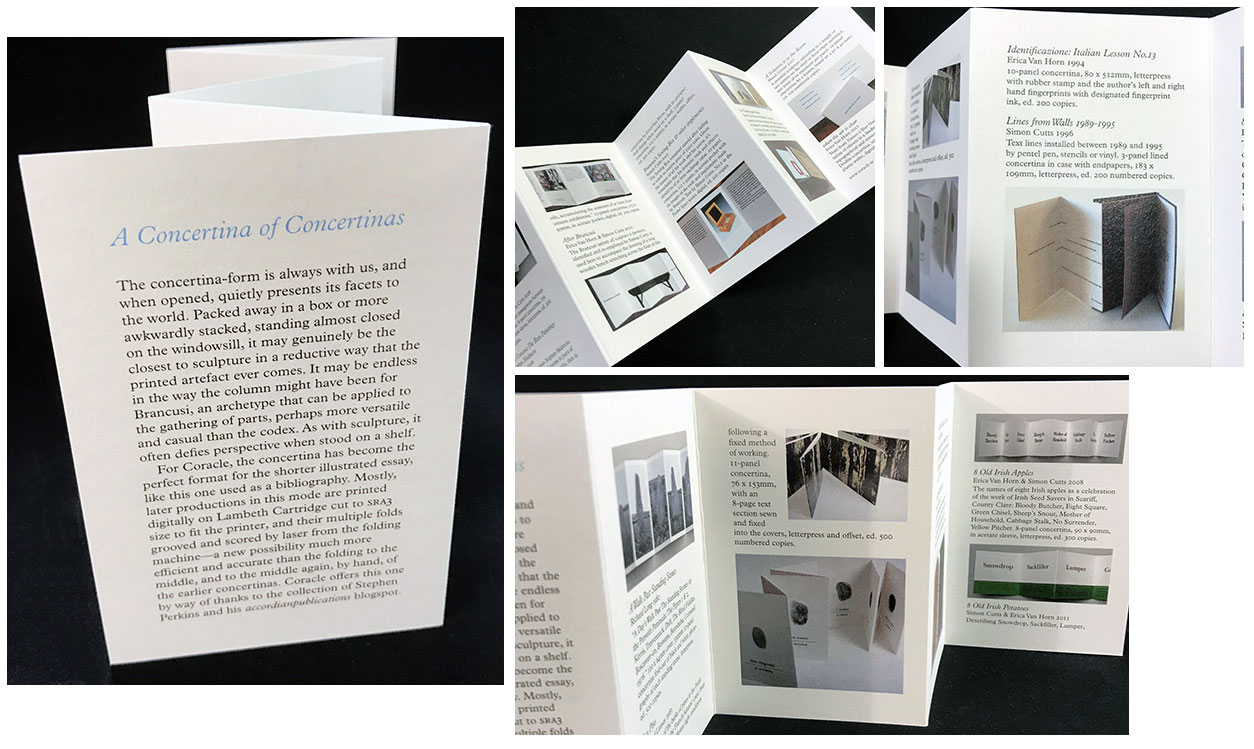
A Concertina of Concertinas 10-panel concertina 140 x 95mm. Colour printed digitally. In acetate sleeve. "A Concertina of Concertinas" is a Listing and description of most of the Coracle concertinas over the years. Coracle Press: "The concertina-form is always with us quietly, openly presenting its facets to the world. Packed away in a box or awkwardly stacked, or standing almost closed on the bookshelf, it may genuinely be the closest to sculpture the printed artefact ever comes. It may be endless in the way the column might have been for Brancusi, an archetype that can be applied to the gathering of parts, perhaps more versatile and certainly more casual than the codex, and as with sculpture, it often defies perspective when stood on a shelf. For Coracle, the concertina has also become the perfect format for the shorter illustrated essay, like this one as bibliography. Mostly, these later productions are printed digitally on Lambeth Cartridge cut to SRA3 size to fit the printer, and their multiple folds grooved and scored by laser from the folding machine - a new possibility from the folding to the middle, and to the middle again, by hand, of the earlier ones. Coracle offers this one by way of thanks to the collection of Stephen Perkins and his accordianpublications blogspot." |
 Click image for more |
Constructed Archive 1959-2016 8.75 x 6"; 210 pages. Digitally printed with 30 full colour plates. Casebound. Coracle: "Archive listing of the books, files, and papers of Simon Cutts. The work itself moves from the text on the page through the sequence and development of the book, paper and printing as a form intrinsic to the poem, to versions of smaller plastic objects and larger installations as a means of its resolution." Simon Cutts, introduction: "This is the archive of the books, files and papers of Simon Cutts, poet, publisher, editor of spaces, and plastic artist. It begins in Nottingham in Britain in the early nineteen sixties as Tarasque Press and later forming Coracle Press in London from the mid-nineteen seventies and in all its later manifestations. "Notebooks, Diaries and Deskbooks go back as far as the late nineteen fifties and are included until the present date. A large section of photographic documentation of objects made, their exhibition and installation, and the photographic documentation of book and card sequences is also listed. "Correspondence is often included in the working files previously listed, and the remainder is separately indexed in its own section. This also includes digital files of particular correspondence held under Coracle in the Getty Research Institute. "The archive is completed by extensive bibliographical, biographical and reference sections, and includes a large section on the locations for both Simon Cutts himself and the places in which he has worked and made books and other objects." |
|
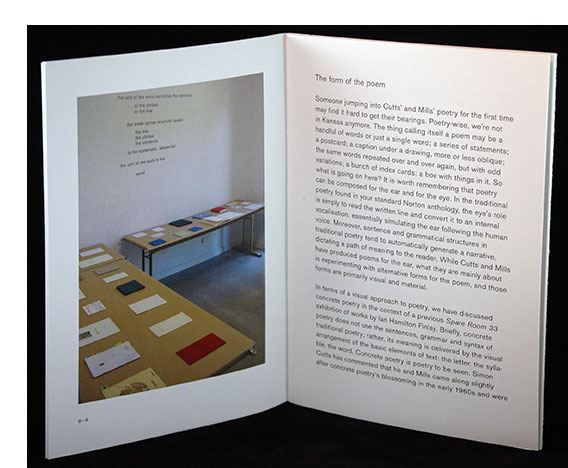
| The Poems of Simon Cutts and Stuart Mills The unit of the work is the word By Peter Jones and Susan Taylor Clonmel, Tipperary, Ireland: Coracle, 2015. 5 x 7"; 24 pages. Printed digitally. Saddle stitch (stapled) bound. Coracle: "Illustrated catalogue of an exhibition at Spare Room 33, Canberra Australia in November and December 2014, containing sections of introduction, the form of the poem and the subject of the poem, together with a list of works included in the display of poetry, poem cards, poem objects, books, booklets, and journals of Simon Cutts and Stuart Mills." $8 |
 Click image for more |
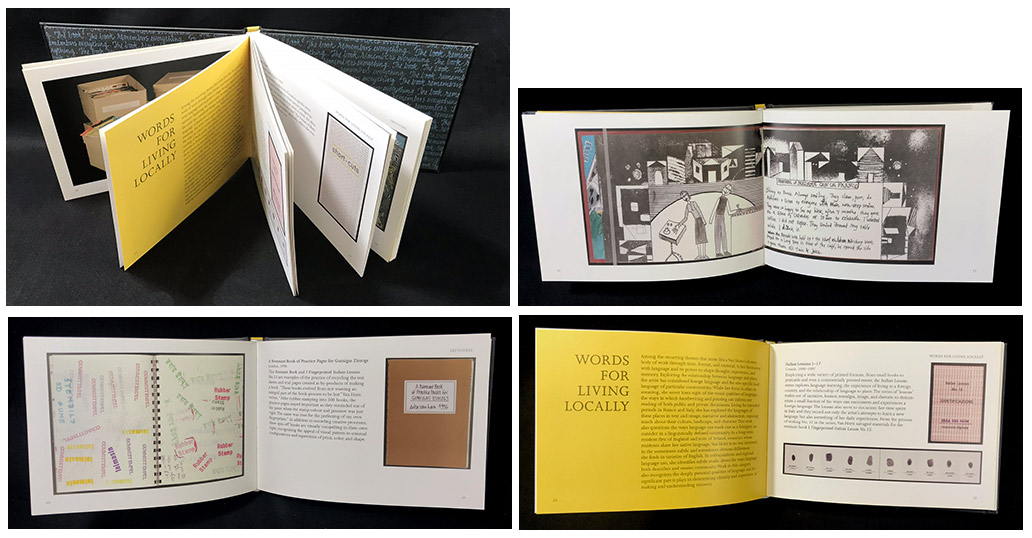
| The Book Remembers Everything The Work of Erica Van Horn By Nancy Kuhl Ballybeg, Grange, Clonmel, Tipperary, Ireland: Coracle / Granary Books, 2010. [Edition of 1500.] 7.125 x 5.125"; 128 pages. Illustrated endpapers and pastedowns. Illustrated paper covered boards. Editorial design by Simon Cutts. Layout design by Colin Sackett. Introduction: "The Book Remembers Everything developed as a result of a 2010 exhibition of the outstanding collection of Erica Van Horn's work in the Yale Collection of American Literature at the Beinecke Rare Book and Manuscript Library at Yale University, including early works on paper, elaborately illustrated unique books, and printed and editioned works in a wide variety of formats. Like the exhibition, this book represents aspects of the artist's development over more than thirty years, exploring common elements throughout the extensive body of her work; it also extends the work of the exhibition by including new books and collaborations from Van Horn's recent work and additional examples of unique bookworks from early periods. ... "A chronological bibliographic checklist of works featured in The Book Remembers Everything makes visible both the artist's persistent attention to her subjects and the development of her creative process over time." The Book Remembers Everything organizes the work under the following six headings: DAILY DETAIL , WORDS FOR LIVING LOCALLY, LEFTOVERS , WORLD OF INTERIORS, NARRATIVE AND PATTERN, and IDENTITY AND LIKENESS. All quotations of Erica Van Horn are from her books or from personal correspondence with Nancy Kuhl. $25 |
 Click image for more |
Simon Cutts and Erica Van Horn have been publishing as Coracle Publications for more than 25 years. This section includes samplers of books produced during that time. |
|
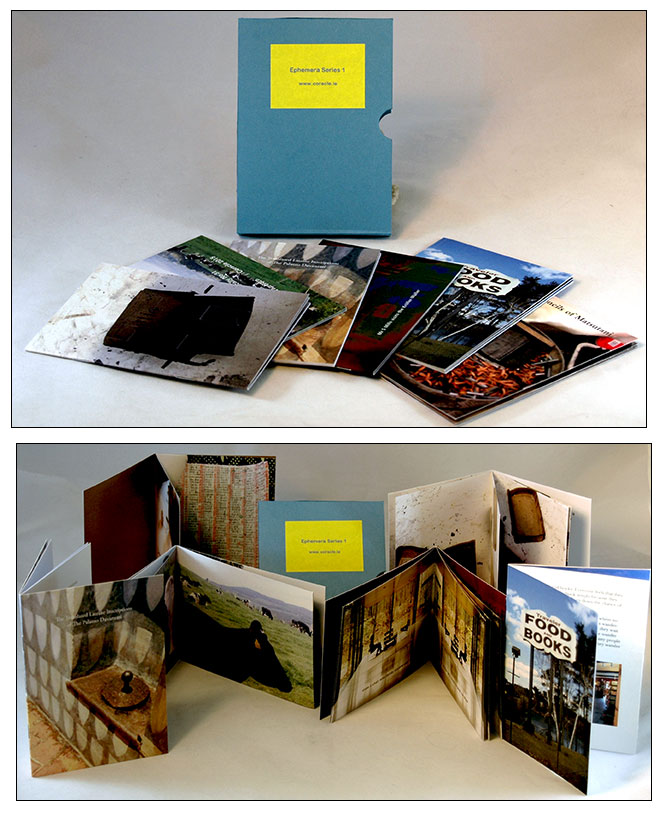
| Ephemera Series I BySimon Cutts Clonmel, Tipperary, Ireland: Coracle, 2016. Edition of 200. 4.25 x 6"; 6 books in slipcase. Digitally printed. Each laminated and stapled. Lightweight cardstock slipcase with paper title on side. The first 6 books in Coracle's digitally printed color series. Mr S Mills visits the Kroller-Muler by Simon Cutts (2014) I always have an audience for my work by Erica Van Horn (2014) The Translated Latrine Inscriptions of The Palazzo Davanzati / Simon Cutts (2015) aglio 6 olio by Duncan Chappell and Coracle (2015) The Traveler Restaurant Union CT by Erica Van Horn & Simon Cutts (2016) The Pencils of Matsutani by Takesada Matsutani (2016) $30 |
 Click image for more |
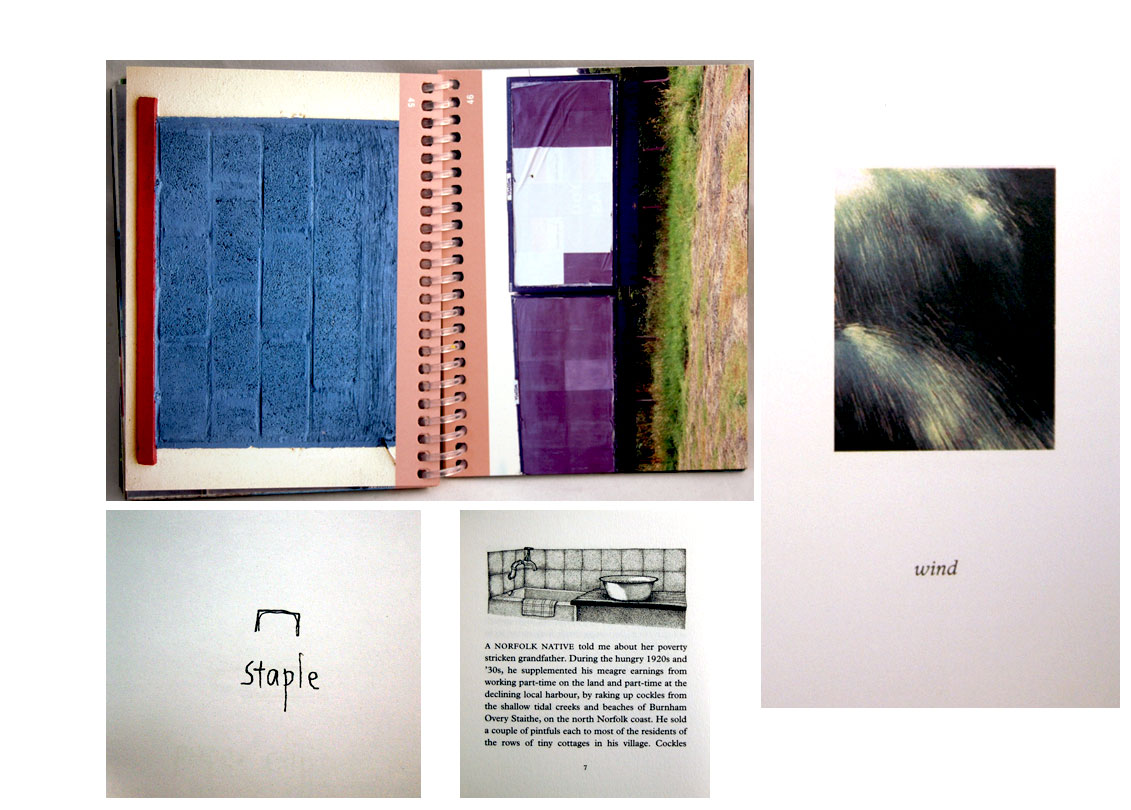
A Sampler of Smaller Publications from Coracle A rich stew from this consistently fascinating and rewarding press. |
 Click image for more |
The Book Remembers Everything: "In her Living Locally series, Van Horn celebrates the landscape, culture, and community of her adopted home in rural Tipperary, Ireland. Collecting, documenting, and illustrating the regional language of the area, Van Horn both acknowledges her position as a kind of outsider (a 'blow in,' in the local slang, referring to 'anyone who moves here from somewhere else') and locates herself firmly within the community." |
|
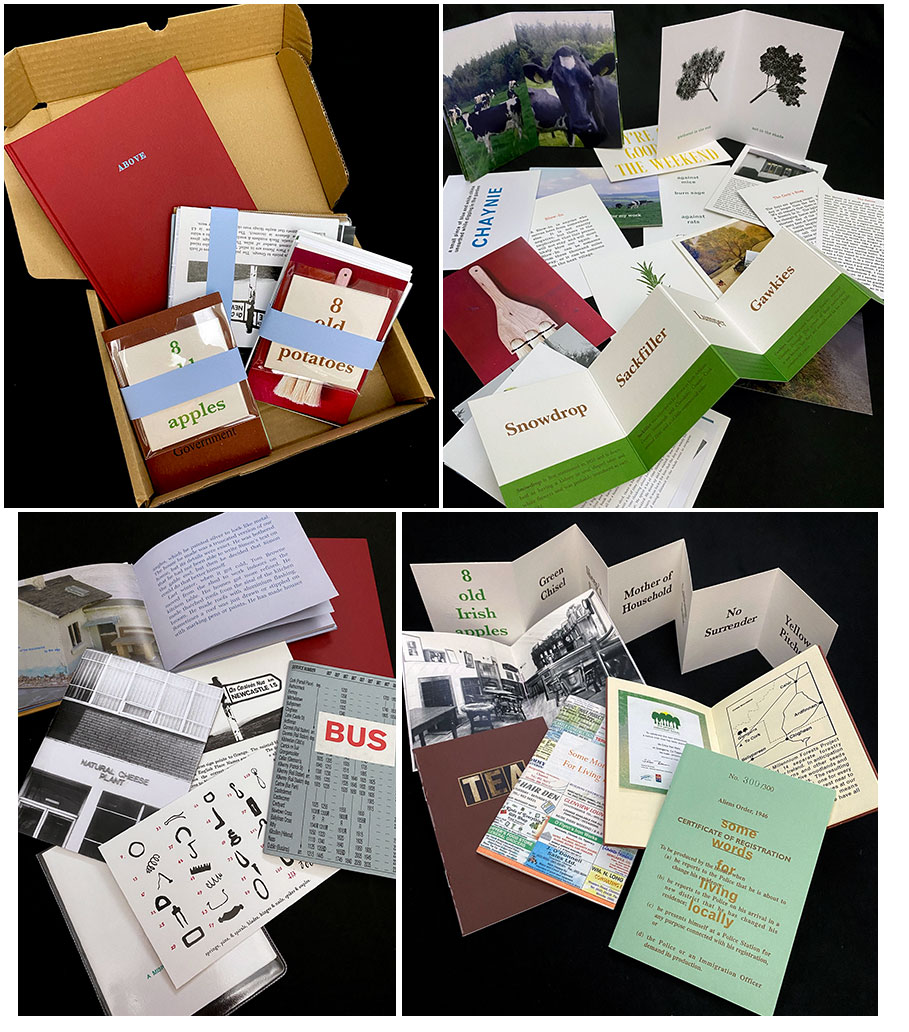
Living Locally 34 items in box 7.5 x 10 x 2.5". Paper title label on lid. Books, pamphlets, and cards. Fine. The complete Living Locally series: 40 items, books, pamphlets, cards. Some works are completely out of print, and this combined set is the only way they can be acquired. No.1-8 Some Words For Living Locally 2002 (OP) |
 Click image for more |
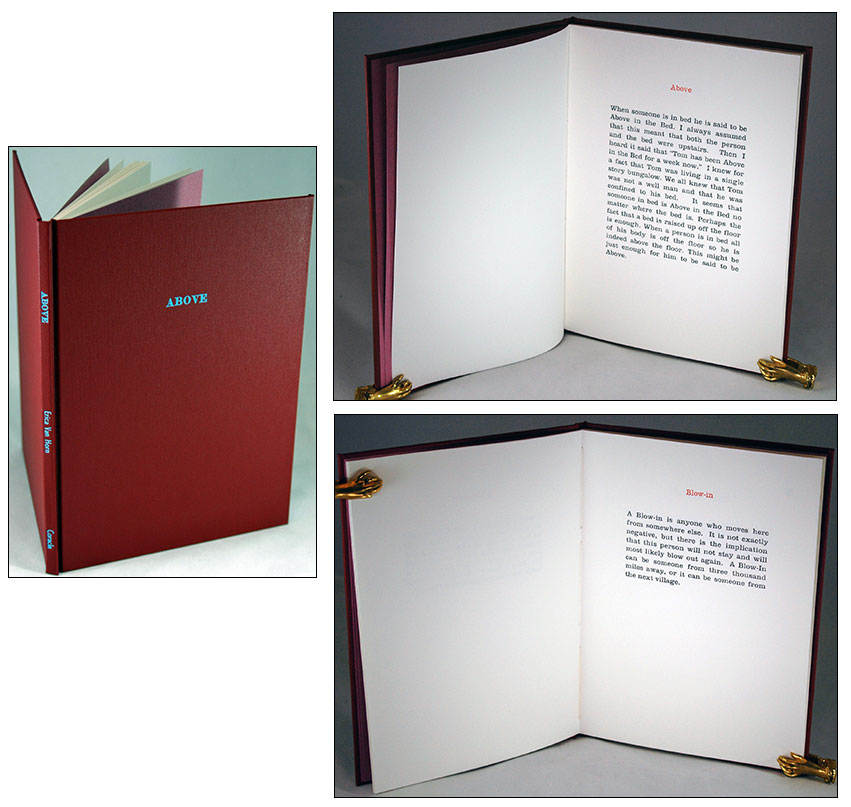
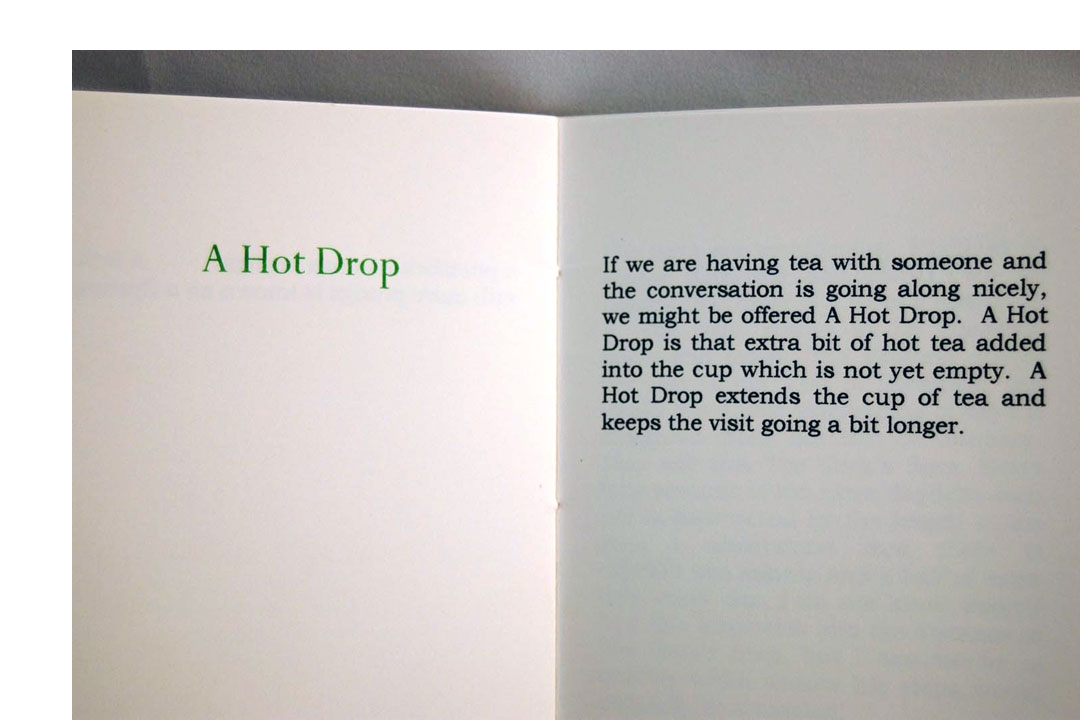
| Above By Erica Van Horn Clonmel, Tipperary, Ireland: Coracle Books, 2016. Edition of 250. 6.5 x 9"; 24 pages. Letterpress printed in two colors. Case bound. Numbered. Coracle: "A collection of more of Living Locally, some seen as postcards, from the ongoing series which continues as a translation of the vernacular speech of where the author lives." The title of no. 35 of the Living Locally series comes from the phrase "Above the Bed". In the author's part of the world "When someone is in bed he is said to be Above in the Bed." Van Horn muses as to what the phrase actually means. She also explores other regional word usage such as "A Hot Drop", "The Long Acre", and "The cock's step". $40 |
 Click image for more |
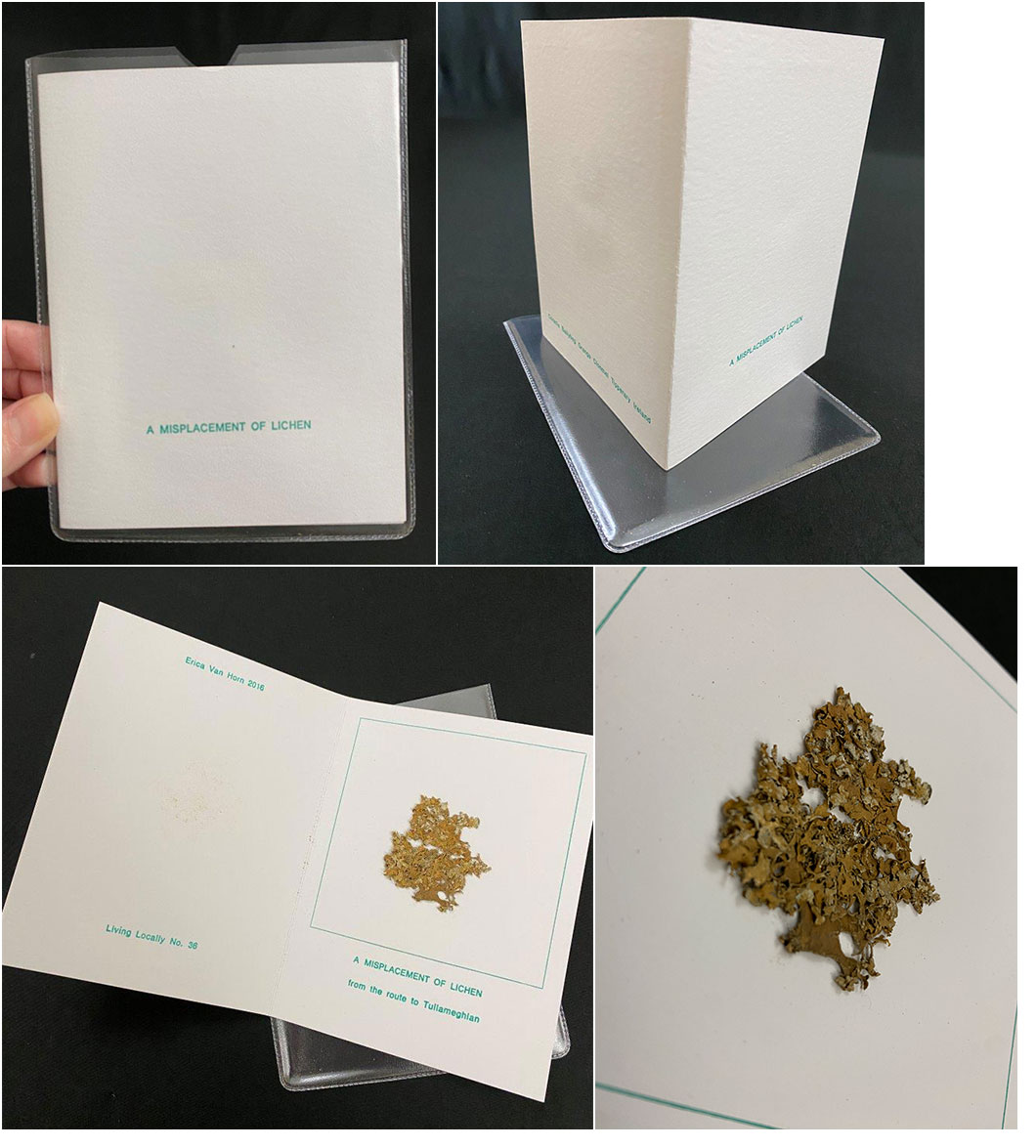
A Misplacement of Lichen 15.3 cm x 11.8 cm. Printed letterpress. One folded card. In plastic wallet. With fragment of lichen. "A Misplacement of Lichen" continues Erica Van Horn's observations of the land in which she lives. No. 36 of her "Living Locally" series contains a pressed and dried lichen specimen gathered from near her home in Tipperary, Ireland - from the route to Tullameghlan. |
 Click image for more |
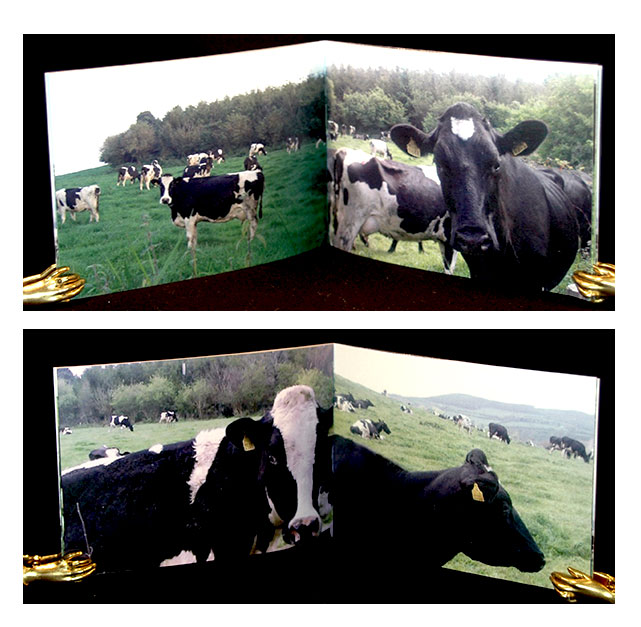
I always have an audience for my work
|
 Click image for more |
| Natural Cheese Living Locally No. 33 By Erica Van Horn Clonmel, Tipperary, Ireland: Coracle Books, 2015. [Edition f 300]. 5 x 6.5"; 20 pages. Photocopy with letterpress. Handsewn with pictorial wrappers. The Book Remembers Everything: "In her Living Locally series, Van Horn celebrates the landscape, culture, and community of her adopted home in rural Tipperary, Ireland. Collecting, documenting, and illustrating the regional language of the area, Van Horn both acknowledges her position as a kind of outsider (a 'blow in,' in the local slang, referring to 'anyone who moves here from somewhere else') and locates herself firmly within the community." This is number 33 in the Living Locally series. It contains short snippets about food and drink observations from the artist about her local community. She begins with an observation about the Michelstown Cheese Factory's doors labeled "Natural Cheese" and "Processed Cheese." She continues with notes on the emptying of the sugar bowl, the ritual of tea, the purchasing dirty carrots, and other local curiosities. $15 |
|
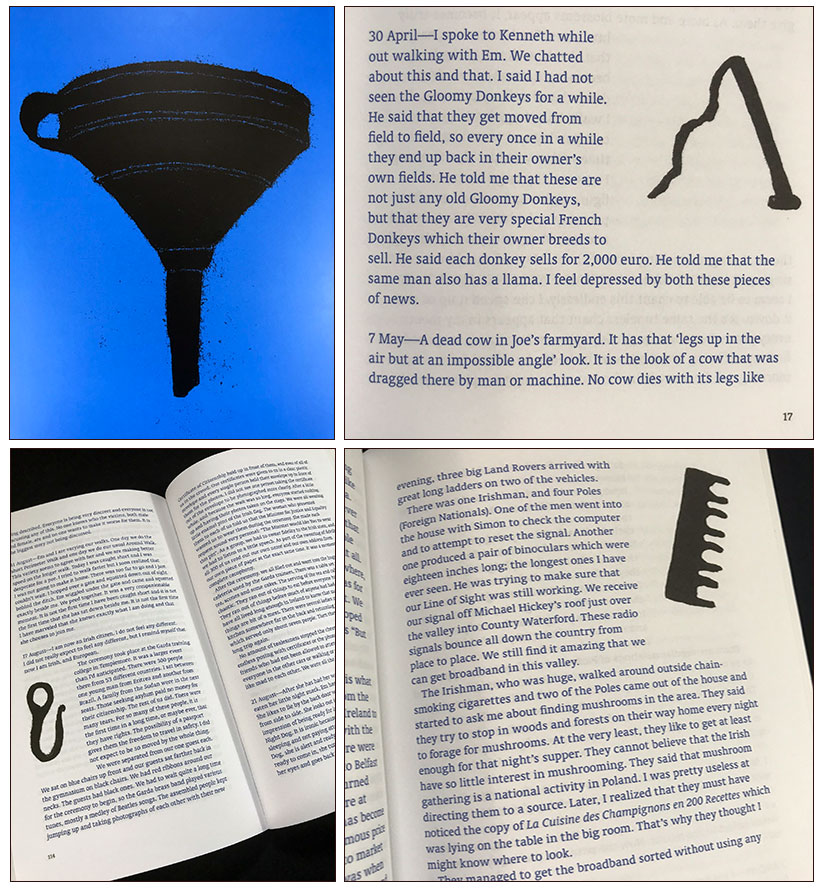
Living Locally 144 pages; 230 x 140mm. Offset in 2-colours. Sewn paperback with flaps. Coracle Press: "An edited selection from the on-line journal from 2007 to the present and an endorsement of the on-going series of the same title." "'Living Locally' selects entries from a daily journal written over five years about rural life in and around a farming valley in Tipperary, to the north of the Knockmealdown Mountains. With needle-sharp observation and in plain words, Van Horn makes remarkable what might otherwise have gone unrecorded: the familiarity of neighbours, of animals and of weather, the regularity of the patterns of transaction on roads and in nearby villages and towns, and, from an outsider's perspective, the unfamiliarity of speech and custom. What results is a human geography whose immediacy recalls earlier local and rural records and enquiries, such as the diary of Francis Kilvert in the Welsh Borders in the 1870s, or Cecil Torr's recollections from his Dartmoor village, 'Small Talk at Wreyland'. In common with these is a concern with both the colloquial and the vernacular, and the strangeness found in such a concentration of repetition and usage." Susan Howe: "Erica Van Horn has produced a meticulous field guide of what it means to be an American discovering the embedded, entangled mysteries of being Irish." All such jewels should be this affordable. |
 Click image for more |
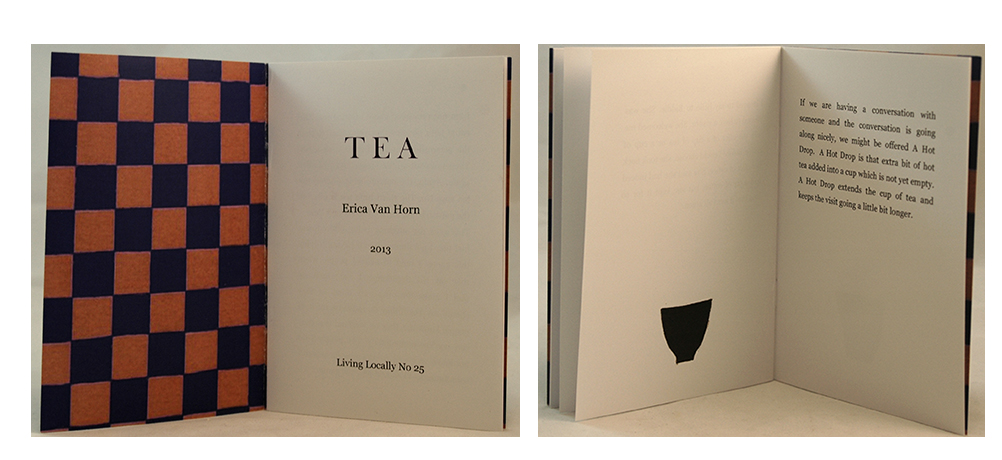
| Tea Living Locally No 25 By Erica Van Horn Ballybeg, Grange, Clonmel, Tipperary, Ireland: Coracle, 2013. 4 x 5.75"; 16 pages. Pamphlet style with saddle stitch binding. In brown paper wrappers. Nancy Kuhl, The Book Remembers Everything: “The Living Locally series celebrates the landscape, culture, and community of Van Horn’s adopted home in rural Tipperary, Ireland. … The 25th in the Living Locally series Van Horn discusses the various aspects of tea culture in her community. Beinecke Library, Yale University: “Erica Van Horn regularly draws the subject of her work directly from the fabric of her daily life, her domestic and artistic work, the simple household objects at hand, the day-to-day aspects of familiar relationships… Her attention to the ‘everyday’ is also an act of recording that which is most important to her; Van Horn creates work that serves as an aid to memory and acts as a hedge against the inevitable passing of one day to the next… and celebrates the significant but often unnoticed habits and customs of family and friendship, the exquisite qualities of home, the work of making art.” $10 |
 Click image for more |
| SOLD / Out of Print Titles by Coracle: | |
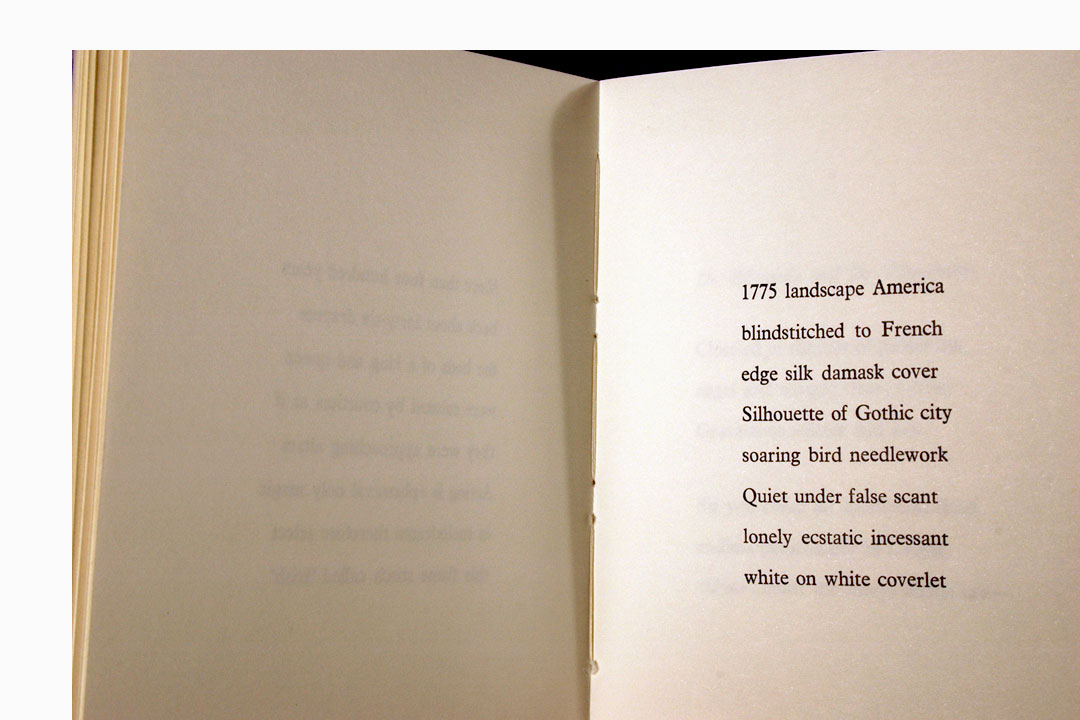
Bedhangings II In Bedhangings II distinguished American poet Susan Howe (American Book Award Winner, Guggenheim fellowship, member of the Academy of Arts and Sciences) teases meaning from the movement of language.
(SOLD) |
 Click image for more |
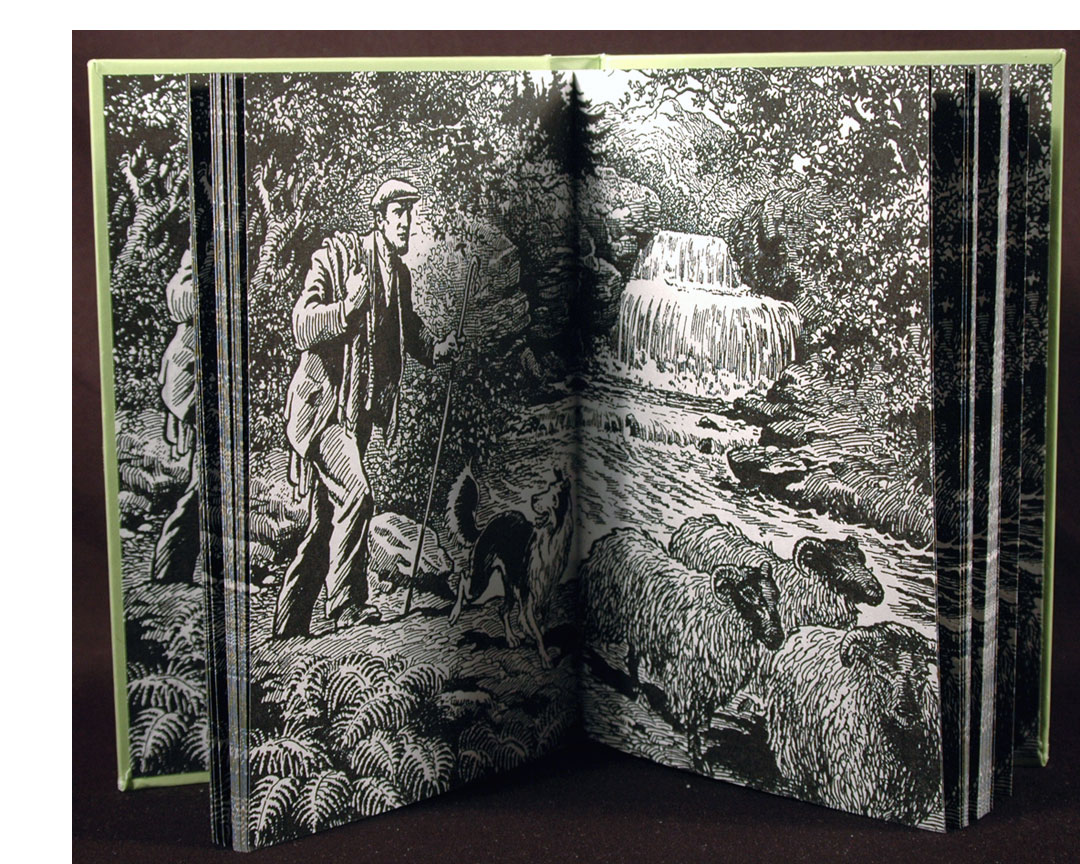
Black Bob
|
 Click image for more |
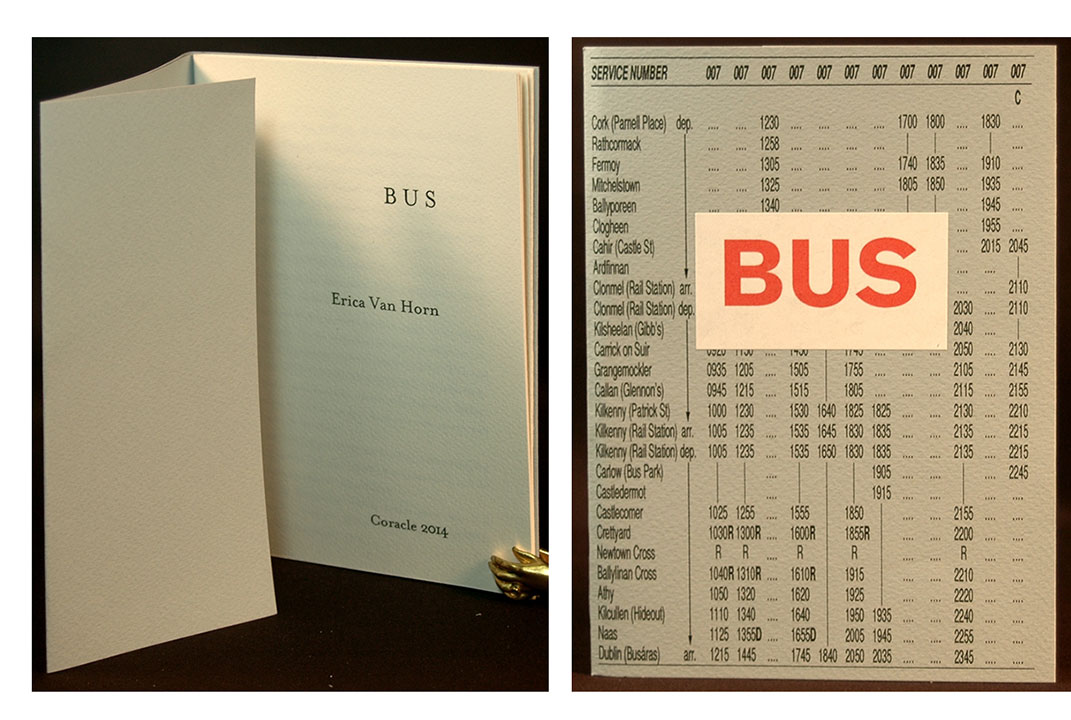
| BUS Living Locally No. 29. By Erica Van Horn Clonmel, Tipperary, Ireland: Coracle Books, 2014. Edition of 200. 5 x 6.75"; 20 pages. Pamphlet stich binding with illustrated paper wrappers. Paper title label on cover. The Book Remembers Everything: "In her Living Locally series, Van Horn celebrates the landscape, culture, and community of her adopted home in rural Tipperary, Ireland. Collecting, documenting, and illustrating the regional language of the area, Van Horn both acknowledges her position as a kind of outsider (a 'blow in,' in the local slang, referring to 'anyone who moves here from somewhere else') and locates herself firmly within the community." In No. 29 of the series Van Horn talks about the different people she meets on several bus trips as she goes about her normal activities around the Irish countryside. She writes of language, landscape, and personalities. (SOLD) |
 Click image for more |
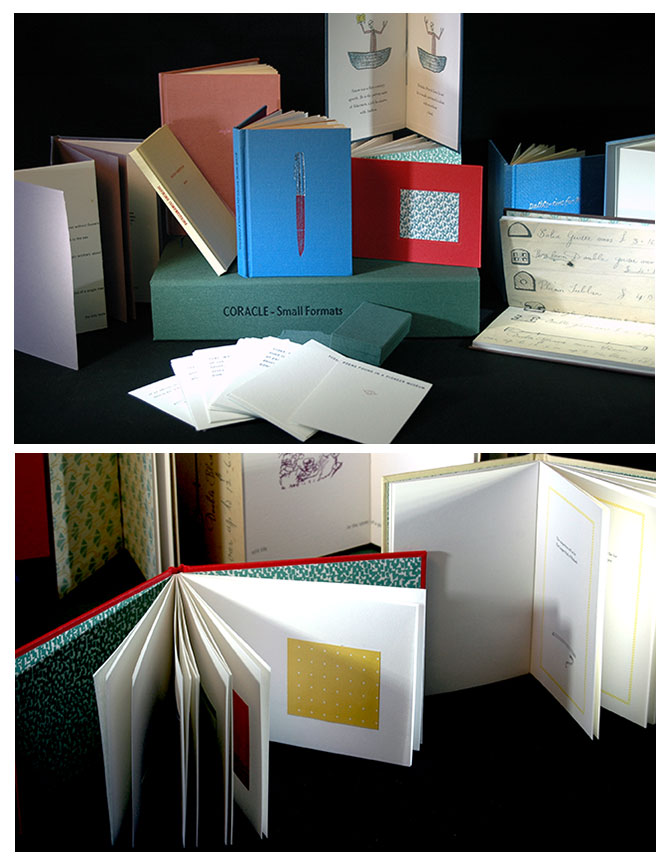
Coracle - Small Formats Petits Airs for Margot (1986) by Simon Cutts (SOLD) |
 Click image for more |
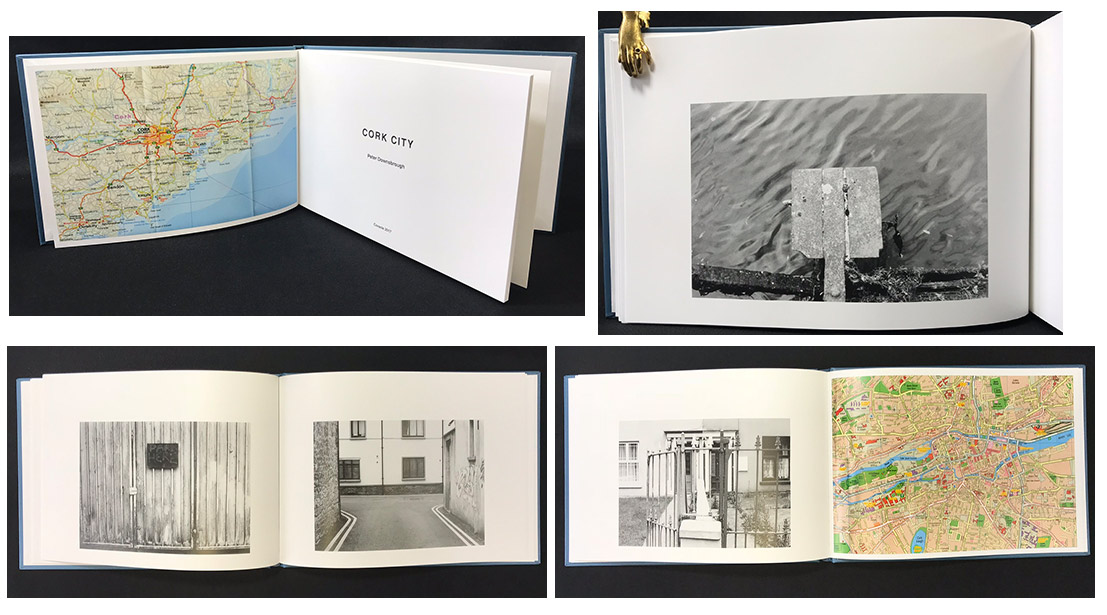
Cork City 9 x 6"; 60 pages. Offset printed. Casebound. Contact strip of the city photographs set into the cover. Coracle: "Printed photographs made on the visit to Cork in 2011, to participate in the 'In Other Words' exhibition at the Glucksman Gallery. ... [C]ontains two maps of the city ... The images convey the parallels and verticals of his photographs set in the sequence of book form, his usual medium." Peter Downsbrough was born (1940) in New Jersey but now lives and works in Brussels. Art Dictionary, (accessed 5/25/18): "Peter Downsbrough … studied art and architecture and, like Robert Barry, Sol LeWitt, and Lawrence Weiner, is one of the artists who continue to use the book as another space to present their work. Since the early seventies, he has incorporated text and line drawings into his books, later integrating maps and photos of urban spaces. His consistent and sharply delineated oeuvre is devoted to examining the meaning of space and place." |
 Click image for more |
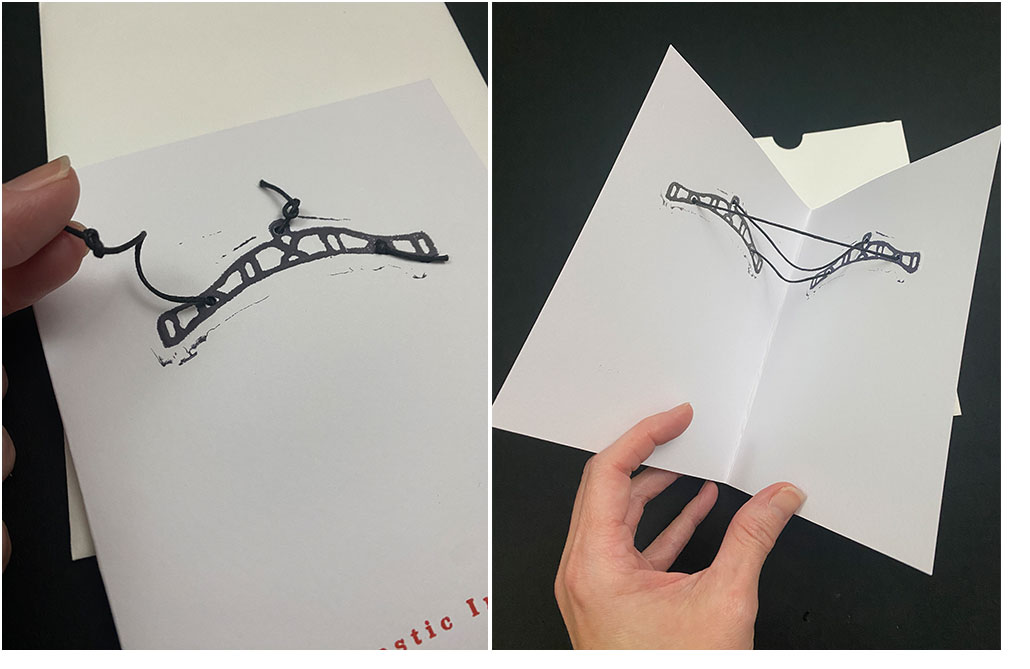
Domestic Interior 1 folded sheet producing 4 pages (5.25 x 6.5”). Black knotted string. Housed in sleeve envelope with title printed on one side, publisher and year on the other side. There is not an artist statement with this very simple one opening book. There is a printed image in black ink on the front cover that reminds me of a headboard of a bedframe. The image is repeated on the interior pages and the back cover. When opened there are strings that attach the front interior cover to the back interior cover. It is like the slats or heavy rope that hold up the mattress on a bedframe. Erica Van Horn, Journal, 29 January Saturday [2021]: "The act of making a bed look fresh and tidy, with clean sheets, or simply with some pulling and tucking and smoothing, is To Dress The Bed. When someone has been sleeping in a bed and it has not yet been dressed, the expression to describe the disheveled bed is that It Has Been Tossed." |
 Click image for more |
Fly Falls in Milk Jug: News in Haiku 6 x 4.25"; 32 pages. Casebound. Numbered. Coracle: "Selection of haiku from the banner heading of the second section of the Concord Monitor, Concord, New Hampshire. These seventeen syllable forms encapsulate items of current news that may well be covered elsewhere in the newspaper by more extended description. This book is a collection of some of those haiku to date, a celebration of their range and task." Haikus by Pittsfield, New Hampshire, poet Maureen Van Horn. |
 Click image for more |
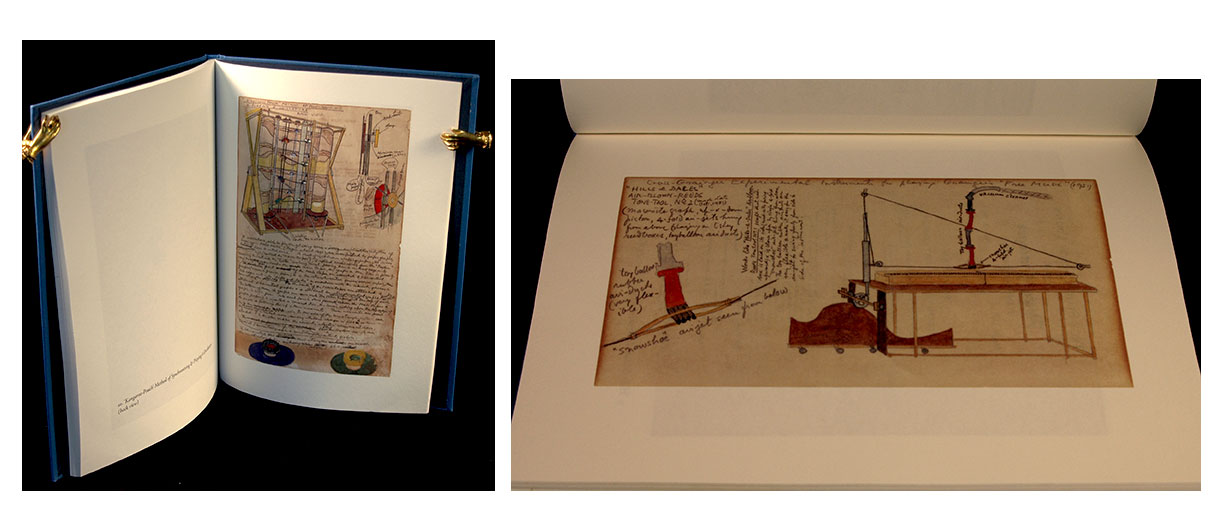
| The Free Music Machine Drawings of Percy Grainger with an introduction by Wilfred Mellers Ballybeg, Grange, Clonmel, Tipperary, Ireland: Coracle, 2014. 220 x 300mm; 72 pages. Casebound with illustration tipped on front cover. Numbered. The book was designed by Colin Sackett, printed in England by Axminster Printing Company and casebound by Stuart Settle. www.wikipedia.com (accessed 1/10/2015): "Percy Aldridge Grainger (8 July 1882-20 February 1961) was an Australian-born composer, arranger and pianist. In the course of a long and innovative career he play a prominent role in the revival of interest in British folk music in the early years of the 20th century ... "Among various new ideas, Grainger introduced his so-called 'free-music' theories. He believed that conformity with the traditional rules of set scales, rhythms and harmonic procedures amounted to 'absurd goose-stepping', from which music should be set free. ... He believed that ideally, free music required non-human performance, and spent much of his later life developing machines to fulfil this vision." This Coracle publication contains 22 drawings by Percy Grainger for the Free Music Machines he developed with Burnett Cross. Simon Cutts became interested in the drawings over 35 years ago. "I was aware of the effect of the drawings on younger artists, musicians and writers ... Their interest resides in the possibility and potentiality of drawing to form a narration. ... This potentiality, the notation of drawing, has been at the core of many inventors and artists' work, a constructed narrative that sustains enough of a belief in their suggested new world." (SOLD) |
 Click image for more |
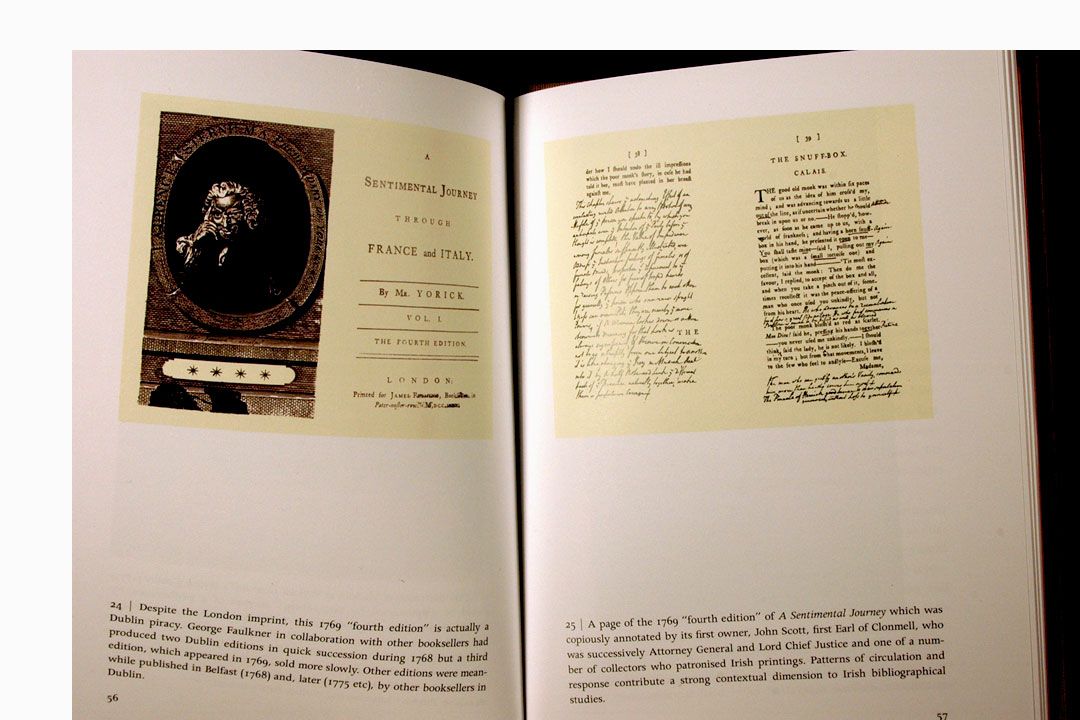
| Fredson Bowers & the Irish Wolfhound By J.C.C. Mays Clonemel, Tipperary, Ireland: Coracle, 2002. [Edition of 500.] 5.75 x 7.75"; 86 pages. Printed four-color offset. Printed endpapers. Casebound with embossed inlay on cover. Includes notes and index. Coracle Press: "Jim Mays suggests that Anglo-American bibliography would be different if Fredson Bowers had not passed over the distinctive features of the Irish book as he theorized his subject. Umbrella, Volume 26, no. 1 May 2003: "A tribute to Fredson Bowers, one of the most famous Anglo-American bibliographers. This is a pithy essay by Jim Mays, who has worked most of his life at University College Dublin. It is an accumulation of thoughts about books, about Irish culture, about the 1500-year history of the book in Ireland as the most extensive and continuous in Europe, and Mays argues for broadening the prevailing consensus about the creation and transmission of knowledge in the Western world." Marta Werner: "In the bucolic but still wild climes of South Tipperary, Fredson Bowers's wolfhound, ready defender of the flock of Anglo-American bibliographers, may meet up with another kind of wolf-hound, a dog crossbred with a wolf and ready to send the flock scattering." (SOLD/Out of print) |
 Click image for more |
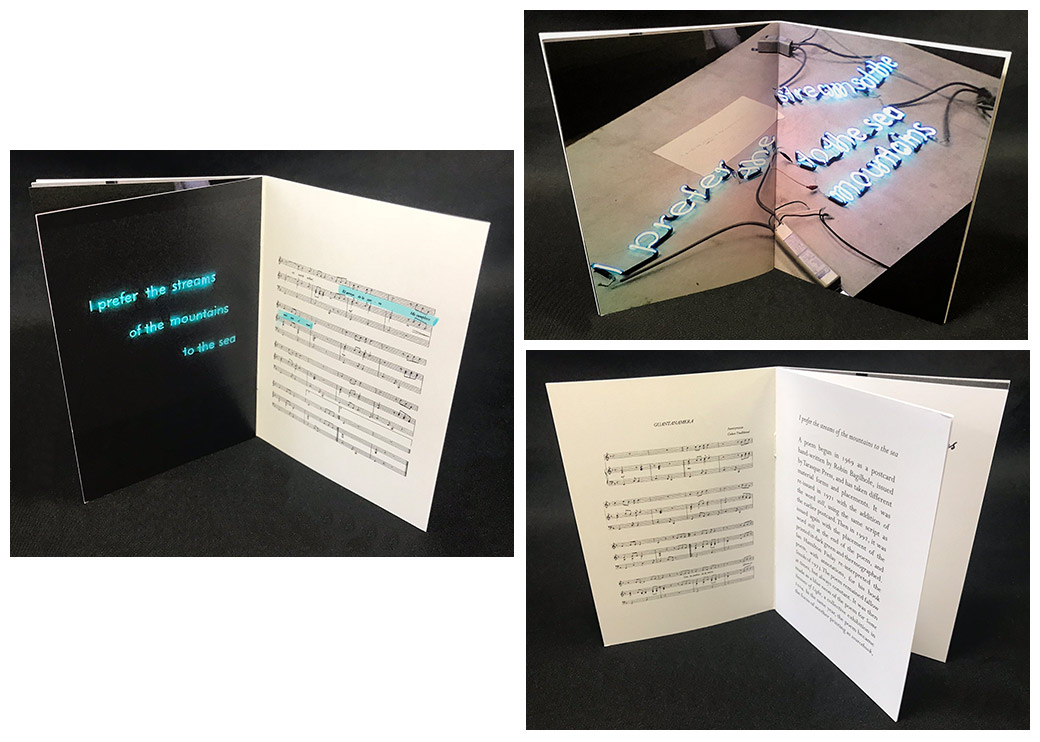
I prefer the streams of the mountains to the sea 5.9 x 4.1"; 16 pages. Digital and lettterpress printing. Saddle stitched (stapled) bound in white covers with title in black on front cover. Coracle: "An eighth book in the ephemera series, this one charts the history of the author's poem from the late sixties in its various guises and appearances on paper to installation." Simon Cutts: "A poem begun in 1969 as a postcard hand-written by Robin Bailhole, issued by Tarasque Press, and has taken different material forms and placements. It was re-issued in 1971 with the addition of the word 'still', using the same script as the earlier postcard. Then in 1992, it was issued again with the placement of the word 'still' at the end of the poem and printed in dark green and thermographed. Ian Hamilton Finlay re-interpreted the poem, with annotations, for his book "straiks' of 1973. The poem remained fallow at times, but always constant. It was then made as a blue neon of the poem for 'Some Versions of Light', a collective exhibition in 2004 ... Finally the neon version of the poem was permanently installed in the grounds of Chateau de Rouret, Grasse, in the Alpes-Maritimes in France in 2012. From 2014, the poem also resides as a thin film of vinyl lettering on the gable end of the house in Ballybeg, Tipperary, Ireland, where it was first painted as a sign in 1998." |
 Click image for more |
Kidnapped
(SOLD) |
|
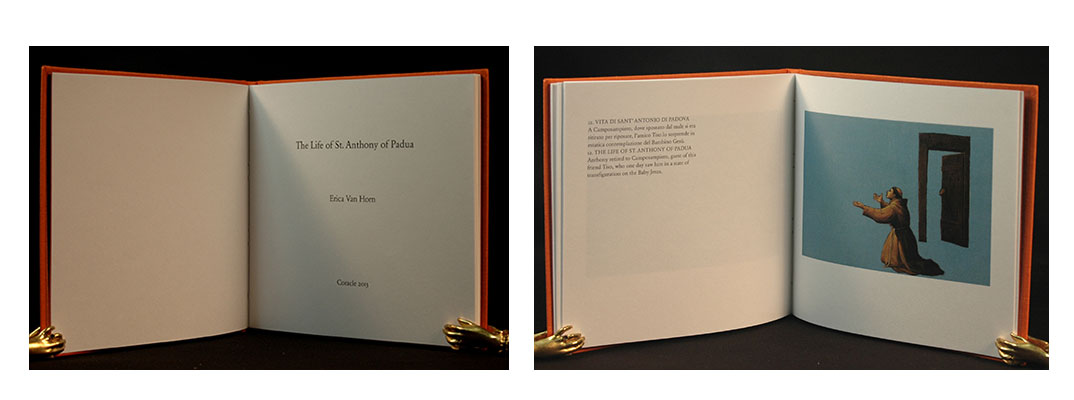
| The Life of St. Anthony of Padua Patron Saint of Lost Things By Erica Van Horn Ballybeg, Grange, Clonmel, Tipperary, Ireland: Coracle, 2013. Edition of 200. 6 x 6.5"; 36 pages. Sewn binding. Bound in orange cloth boards with stamped titles on front cover and spine. Numbered. Reproductions of 13 altered postcards of the Life of St. Anthony of Padua from paintings by Johnson Sabattini. The left page of each spread contains a descriptive caption in Italian and English, the right contains the postcard, which has been altered to leave only the saint himself and one or two crucial (?) elements – a column, an urn, a book (Bible?), a severed leg. Postcards 7 and 8 have been "lost" and are represented by a blue rectangle. Playing with the stamp of sanctity (once at least) conferred by books? Playing with the inevitable abstraction of reality by word and image? The first page announces "The Eliminations." The images eliminate so much of the original painting that we have a best a hint of the original, a sketch of a sketch. It's the gap between the lived and the portrayed (by words and images) that can be only breached by faith, belief? Such is the power of art, and the artist, to evoke so much from so little. (SOLD) |
 Click image for more |
a line only a word (SOLD)
|
 Click image for more |
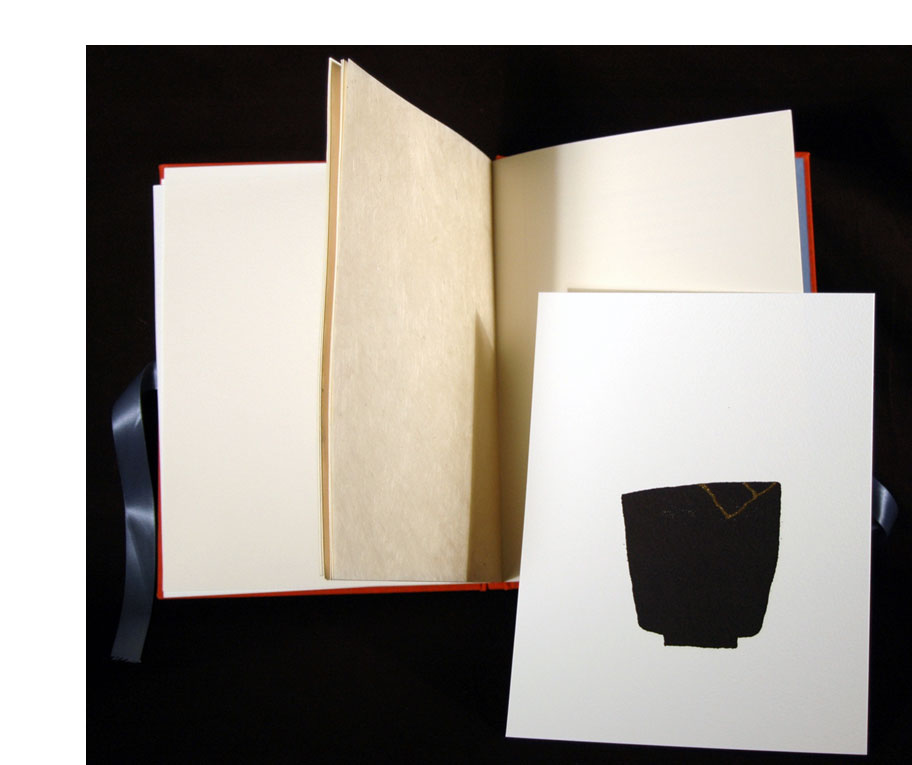
| mending four printed drawings by Erica Van Horn with poems by Thomas Meyer Ballybeg, Grange, Clonmel, Tipperary, Ireland: Coracle, 2011. Edition of 80. 7.25 x 9.5"; 44 pages. Case bound cloth over boards. Ribbon-tie closure. Colophon: "Drawings are printed from letterpress blocks and their repairs made in gold thermography. Earlier paler silhouettes of them accompanied the poem 'Kintsuge' from Punch Press in 2008. Texts published here are extractions taken from a later, longer version of the same poem, 'Kintsugi,' from Flood Editions in 2011." "kintsugi: the Japanese practice of repairing ceramics with gold lace lacquer to illuminate the breakage traditionally brought out in November for special use to celebrate the repairs and return to utility" Artist Erica Van Horn is one of the founders of Coracle Press. Poet Thomas Meyer lives in the woods in western North Carolina. He is executive director of the Jargon Society, founded by his late partner, Black Mountain poet Jonathan Williams. (SOLD) |
 Click image for more |
| Mr S Mills visits the Kröller-Müller By Simon Cutts Clonmel, Tipperary, Ireland: Coracle Books, 2014. Edition of 300. 16 pages including laminated wrappers; 105 x 150 mm (4.25 x 5.75"). Saddle stitch (i.e., stapled) binding. Coracle: "Variations on the title-line of Stuart Mills' almost last book anyone who thinks can draw a chair imposed on the cover image of his book, recto/verso, of the poet himself sitting in a Mies Van der Rohe in the Museum in Otterlo." (SOLD) |
 Click image for more |
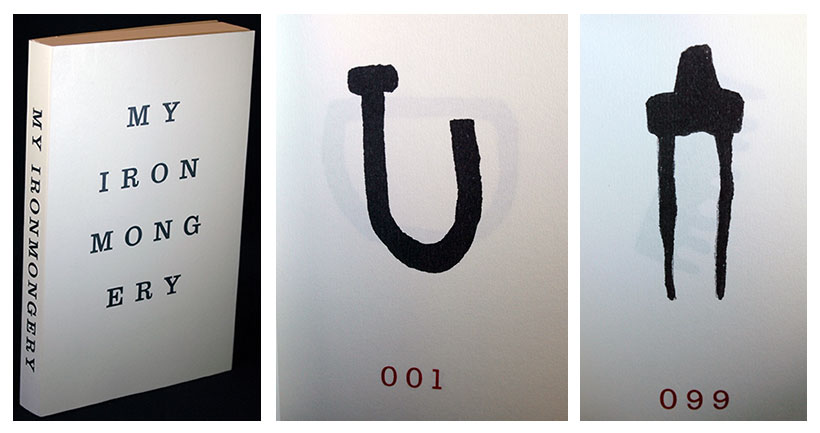
| My Ironmongery By Erica Van Horn Clonmel, Tipperary, Ireland: Coracle Books, 2015. Edition of 100. 21.5 x 14 x 2.2 cm (8.5 x 5.5" x 1"); 214 pages. Printed digitally in two colours. Stab-stitched binding with laminated wrappers. Numbered. Coracle: "An inventory of many of the metal forms found and drawn by Erica Van Horn as a potential index of their acquisition and use and a hardware catalogue for further identification." (SOLD) |
 Click image for more |
| One By Yoko Terauchi Clonmel, Tipperary, Ireland: Coracle, 2012. Edition of 20 + 6 proofs. 600 x 560 cm (22 x 24") sheet, folded to 300 x 140 (5.5 x 12"). Laid in cloth-covered clamshell box with title information blocked in grey foil on spine. Signed and dated by the artist. Coracle: "The most recent of the special format works made by Yoko Terauchi and Coracle over the years, beginning with Terra in 1984, and followed by Ebb & Flow in 1988, Cuckoo in 1992, coil/join in 1994, and now one, 2012. Here the interior sheet of red paper is folded tightly and then burned by a heated stainless steel cone once to form 64 holes of diminishing dimensions when the sheet is opened, each charred at the edges from the burn." Yoko Terauchi (1954 - ) is a British visual artist. She is professor at Aichi University of the Arts and a Daiwa Foundation Award recipient. Her work deals with questions posed to the concept of "one." That is, what is the one, the whole? Is each part a whole or do the parts make the whole? (SOLD) |
 Click image for more |
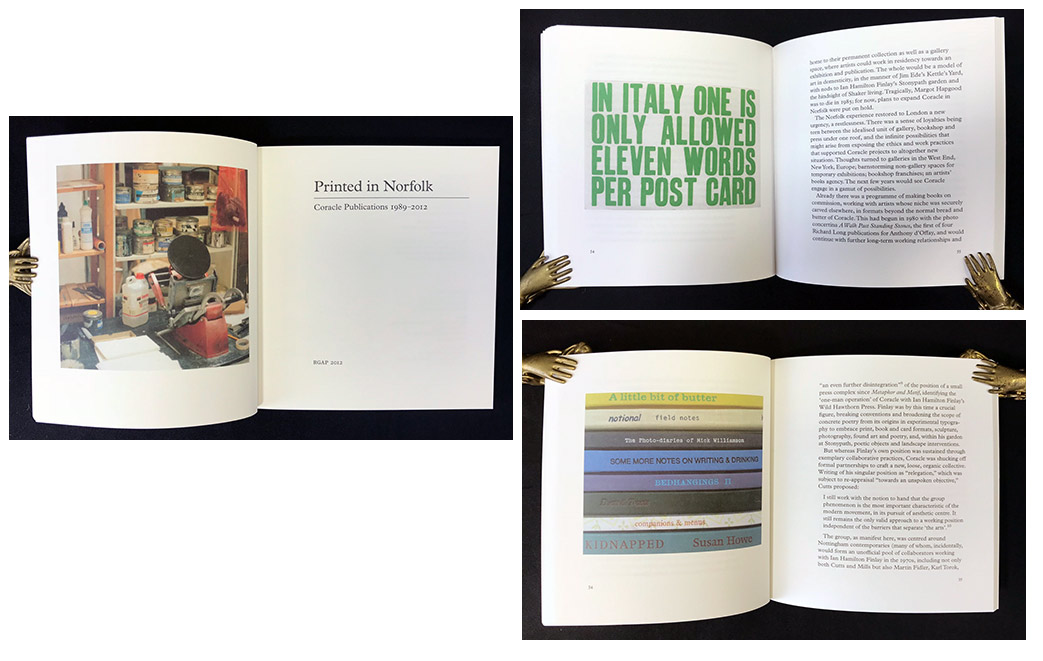
| Printed in Norfolk Coracle Publications 1989 - 2012 Designed by Colin Sackett Sheffield: RGAP (Research Group for Artists Publications), 2012. Open Edition. 5.5 x 5.875"; 96 pages. Perfect bound in illustrated covers (cover image of Aglio 6 Olio, or The Garlic Book). The catalogue was published in conjunction with a traveling exhibition with four stops in the United Kingdom during 2012 of Coracle's work. Coracle Press: "The catalogue has been designed by long-term Coracle collaborator, Collin Sackett, and includes articles by Coracle director, Simon Cutts, writer, poet and critic John Bevis, and an introduction by Andrew Wilson, Curator of Modern and Contemporary British Art at Tate Britain." Cover blurb: "For more than 35 years, Coracle has produced artists' books, critical works, editions and ephemera. Printed in Norfolk tells the story of this contemporary small press in all its manifestations as printer, publisher, bookshop and gallery. The emphasis here is on the years 1989 - 2012, when, under the direction of Simon Cutts and Erica van Horn, a symbiotic working relationship between in-house production, the commercial practices of Norfolk printers Crome & Akers, and binder Stuart Settle, signalled a new standard for the small press." (SOLD) |
 Click image for more |
The Purification of Fagus sylvatica var pendula 8.5 x 10.25"; 50 pages. Offset printed in two colors. The images are printed on coated stock, the text on Snowden Cartridge. Casebound in Avon midnight blue clothhes. Colophon: "The Purification of Fagus sylvatica var pendula was produced and first exhibited for the exhibition Crossing the Line, organized by The Queens Museum of Art, June 24 - October 7, 2001." Paul Etienne Lincoln, from the beginning of The Purification of Fagus sylvatica var pendula: "Situated at the perimeter of Weeping Beech Tree Park in Queens, New York, was a small pavilion looking on to a stump of the oldest weeping beech in America. In 1847 Samuel Bowne Parsons, a Quaker and a nurseryman, purchased a shoot of weeping beech, Fagus sylvatica var pendula, in Belgium, while traveling in search of unusual plants. On his return to the United States he planted the shoot at the site of the stump, then part of Parson's nurseries. Every weeping beech in America is descended from this one tree. Regrettably, the stump is all that remains, as shortly after this venerable tree's 150th anniversary in 1997 it died and was cut down. The tree had, however spawned seven progeny, which still grow in a circle around the original beech." Granary: "Comprised of text, diagrams, and 50 black and white photographs, The Purification records the series of experiments and performance which detail the afterlife of a specimen of local vegetation. It is emblematic of Lincoln's inquiry into the origin and production of memory and our ethereal relationship to that intangible evidence of our consciousness. In this pursuit, Lincoln has employed diverse forms and themes, ranging from examination of historical figures to detailing anything from New York City infrastructure to 'household' machines that dispense gin-and-tonics (mixed at varying strengths). "Over the past two decades, Lincoln has committed himself to creating complex installations, recordings and documentation on a wide range of subject matter. The Purification follows his investigation of the weeping beech as a way of detailing the process of examination and history-writing, which is ever shifting and defining the world around us." |
|
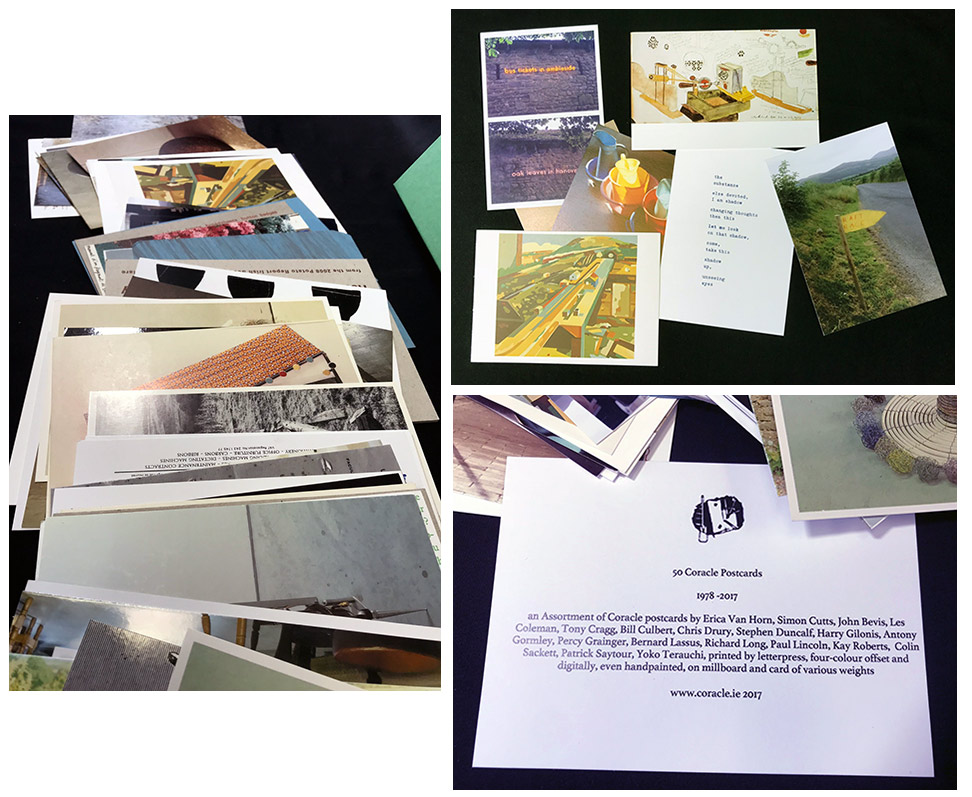
Selected Postcards 2017 5.5 x 7 x1.4" green paper covered box containing 51 postcards (50 postcards + title card). Printed by letterpress, four-colour offset and digitally, even handpainted, on millboard and card of various weights. An assortment of Coracle postcards by Erica Van Horn, Simon Cutts, John Bevis, Les Coleman, Tony Cragg, Bill Culbert, Chris Drury, Stephen Duncalf, Harry Gilonis, Antony Gormley, Percy Grainger, Bernard Lassus, Richard Long, Paul Lincoln, Kay Roberts, Colin Sackett, Patrick Saytour, Yoko Terauchi. These cards document projects and books, collaborations and individuals of the press' history since 1978. |
 Click image for more |
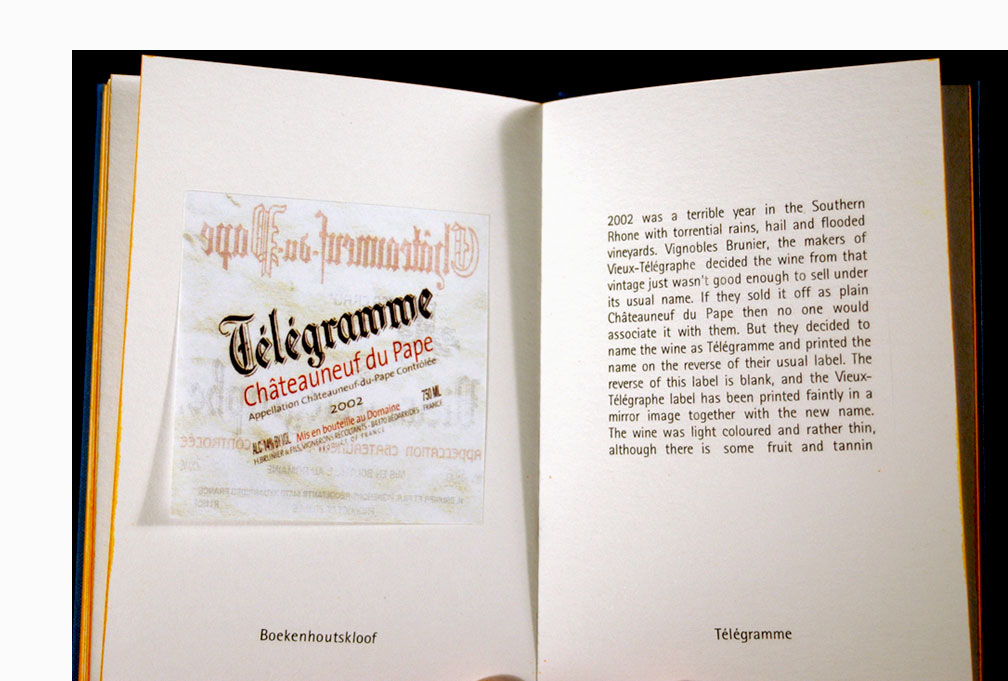
| Some More Notes on Writing and Drinking By Simon Cutts & Bill Culbert Ballybeg, Grange, Clonmel, Tipperary, Ireland: Coracle, 2010. Edition of 175. 4.25 x 5.875"; 64 pages. Offset with letterpress and additions, rubber stamp, tip-ins. Each with original drawing by Culbert and a holographic poem by Cutts. Casebound 150 x 110 in blue cloth. With 3-color blocking images on top board of a Parket 51 pen with silver cap and on back board of a black bone-handled corkscrew with silver spiral. Coracle: "Contains drinking notes for Vignobles Brunier's failed 2002 Vieux Telegraphe Châteauneuf and what became of it, together with fermentation notes on Boekenhoutskloof Syrah." Colophon: "This book is inscribed by the artist and author using their favourite Parker fountain pen. Each book contains drawings by the artist and a poem by the author." The precursor to "More Notes" was "Some Notes on Writing and Drinking" 1992. This 2010 edition again brings together the writer's tools and the drinker's tools - pen and corkscrew. Bill Culbert, the artist, is originally from New Zealand but left in 1957 to study at the Royal College of Art, London. He works in sculpture, installation, and photography. The subject of his work is light. He has produced several pieces reflecting the play of light and wine. Simon Cutts, author, is one of the founders of Coracle Press. (SOLD) |
 Click image for more |
Some More Words for Living Locally
(SOLD/Out of Print) |
 Click image for more |
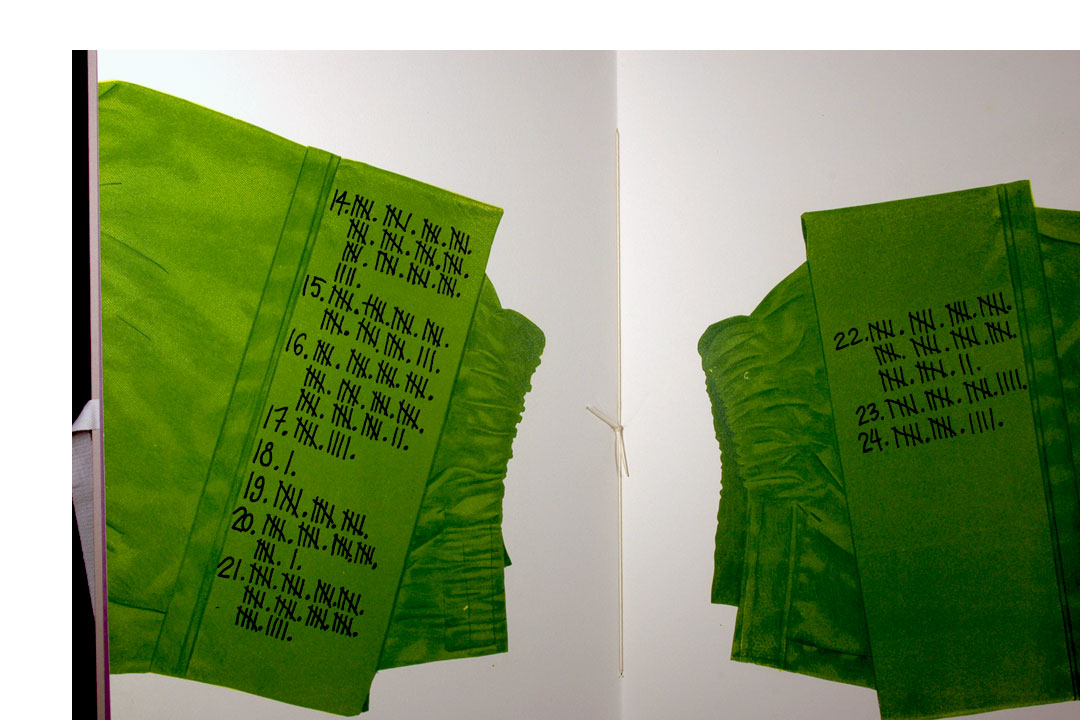
| Stiles & The Pennine Way By Erica Van Horn Docking, Norfolk, England: Coracle, 1993. Edition of 100. 9.25 x 14.25"; 2 leaves. Letterpress text printed onto endpapers. Offset Illustration in three colors. Casebound with folio ties and titles printed in green on front board. The Book Remembers Everything / The Art of Erica Van Horn Exhibition, Beinecke Library: "An unusual daily travel journal, Stiles & the Pennine Way, records an eleven-day-long walking trip in England; seven day of the trip were spent walking the Pennine Way, a trail ranging across the Pennine Mountains. To keep from getting bored and as a way to distract herself from the steady rain, Van Horn kept track of the stiles she passed through or over along the walk by making hash marks on the sleeve of her raincoat with a waterproof pen. 'I was very tidy about my little group of tally marks,' Van Horn writes of her second day on the trail, 'and found myself admiring my sleeve a lot through the afternoon, especially since it was raining hard and I had to keep my head down.' Though the book includes Van Horn’s prose narrative about her trip, her drawing of her sleeves interrupts the text in its center; in this way, Van Horn suggests that the marks and the practice of making them are at least as important as the straightforward description of the journey." (SOLD) |
 Click image for more |
| Toscano By William Roth Tipperary, Ireland: Coracle Books, 2011. Edition of 95. 4.125 x 5.75"; 8 pages. Photocopy with letterpress. Sewn pamphlet binding. Paper wrappers with title on front cover. Color frontispiece tip-in of cigar image. Slipped into acetate pocket. A short story about friendship and a last cigar. Colophon: "An edition of 95 copies with a few proofs on the occasion of the author's ninety-fifth birthday in September 2011." Erika van Horn: "William Roth turned 95 last September. The Toscano book was a birthday gift from us to him. He had written the piece some years before on the occasion of a friend's death, and since he and Simon shared a love of cigars, which neither of them can smoke anymore, he gave Simon the text to read. We loved it. "He has been involved with the arts and with politics for his entire life. ... A graduate of Yale, he started The Colt Press with Jane Grabhorn while still a student. He sort of always wanted to be a writer but instead was a businessman who supported the arts in innumerable ways, with scholarships, subsidies and purchases both in the USA and in Ireland. ... He ran unsuccessfully for governor of California. "A full and wonderful life … not the history of your usual book artist!" (SOLD/Out of Print) |
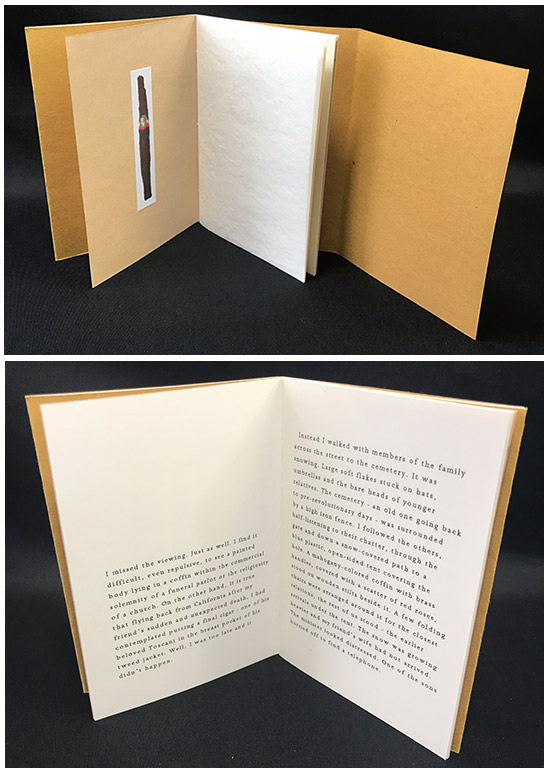 Click image for more |
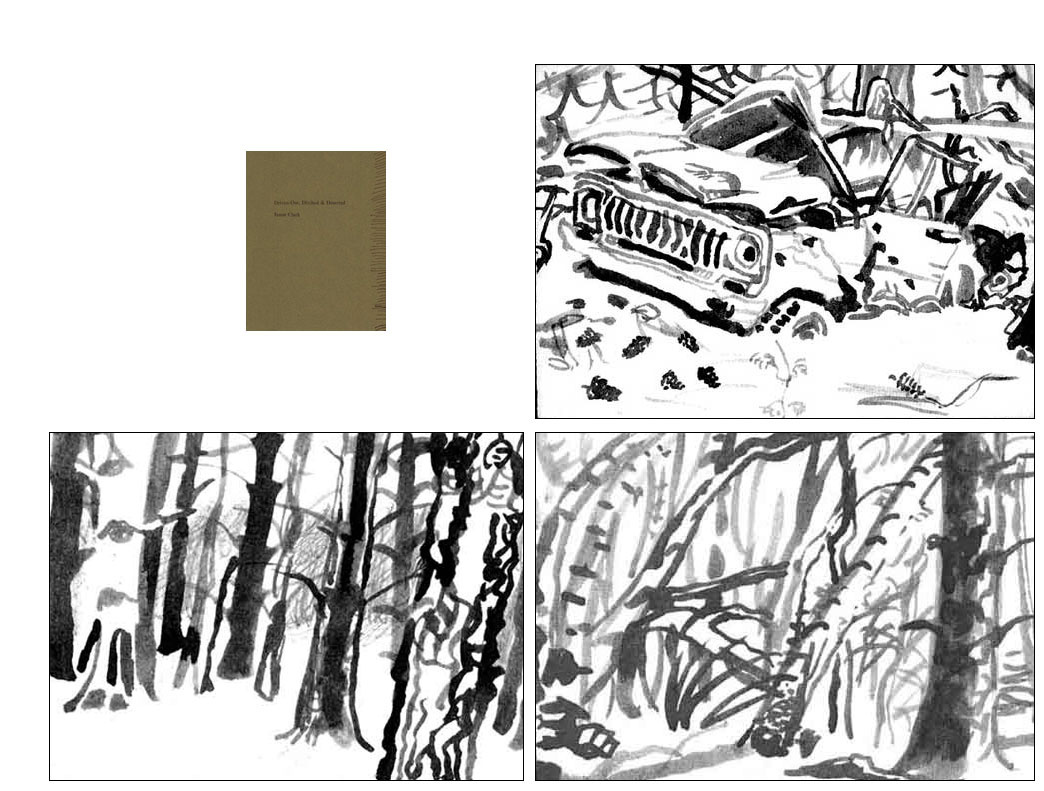

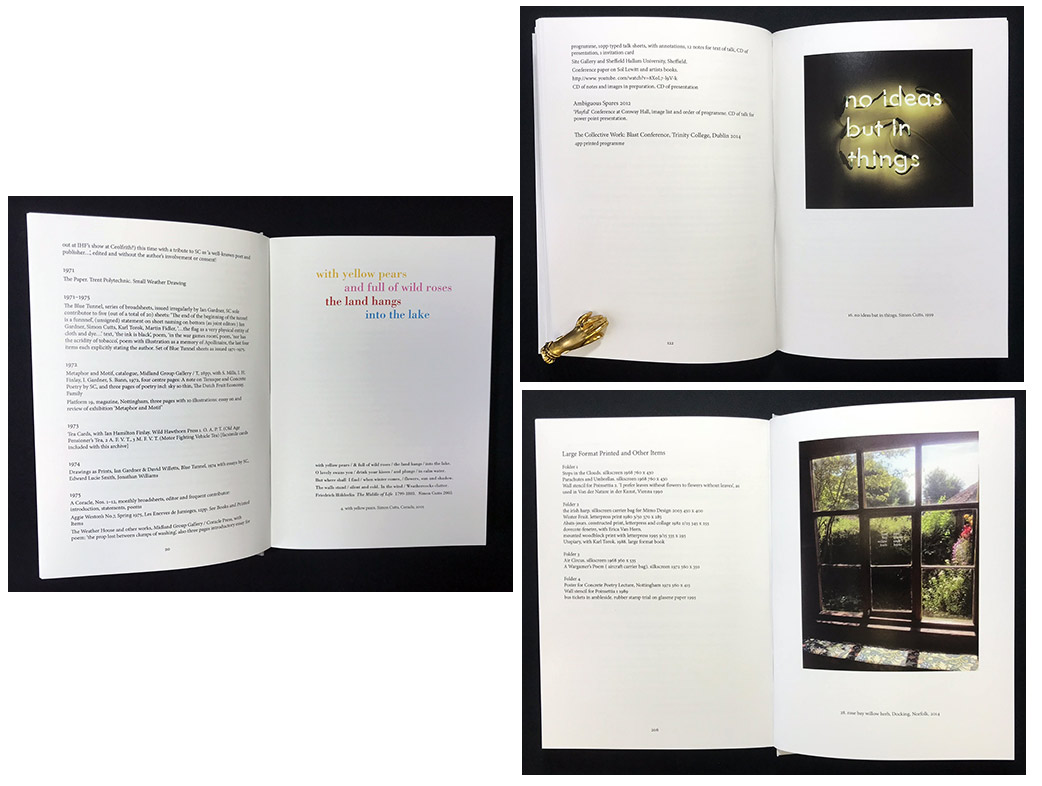

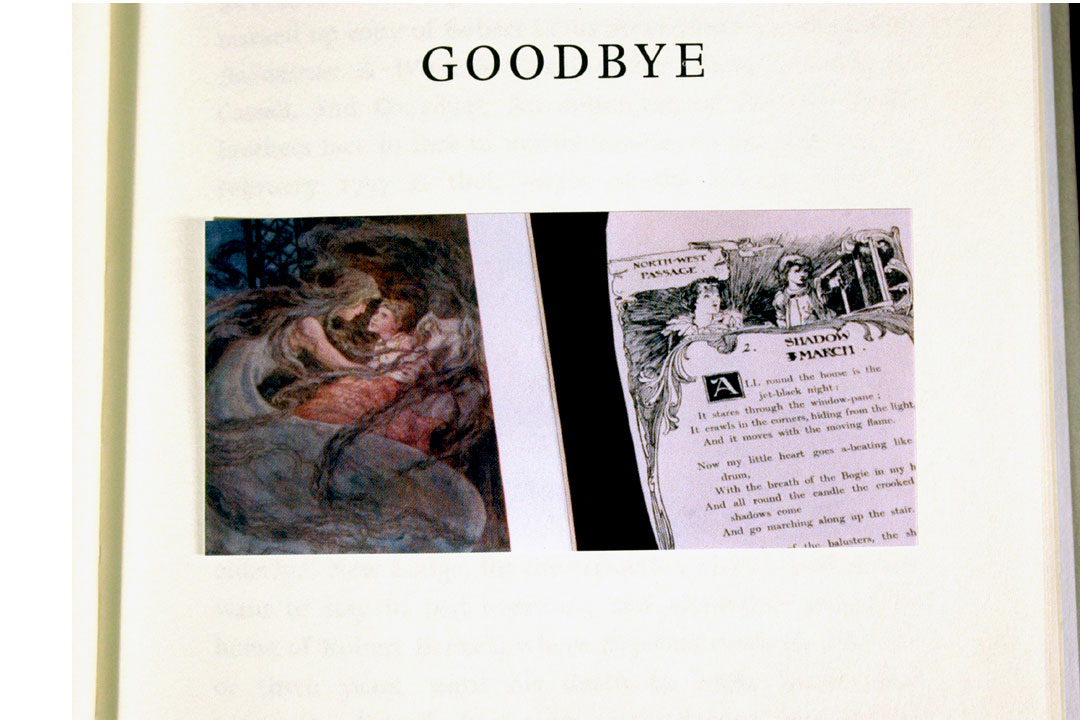
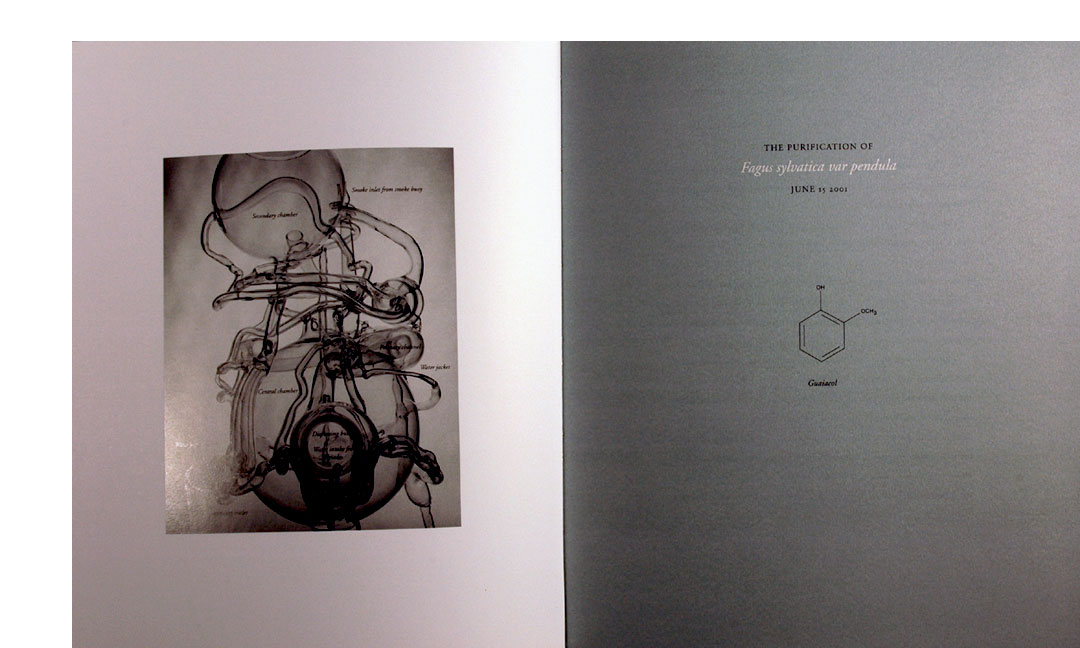
Page last update: 02.04.2025

Home | About Us | Contact Us | New Arrivals | Fine Press & Artists' Books | Broadsides |Resource Books | Order/Inquiry
Copyright © 2023 Vamp & Tramp, Booksellers, LLC. All rights reserved.